0 Items In Cart
No products in the cart.
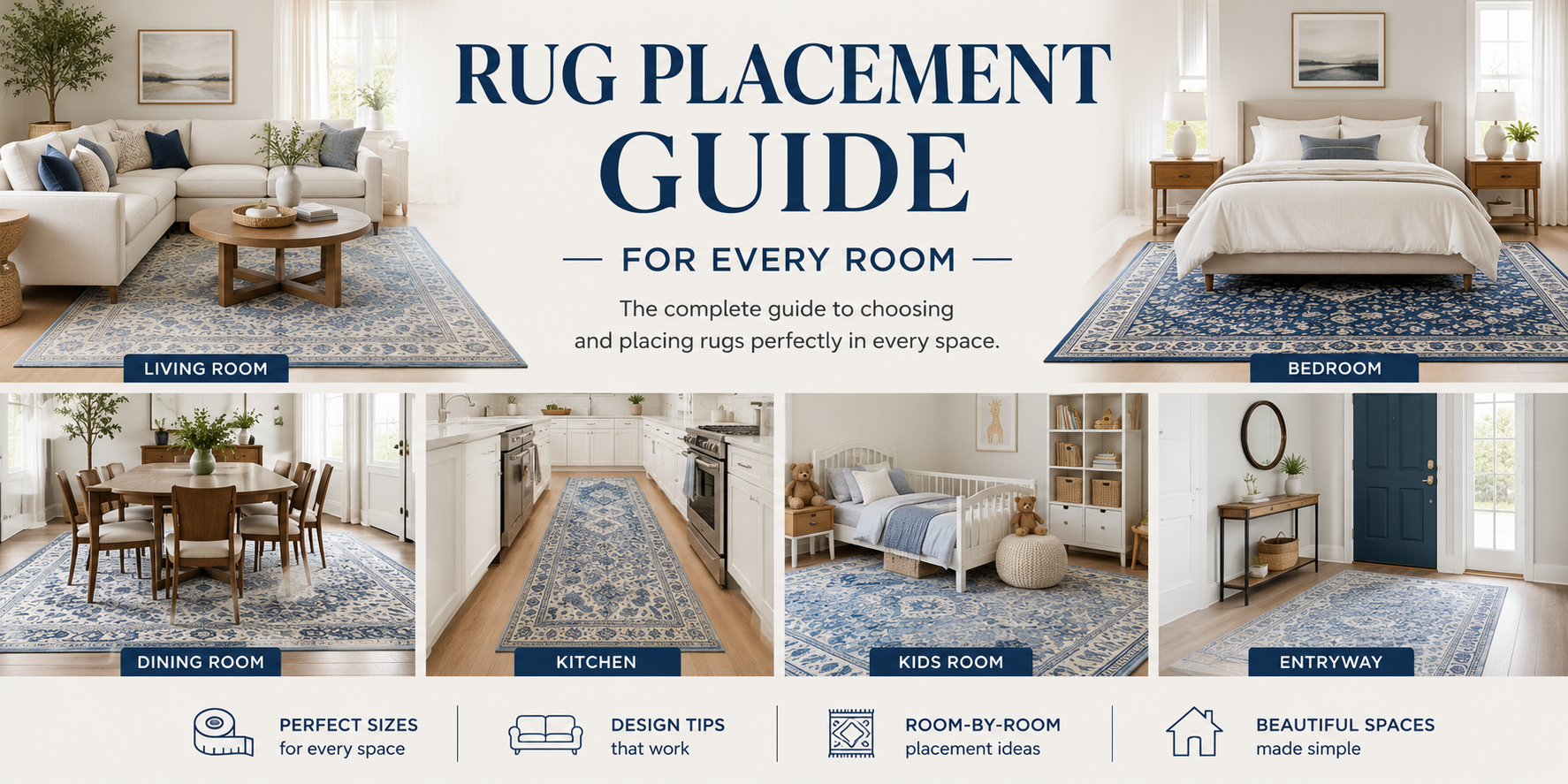
Table of Contents
The ideal way to place a rug in every room is to pick the correct rug size and place it so it anchors furniture, defines the space and supports the functions of that space.
Usually, in many rooms, a rug is used to connect major furniture, leaving sufficient floor visible between the corners and the walls to create balance.
A well-placed rug adds warmth, defines space, eases traffic flow, minimizes floor noise, makes the underfoot comfortable, connects decor and makes a room look larger.
From the living room, dining room, bedroom, and entryway to the hallway and home office, learning some basic rug placement rules will help you to make your space more polished and functional.
Quick Tips:
The right placement helps furniture connect to the rug, not making it float or isolate.
Living room rugs must reach under the front legs of your furniture.
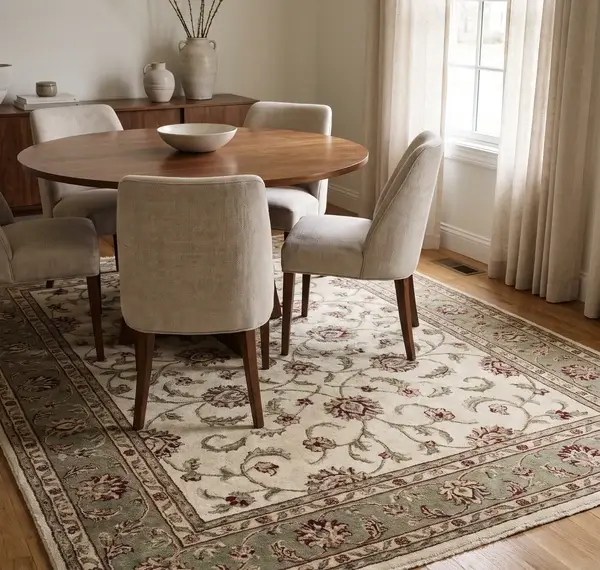
The dining room rug should be large enough so that the chairs will stay on the rug when drawn out.
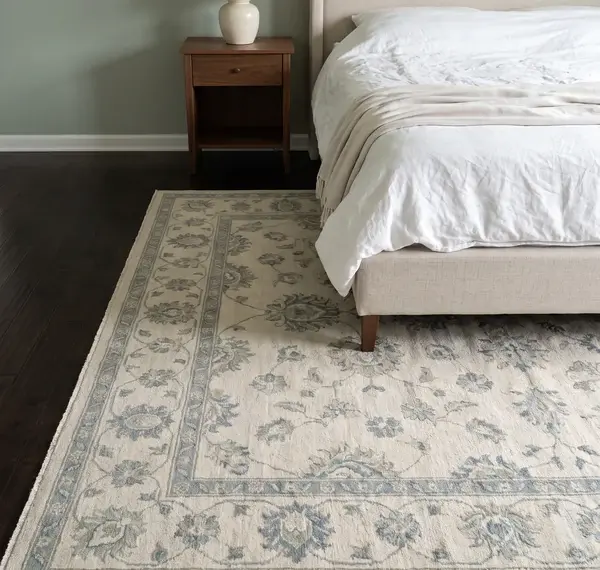
The bedroom rugs should reach beyond the bed on all sides for a balanced and calm feel.
Avoid buying a very small rug, as they make rooms appear undefined and incomplete.
Placing the rug properly is important because it helps to make a room more comfortable, visually pleasing, and balanced. A well-placed rug connects furniture, defines spaces, eases traffic flow, improves overall decor and protects your floors.
Let's understand why it matters:
Proper rug placement connects furniture in your room and helps tie the decor together, making it feel complete rather than cluttered. The rug serves as a base, anchoring everything together.
Rugs can help to divide spaces and define different functions. In an open floor plan, rug sections living areas from a dining room or work areas without using walls.
A rug helps protect your hardwood, laminate or tile flooring from scratches, dirt, and everyday use. Heavy-traffic areas are protected with rug pads and rugs.
4. Improves Comfort and Reduces Noise
Rugs add softness underfoot and also reduce echoes by absorbing sound, making the space feel quieter, warmer, and more comfortable.
A right-sized rug placed perfectly creates the illusion of extra space within a room. A rug placed in the right way helps make the room look larger.
The right oriental rug placement tips involve selecting the right rug size, aligning it with your furniture setup and design, and showing off the design. Proper placement of oriental rugs can help divide areas, allow easy room movement, highlight your rug's design, and create a balanced and comfortable environment in your home.
Choosing the properly sized Oriental rug is essential to balance and complete the look of the room. A very small rug can disconnect furniture, and a very large rug can give furniture a sense of calmness and freedom. Carefully measure your room and furniture before choosing a rug.
A rug placed in the living room should connect the large furniture items. It should come out of the sides of the bed. A dining room rug should be large enough to hold chairs when pulled out.
Expert Tip: If you have to select between two sizes, the larger rug is the best choice.
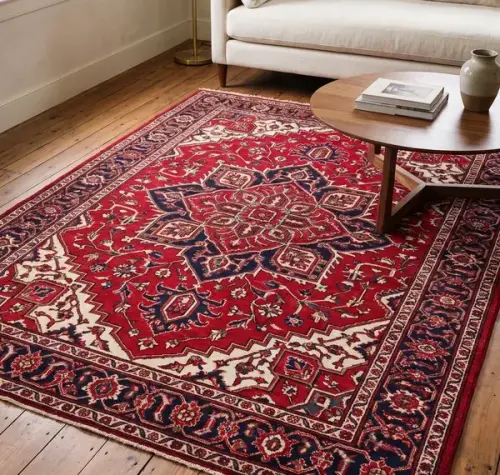
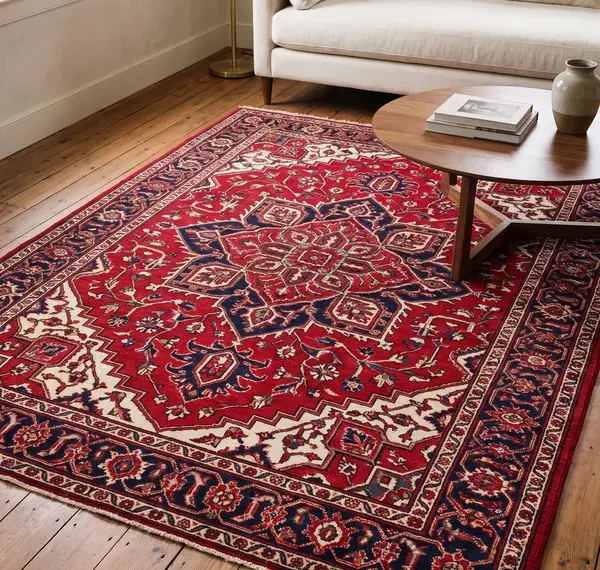
The ideal place for an Oriental rug in the room is under the main seating area. The front legs of sofas and chairs should rest on the rug. This will help to define the space and let the design of the rug be visible.
Don't place the small rug in the center of the room around all the furniture. Rather, anchor your seating area with the rug. If the room is large, the rug should be placed so that all the legs of furniture rest on it. In medium-sized rooms, you should place the rug under the front legs of sofas and chairs to create a defined look.
Choosing the right rug shape is the key to creating a design that fits the space and ties the Oriental rug to the furniture. Selecting the right shape enhances the space visually and functionally.
Rectangular rugs are flexible and work best in bedrooms, dining rooms, and living rooms. Round-shaped rugs are perfect for spaces that can be used in small seating areas. A runner rug is ideal for hallways or entryways, and a square rug is best suited to square rooms.
Around 8-18 inches of floor should remain uncovered around an Oriental rug. This border helps to highlight the rug, and the space does not appear cluttered.
The amount of floor visible is dependent on the size of the room. At least 8-12 inches is great enough for a smaller room, and 12-18 inches is better for a larger room. The uncovered floor areas draw attention towards the rug’s decorative edges and detailed design.
Oriental rugs can divide the various rooms of the open concept without introducing walls or barriers. They create visual borders, making it spacious, more organized and meaningful.
For example, put an Oriental rug under the furniture in the living room, and another under the dining table. This is the right way to divide each space without compromising the open and airy environment of open-plan concepts.
You should always consider traffic flow in mind when placing the rug to complement the room, instead of blocking it. With the right placement, anyone can move comfortably around the space while maintaining the functionality and looks.
Don't use rugs that block natural walkways. If you are in a high-traffic area like hallways, entryways or living rooms, leave sufficient space to move around the rug. Correct rug placement changes the look and practicality of the space.
Layering oriental rugs properly adds depth and texture and allows the space to look different. The right layering makes the room atmosphere cozier and more inviting.
The best way is to layer an Oriental rug over another larger natural-fiber rug, jute or sisal. This technique makes the space look defined, and it reflects the fine craftsmanship of the Oriental rug. Make sure the layered rug is properly sized to create a structured look.
Patterns and colors help the Oriental rug tie in with the other decor items. Using a matching color scheme makes the room environment defined and attractive.
You can combine it with simple furniture and accessories if your rug has a bold pattern or vibrant hues. In neutral rooms, an Oriental rug can be used as a focal point and to give character to the room. Using the same color cushions, curtains or decor as rugs gives a unified feel to the room.
Do not block doorways and walkways to keep the room usable and safe. An oriental rug should complement the room and not hinder movement or access to the area.
Make sure the rugs are placed near the doors, without blocking the doors' opening and closing function. Provide sufficient bare floor around the rug in hallways and entryways that allows clear walking paths. The right placement helps provide better traffic flow and gives a well-balanced, pleasing appearance.
Rotating the Oriental rugs every 6 to 12 months to prevent uneven wear. This maintenance step is simple and helps to keep the rug looking its best and long-lasting.
Direct sunlight, furniture placement, or heavy traffic affects the rug more than other factors. Rotating a rug regularly prevents fading and uneven wear. It also helps to maintain the rug's beauty for many years.
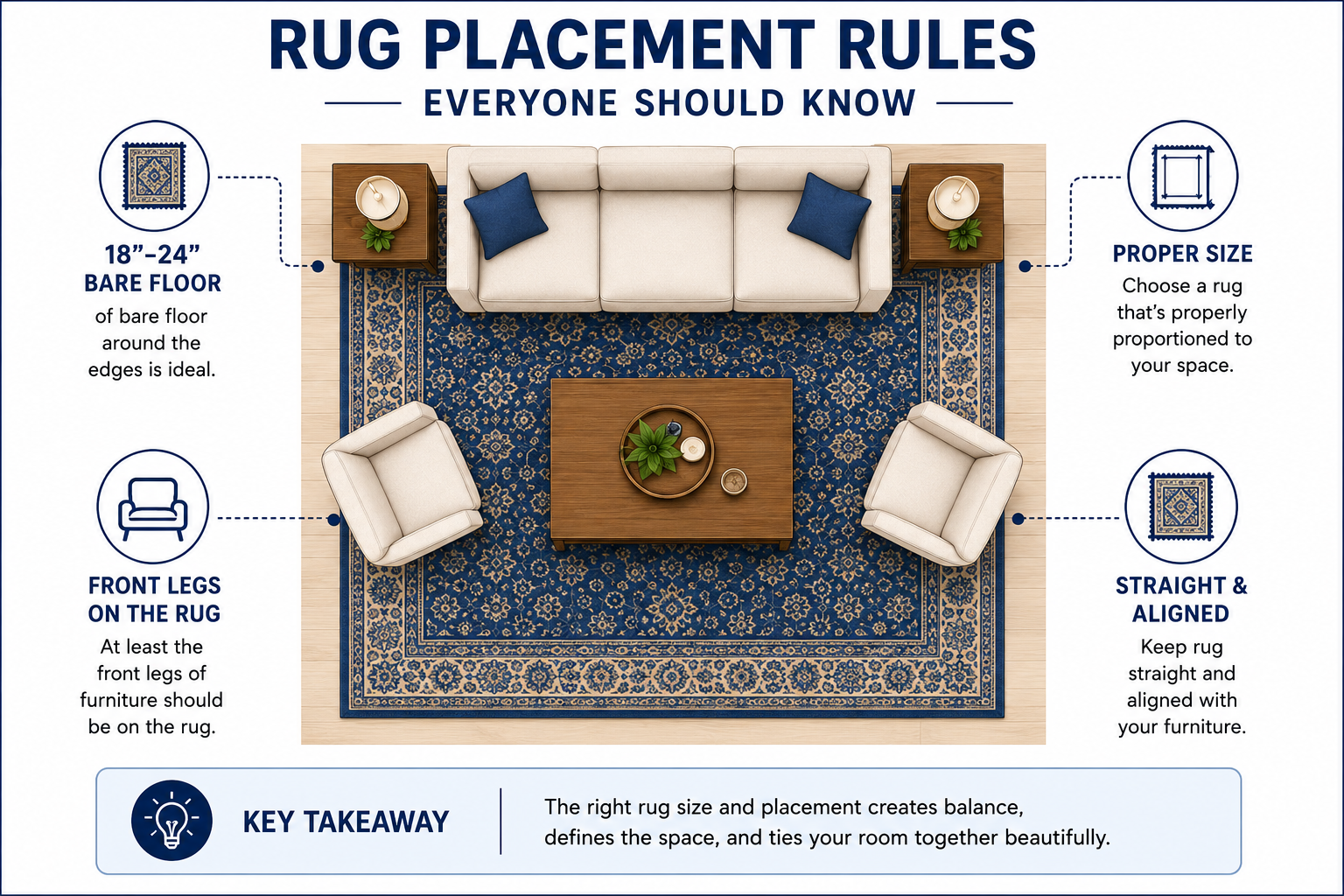
Using these basic rug placement rules helps your room look more balanced and maintained. The correct rug placement enhances the traffic flow, ties furniture together and makes the room look more defined.
Put at least the front legs of sofas and chairs on the rug. The back legs should sit off the rug. This rule helps to create a defined seating area together without using a very large rug.
All the legs of the furniture should sit on the rug. This placement rule provides a well-balanced and unified feel. These rules work best in open floor plans or larger living spaces.
Allow your rug to sit freely in the center of the room. Make sure the furniture doesn't touch your rug. This works well for smaller rooms or decorative, detailed rugs.
Always try to leave between 8 and 18 inches of floor uncovered on all sides of the rug. Leaving proper space creates a sense of balance in the room and makes it feel spacious and proportionate.
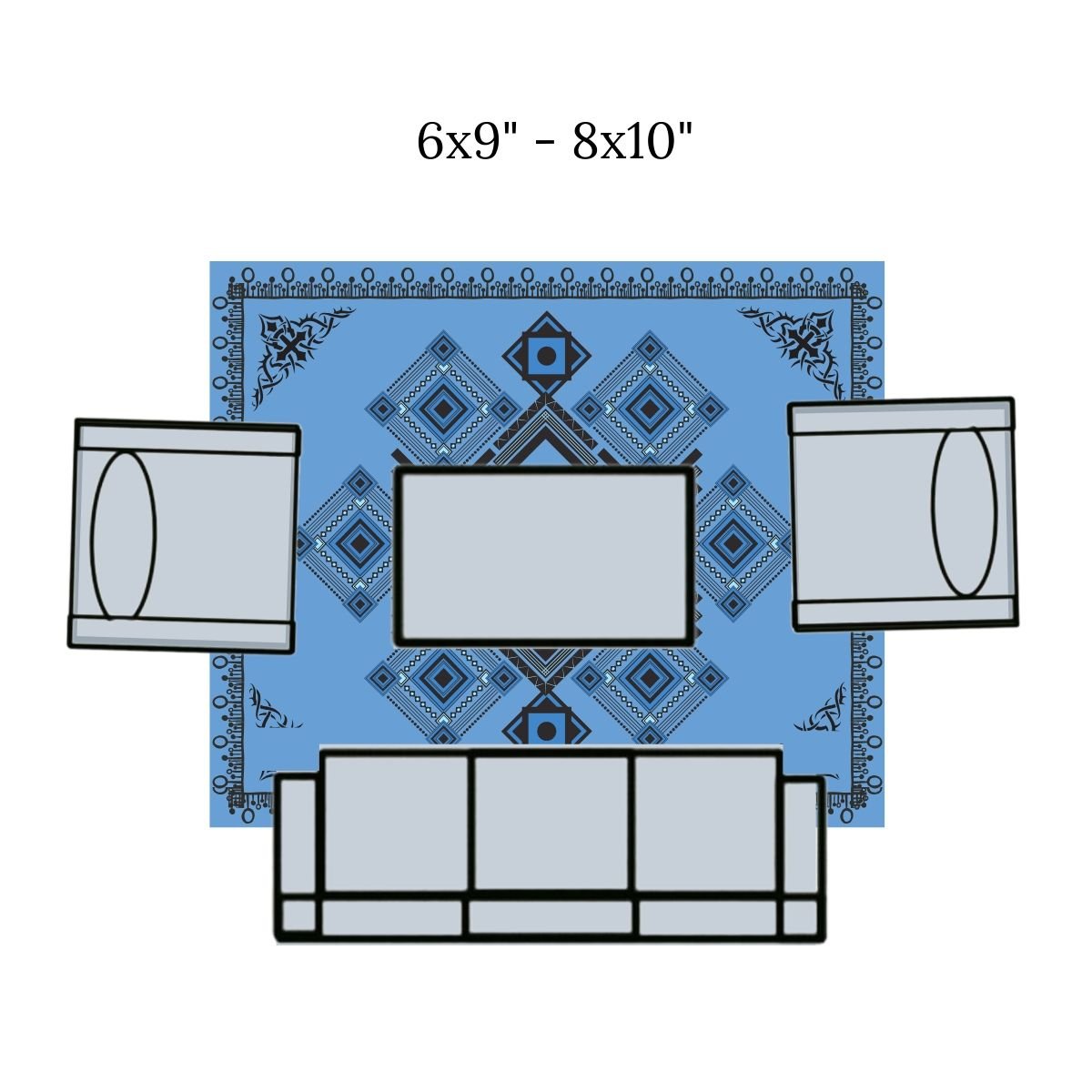
The living room is the most important area of any home, and rug placement depends on the layout, size and type of the living room.
In large living rooms, anchor all of the furniture with your rug, making sure that all furniture legs sit on the rug to create a defined seating area and balance.
Place the front legs of your sofa and chairs on the rug, as it is one of the most common, practical ways of living room rug placement.
A floating rug placement goes well in compact areas. Position the rug under the coffee table and central seating area.
Either place your entire sectional sofa on the rug or put all of the front legs on the rug. Placing it partially looks disconnected.
Make sure all four legs of the coffee table are sitting on the rug. This helps in balancing the seating arrangement.
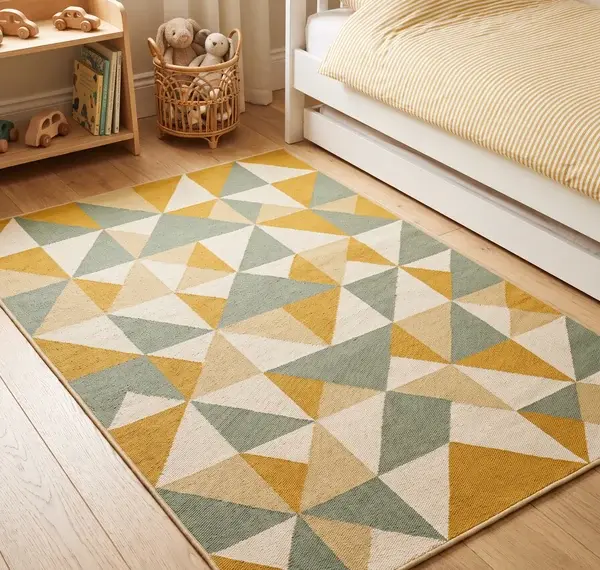
Rug placement in the bedroom is important for comfort as well as establishing a centered look under the bed.
For a Queen-sized bed, the rug should go beyond both the width and length of your bed by 6-12 inches on both sides. This rug placement establishes balance and makes the foot movement easy. An 8x10 goes well under a Queen-size bed.
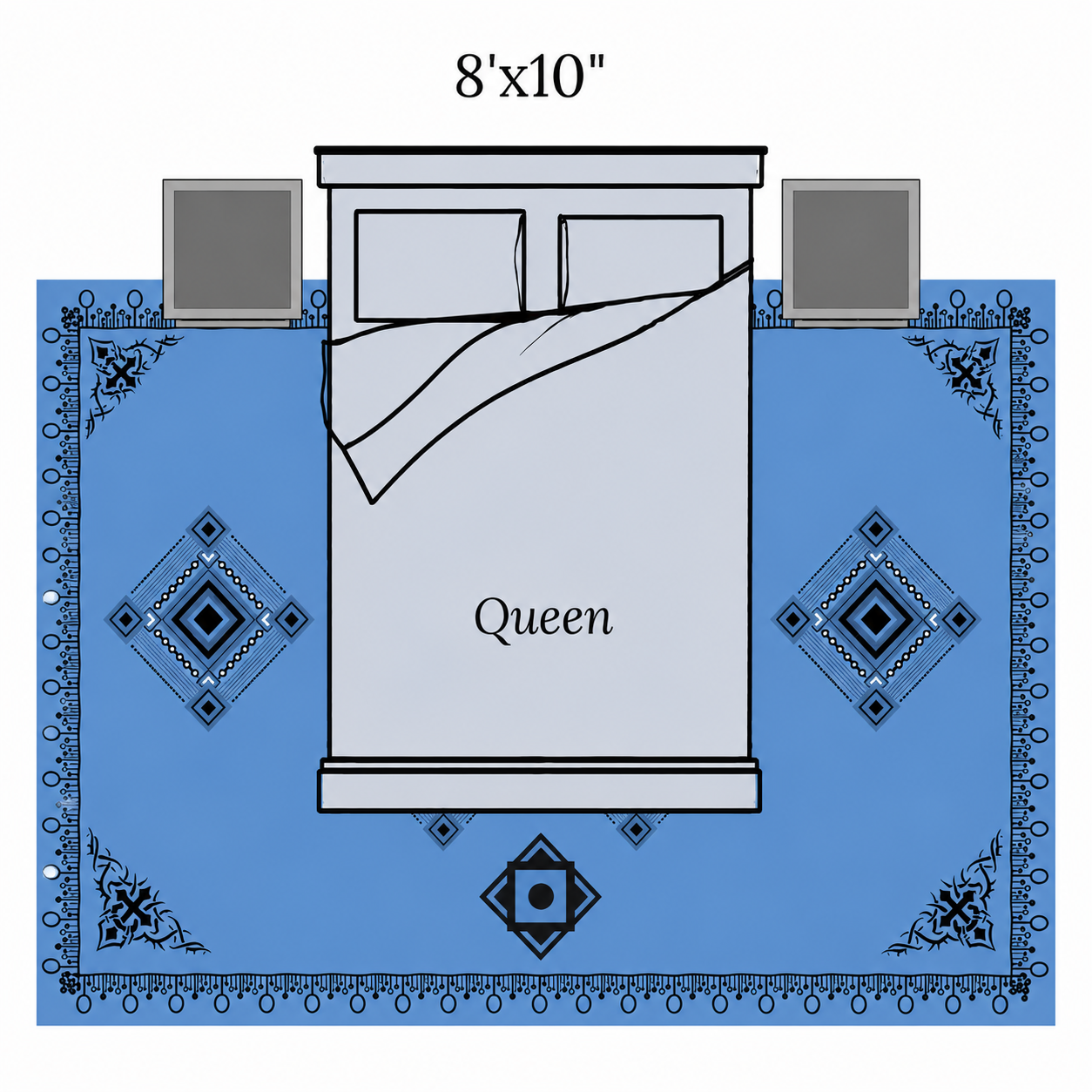
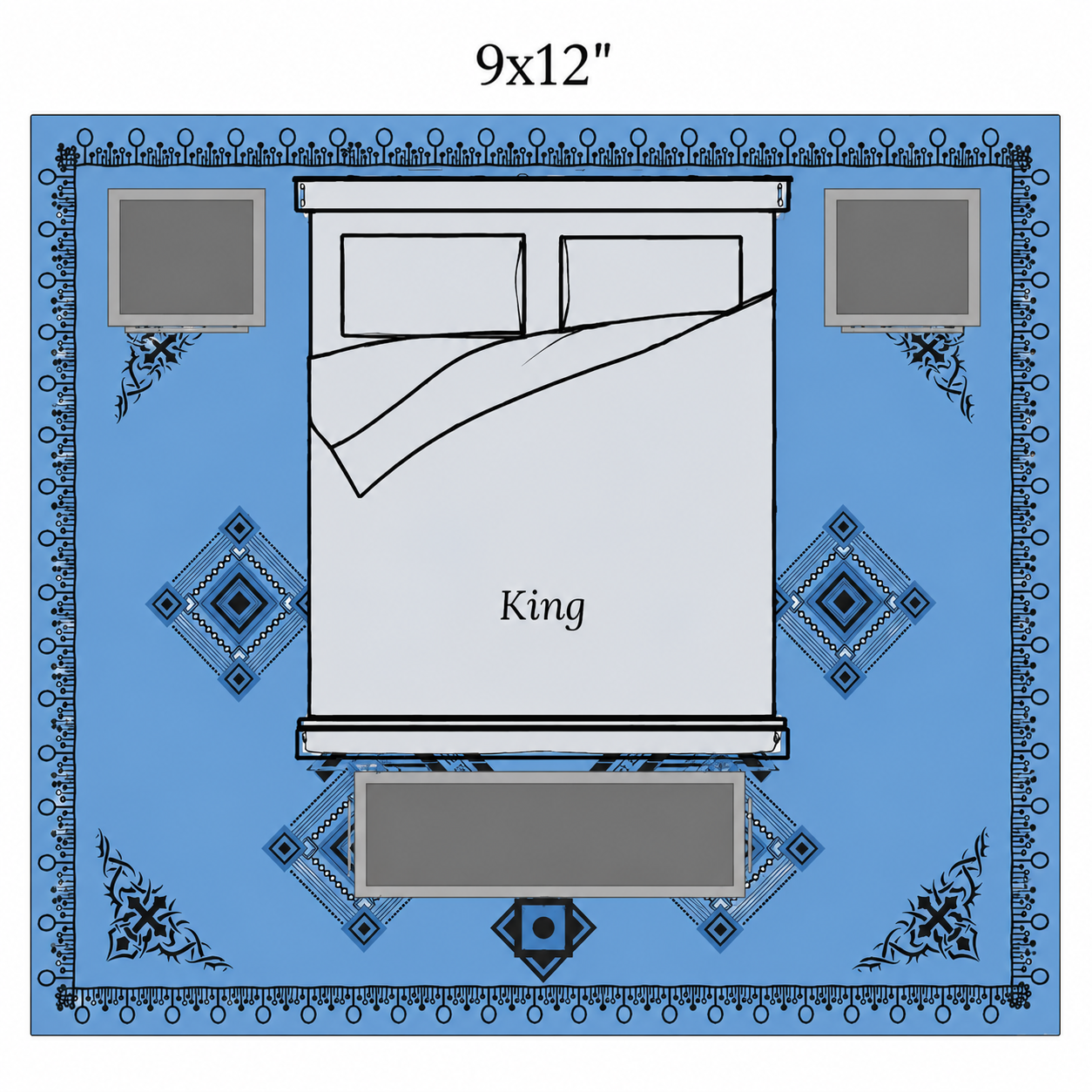
A good rug placement for a King-sized Bed should extend from both sides of the bed equally to establish a defined appearance. A 9x12 rug provides space and achieves a luxurious look.
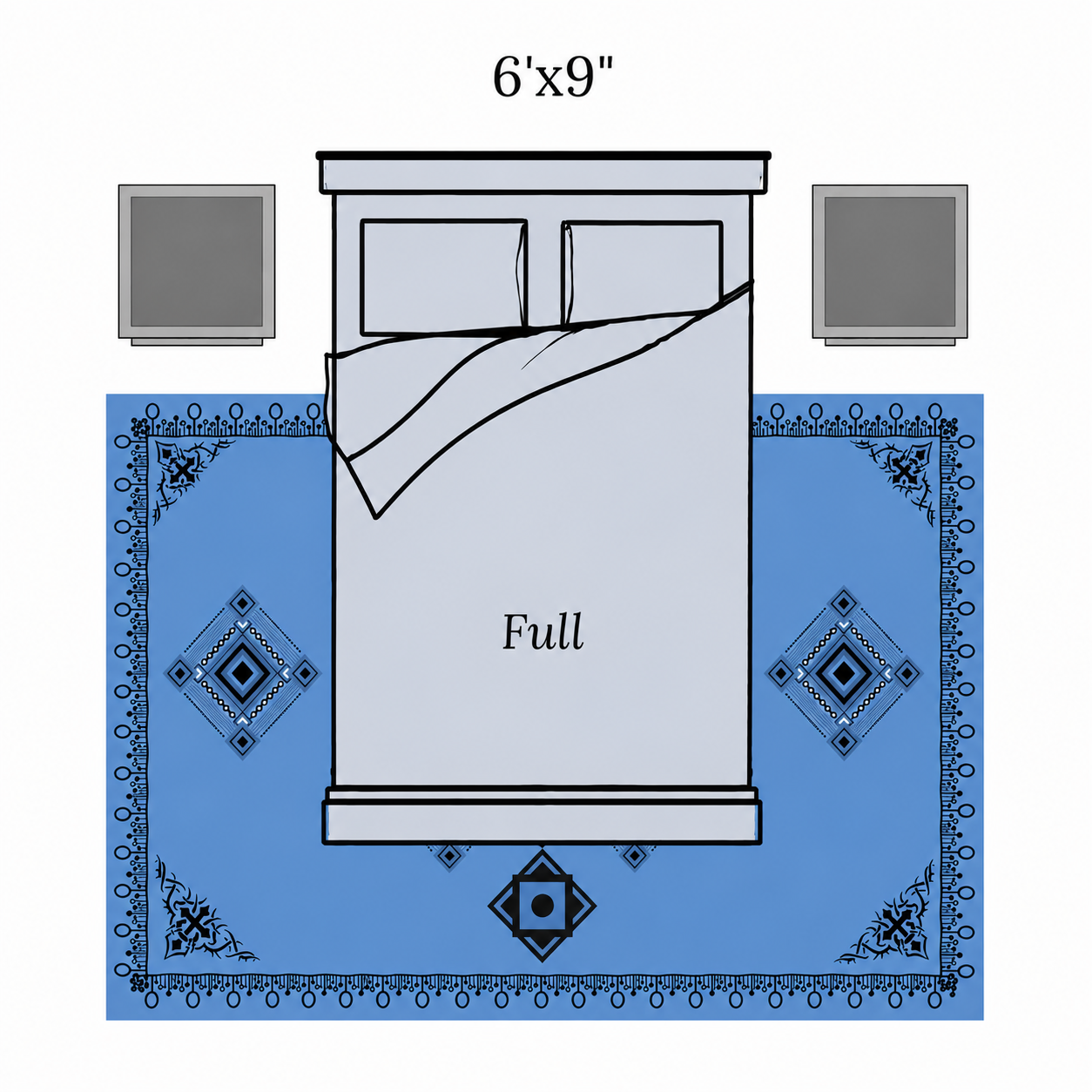
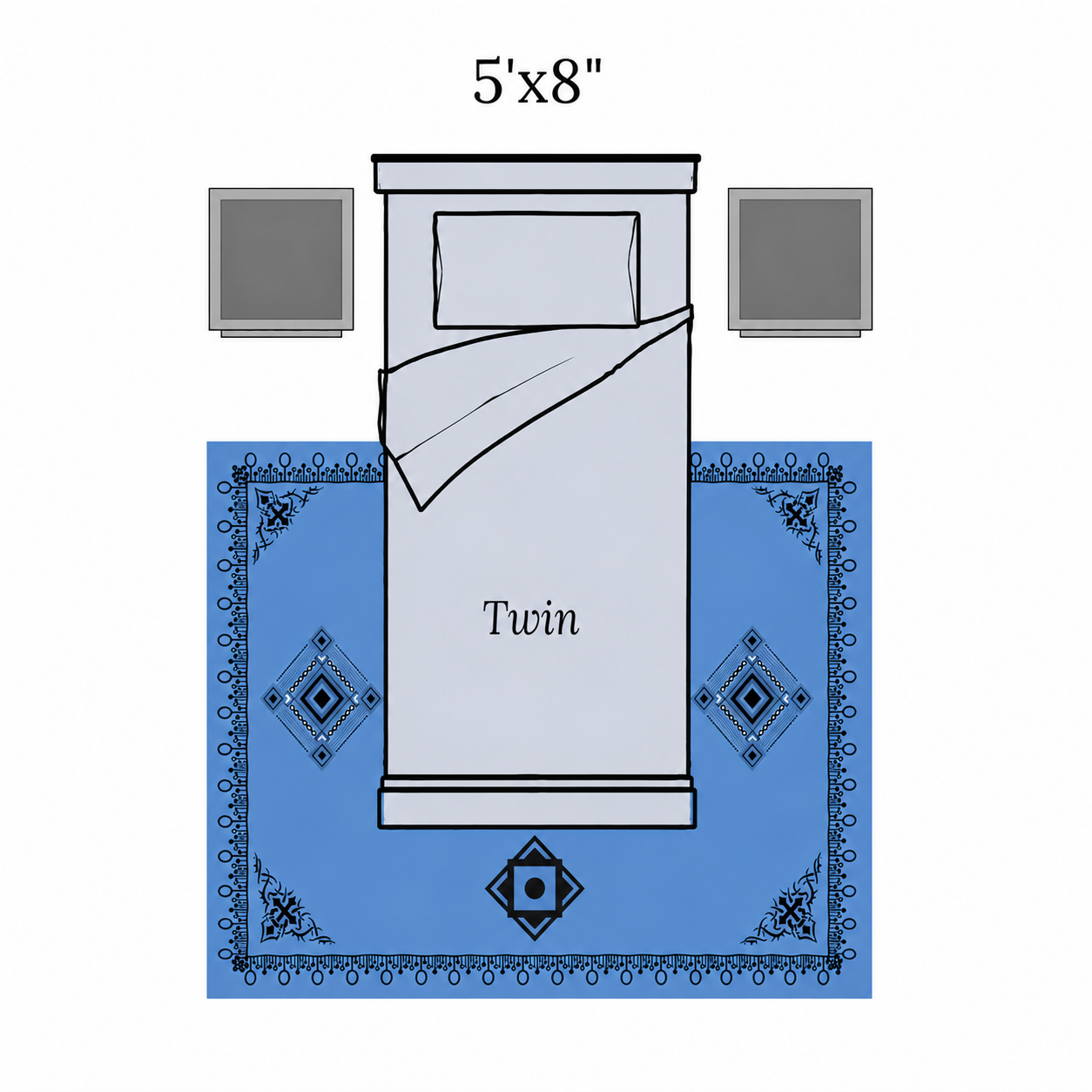
In a full-size bed, position the rug under two-thirds of the full-size bed to get most of the visible area around it. The 8x10 rug or a 6x9 rug placement depends on the room size.
To provide enough floor space to step onto the rug when you get up from your bed, you should either place it at the foot of the bed or use runner rugs alongside the bed.
You can layer the rugs in the bedroom to add texture, depth, and visual interest to your decor. Start with a large, neutral rug as a base, then add smaller decorative rugs on top of it.
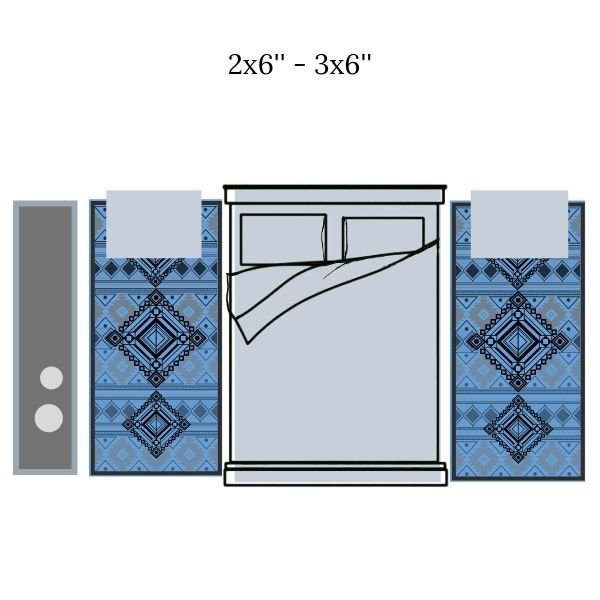
Runner rugs provide a soft landing on either side of your bed, and they work well in smaller bedrooms that are difficult to arrange. You can place these runner rugs at the bedside.
The rug in your dining room should be sized according to the size of your dining table and chairs, whether occupied or not in use.
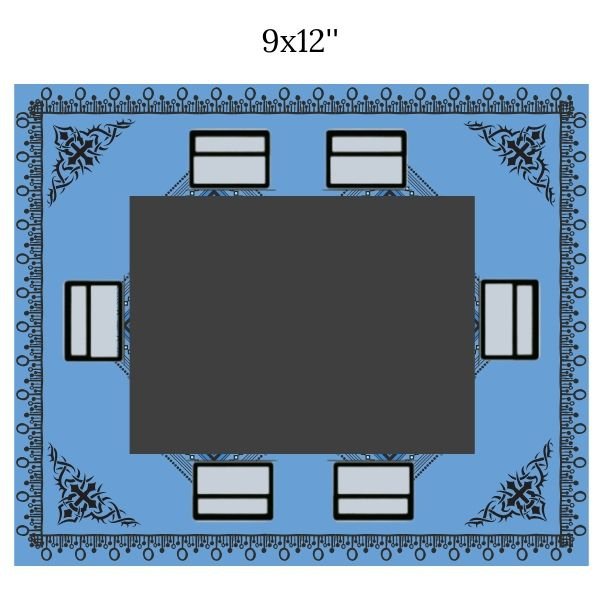
Make sure the dining table is centered in the middle of the rug and can fit without falling off either corner.
Your dining room rug should reach a distance of 24 inches behind the table's edges to avoid the chairs falling off when pulled out.
Round rugs fit perfectly under the round dining table as they create balance and alignment. Place the table at the center of the rug to get equal space on all sides of it.
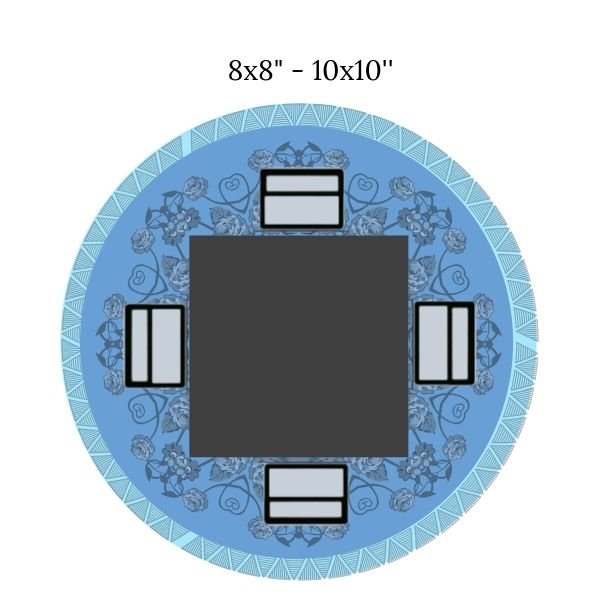
A rectangular rug goes well with a rectangular dining table as it ensures even coverage. Place the rug as per the shape of the table so that the chairs can move easily.
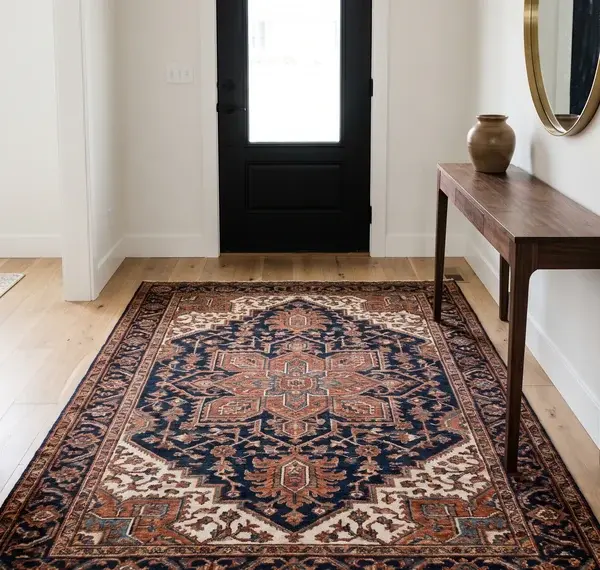
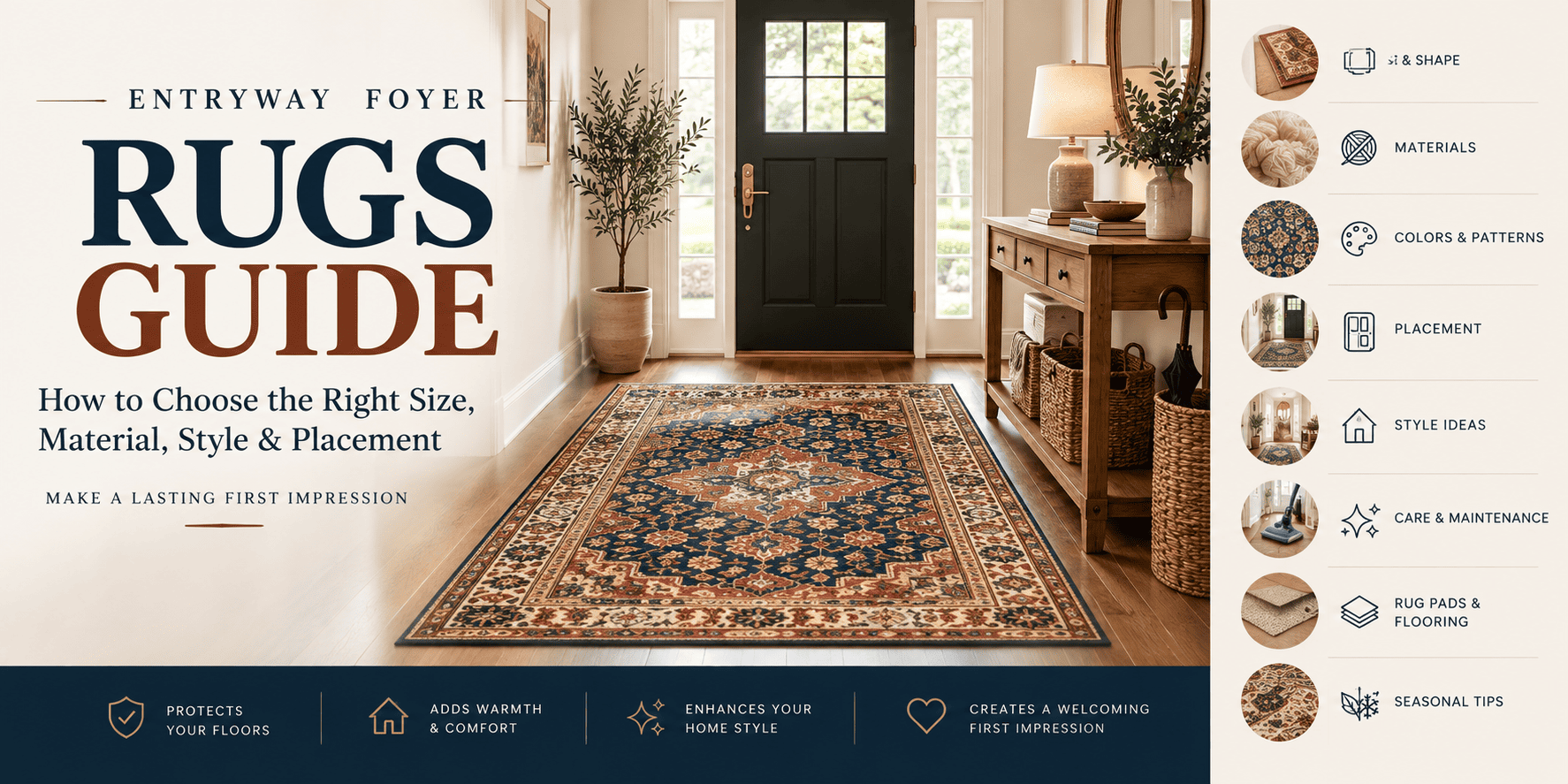
Correct placement of entryway or hallway rugs helps make a good first impression as well as prevent dirt and moisture from entering your home.
Select a rug that goes well with the width of your doorway, leaving at least 6-12 inches of floor visible on all sides.
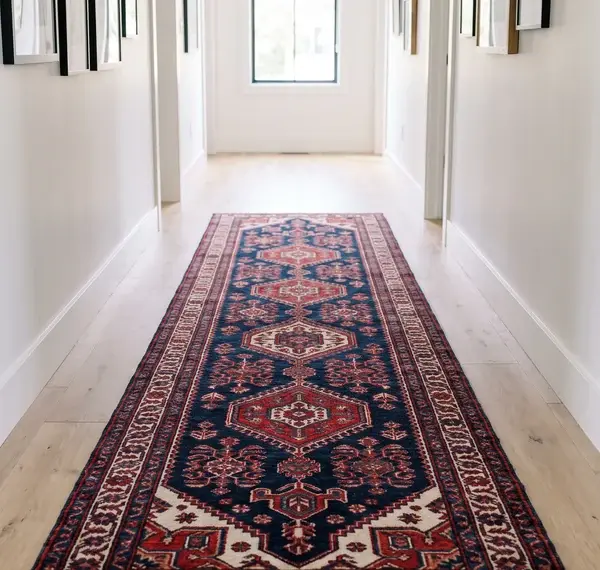
A runner rug works best for a narrow space or hallway, providing floor coverage without overfilling the space and also does not create a passage through the entryway.
Place the rug in front of the entryway or hallway and directly aligned with the doorway or corridor. Right placement creates a clean and polished appearance.
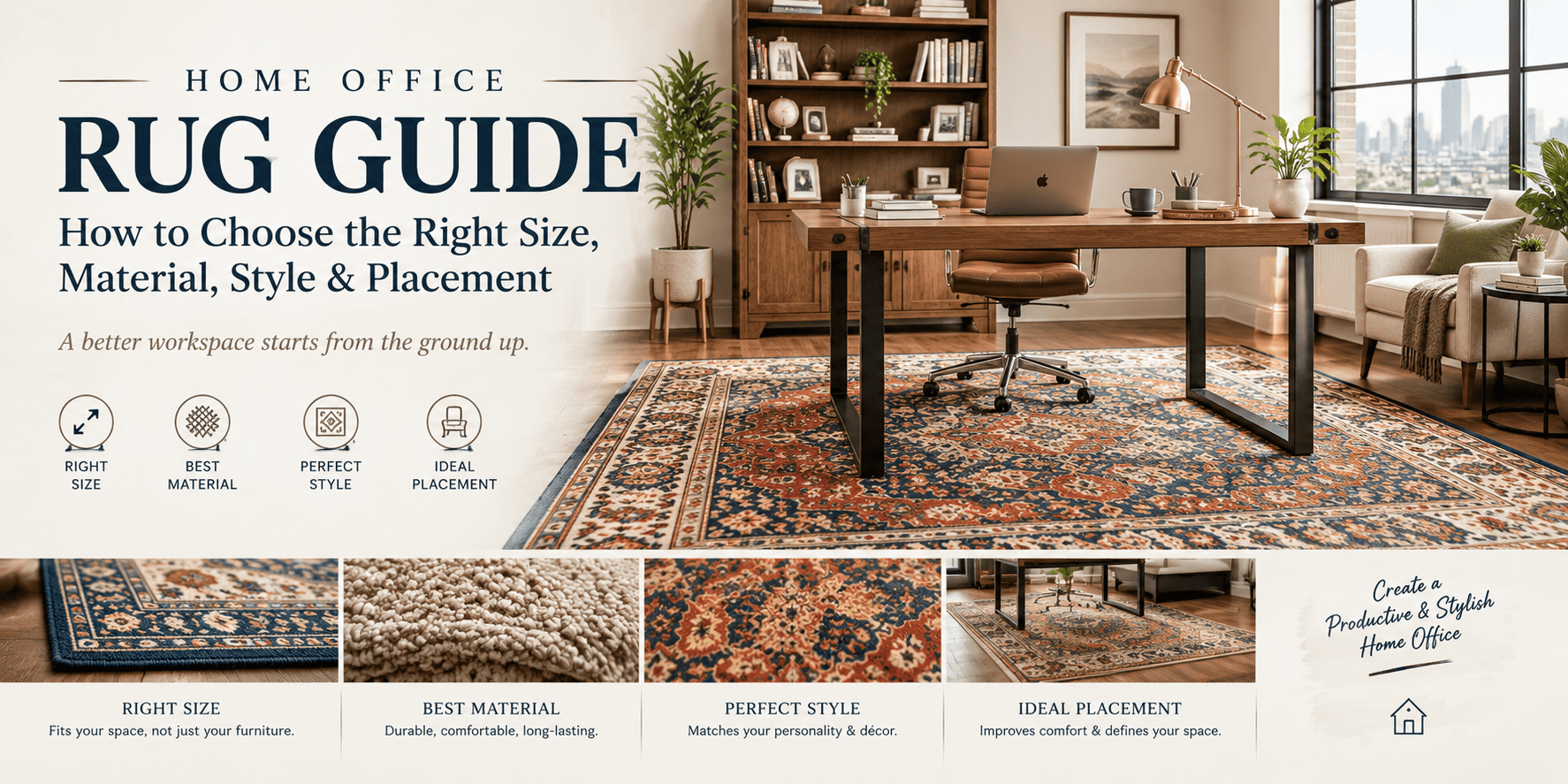
A well-placed rug in the home office increases comfort, lowers echoes and helps define the workspace. The perfect rug placement makes the office look more organized and professional.
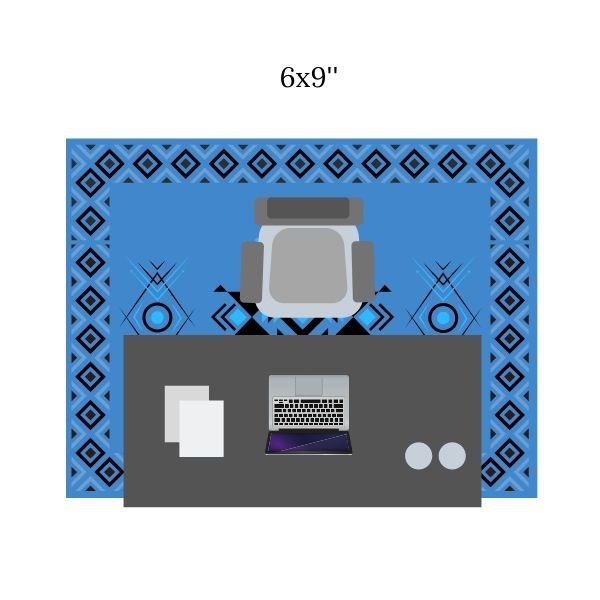
The rug needs to be placed beyond the desk on all sides, specifically beside. This makes sure the chair stays on the rug when drawn out and establishes a defined work area.
Use only low-pile rugs for spaces with rolling chairs so that chairs can move freely. Avoid using thick rugs because they make the movement of the chair difficult.
The correct rug placement visually differentiates the work area from the other areas. This defines a separate office area, increasing focus without any physical dividers.
The family rooms undergo frequent traffic, so rugs used in these rooms need to be placed strategically.
Place the rug under the seating arrangement and entertainment layout. The front legs of the chair should sit on the rug to make the area feel connected.
In the open concept plan, a well-placed rug in a family room clearly defines the space, isolating it from adjacent areas like the kitchen or dining area, making it feel balanced and polished.
A large oriental rug serves as a statement piece, while adding warmth and texture to the family room. Layering them above other large neutral rugs establishes depth, allowing the design to be highlighted beautifully.
Choosing the right rug size is one of the most common mistakes people make with oriental rug placement, along with furniture positioning and room size. By avoiding these mistakes, you can place your oriental rug properly to make the room feel pleasing, functional, and highlight the rug's pattern.
Let's discuss the common mistakes of oriental rug placement and how you can fix them:
The common decorative mistake is to choose an oriental rug that is too small for the space. The small rugs make furniture look isolated and incomplete. A lot of people purchase rugs that are too small to go underneath the coffee table, and leave the sofas and chairs out of the rug area.
How to Fix It
When furniture is fully out of the rug, it gives the furniture a “floating” impression. The seating area does not give a cozy and connected feel. One of the most common mistakes is placing the rug in the middle of a living room.
How to Fix It
To get the most out of an oriental rug combination under a sofa and coffee table:
If you are placing an oriental rug over hardwood floors, nothing will be clearly visible. If a rug is too large and there is no space around it, it will take away the beauty and warmth of a hardwood surface.
How to Fix It
This will make both the Oriental rug and hardwood flooring look great together.
If you have different oriental rugs, you should be careful not to use colors that clash with each other because it will look messy, rather than elegant, in the open spaces. Strong patterns that clash with each other and create visible confusion.
How to Fix It
The rugs need to complement each other, but they don't have to match each other perfectly.
Rugs add texture and warmth, but if they are all of the same size, it creates a cluttered look rather than giving an elegant feel. This is a common mistake when placing an oriental carpet on carpet without looking at the size.
How to Fix It:
This provides depth while not making the room look crowded.
A small oriental carpet that is placed improperly around the existing carpet may appear out of style and out of place with the furniture. The rug will not act as an integral part of the room design if it isn't positioned correctly.
How to Fix It
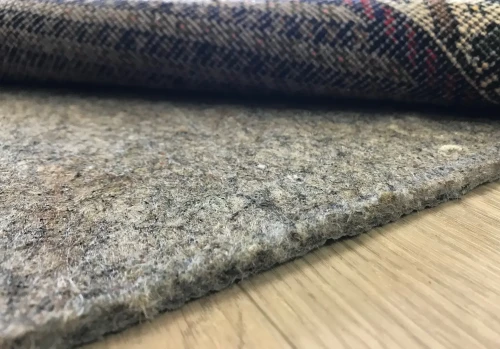
One of the most common mistakes made while placing an oriental rug is not using a rug pad. If a rug pad is not used, the rug can:
How to Fix It
A good rug pad:
Comparatively, spending a small amount of money can create a huge impact.
A beautiful oriental rug can also look dull if the colors don't match the room. If it doesn't match the room's other rugs or carpets, it will also look out of place. Sometimes, homeowners use rugs without thinking much about furnishings, wall paint, curtains or decor.
How to Fix It
Before purchasing a rug:
This will help the rug to easily blend with the space rather than dominate it.
Natural wool and silk fibers are sensitive to heat and slowly lose their quality when placed close to the fire-related area, radiators or heaters.
Exposure to heat can lead to:
How to Fix It:
These small steps help to maintain the beauty of the rug for many years.
Don't make any of these common mistakes while placing the oriental rug. Right placement completely changes the appearance and feel of your home. Whether it's the size of the rug or the placement of furniture, every detail creates a difference in achieving balance in a room.
The correct rug placement changes the entire appearance and feel of the room, making it balanced, transformed and refreshed. No matter which area you are buying the rug for, whether for an entryway, large living room, bedroom or home office.
Right rug placement is an important part of decorating any area of a home. Understanding these rug placement rules and tips can not only ensure that you are getting the best out of your rug's size and design, but also make the room comfortable, defined and aesthetically pleasing.
Ready to transform your room with the perfect rug?
Browse our collection at Magic Rugs to find durable, washable, and family-friendly rugs that fit perfectly in every room and make your home elegant, calm and beautiful.
Explore the Featured Magic Rugs Collection
Your living room rug should go at least under the front legs of both sofas and chairs. This will keep the seating area well and create a comfortable appearance.
A bedroom rug should come out from the side and foot of a bed by at least 18-24 inches. This will leave enough walking space to feel balanced and refined.
Dining room rugs should go beyond the dining room table by 24 inches on all sides of the table. With this, the chairs do not fall off the rug when drawn out from the table.
Yes, a well-sized rug can make any room appear larger or more spacious. It makes the space feel visually connected. As said, the larger the rug, the larger the room appears.
Not always. In many living rooms, the front legs of your furniture must sit on a rug to create a balanced look. However, in larger living rooms, you can place the entire piece of furniture on the rug.
The most common oriental rug placement mistake is selecting a rug that's too small. A compact rug makes the space appear disconnected and smaller.
Yes. Oriental rugs are ideal for living rooms, bedrooms, dining rooms, offices, and entryways. By taking careful consideration of proper size and placement, ensure that the rug features get highlighted, adding functionality around the room.
Place your runner rug in the center of a hall or narrow space. The most essential part is to leave the floor between the rug and the walls visible so that it will not appear compact. Using an anti-skit rug pad under the rug helps enhance safety and keep the rug secure.
Rug Guide
Rug Guide
Rug Guide