0 Items In Cart
No products in the cart.
Your privacy
Choose which cookies we can use. Your choice is saved for 12 months, and you can change it at any time from Cookie Settings in the footer. Read our Cookie Policy.
Needed for the site to work, such as your cart, checkout and account sign in. These cannot be switched off.
Remember your choices, such as your wishlist and recently viewed rugs, so the site feels personal.
Help us understand how visitors use the site so we can improve it. The data is collected in aggregate.
Used by our advertising partners to show you relevant Magic Rugs ads on other sites.
Table of Contents
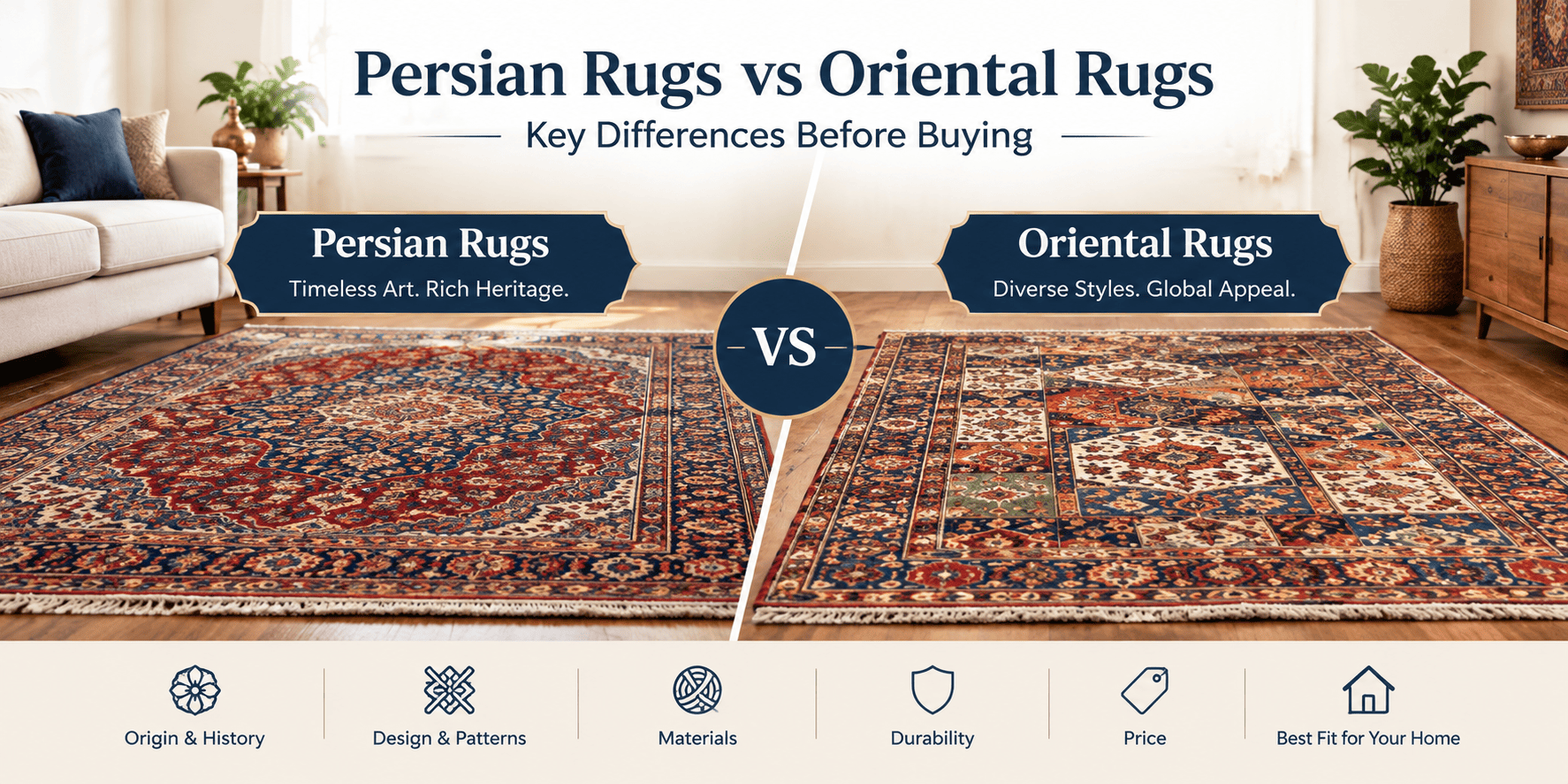
Choosing between Persian rugs and Oriental rugs can be quite confusing, as both the terms Persian and Oriental can sometimes be used interchangeably. However, there are some differences between the two rugs.
Both are traditional handmade designs, colorful, well-crafted, and elegant, but they also differ in their origin, history, construction, variety, and price. Persian rugs are different as they come from Persia, while Oriental rugs have a broad range of traditionally made styles that come from Asia.
This guide discusses how Oriental rugs are different from Persian rugs in quality, price, and style and helps you choose the ideal rug as per your home needs.
Persian rugs are from Persia and famous for their intricate patterns and traditional craftsmanship. In comparison, Oriental rugs have many categories of rugs that come from different Asian countries, like Turkey and Afghanistan.
Let’s discuss the differences in the table below:
Feature | Persian Rugs | Oriental Rugs |
Origin | Persia | Asian Countries |
Designs | Floral, medallion, and detailed patterns | Floral, geometric, tribal and unique patterns |
Material | Wool, silk and blends | Wool, silk, cotton, and other materials |
Construction | Handmade and machine-made options | Handmade and machine-made options |
Price | Differs by material and craftsmanship | Differs by origin, quality and construction |
Best For | Classic and traditional interiors | Traditional, vibrant, and varied interiors |
A Persian rug is a hand-knotted rug originating from Persia. They are well-known for their intricate patterns, regional designs, and traditional construction.
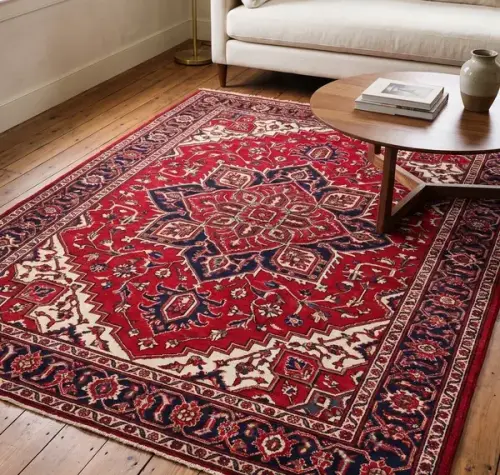
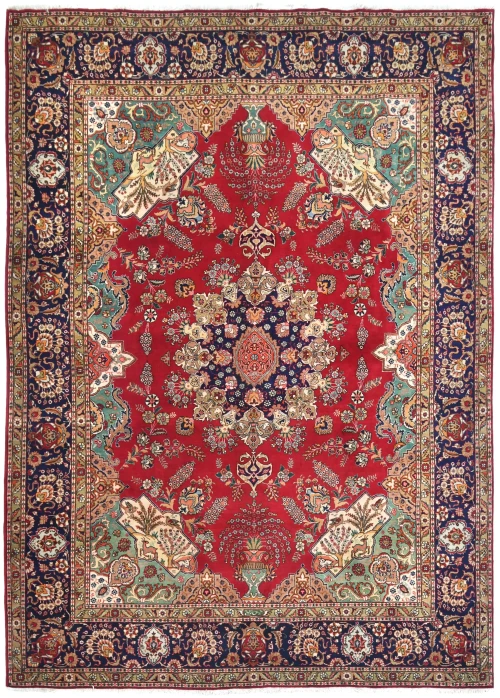
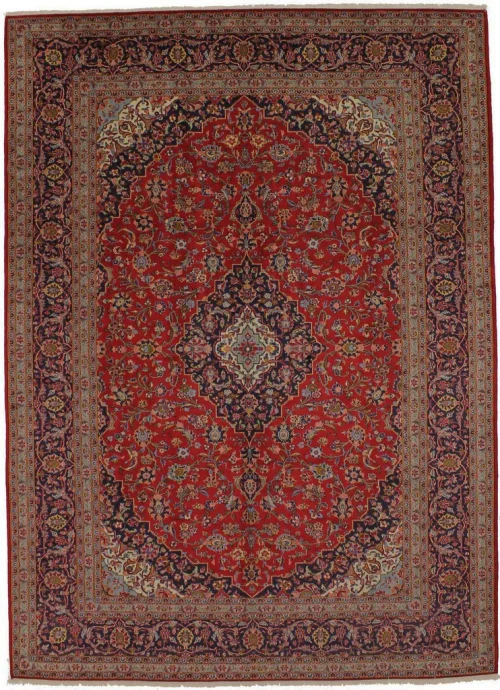
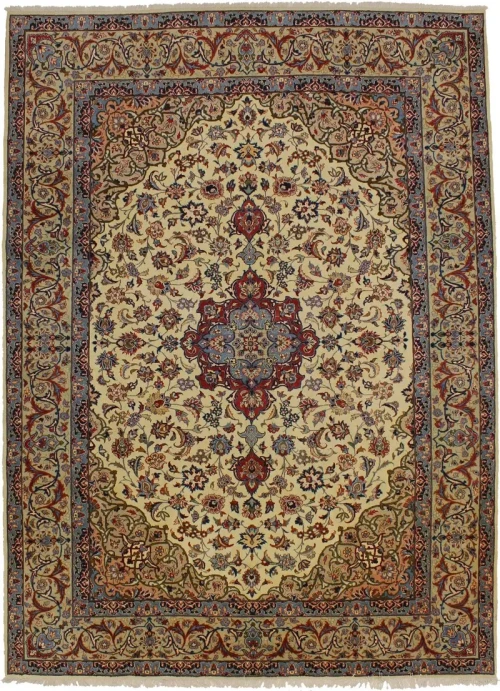
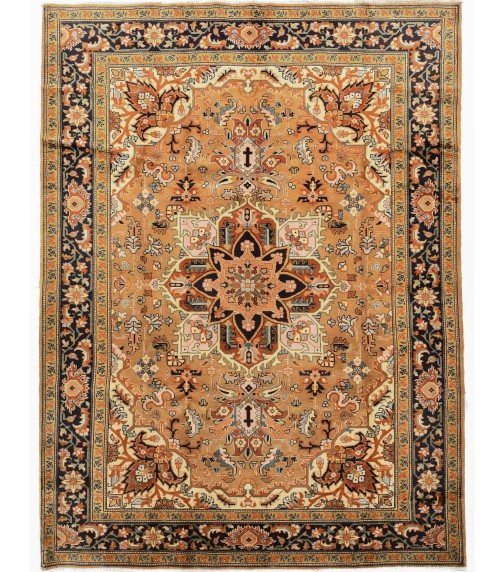
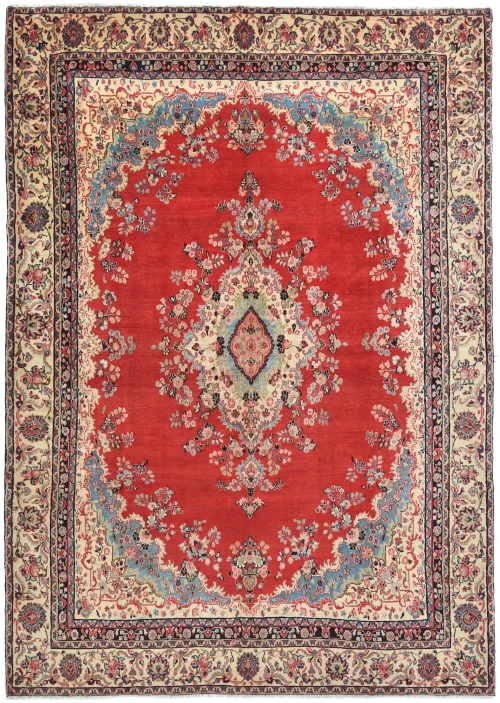
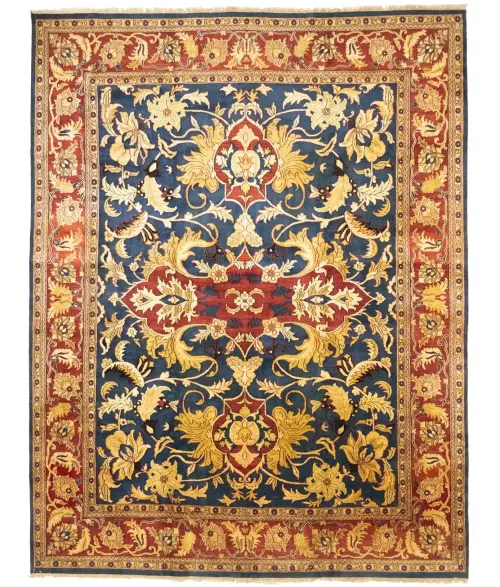
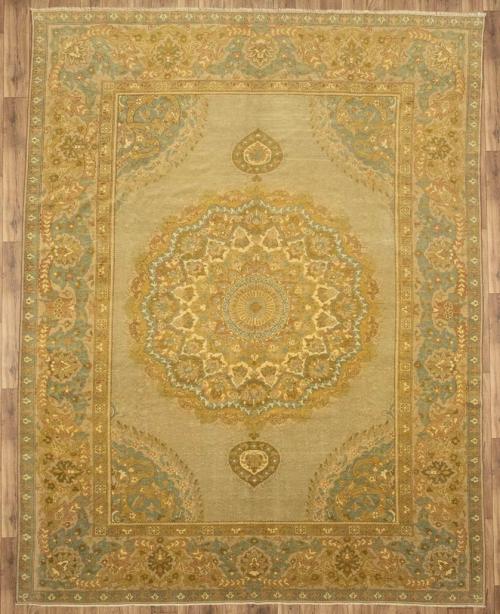
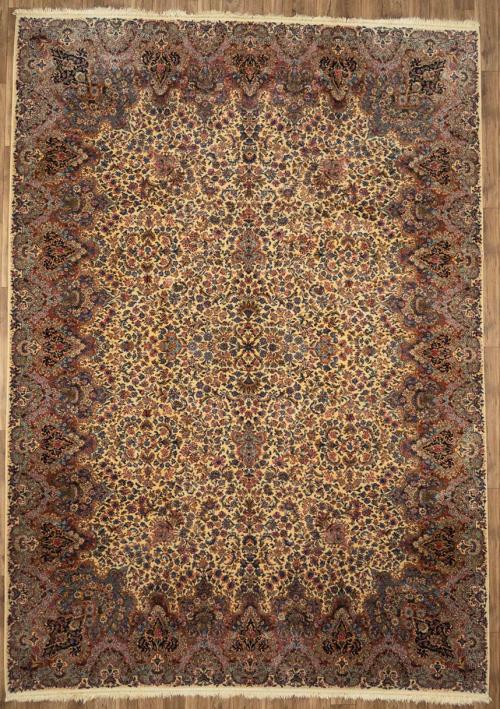
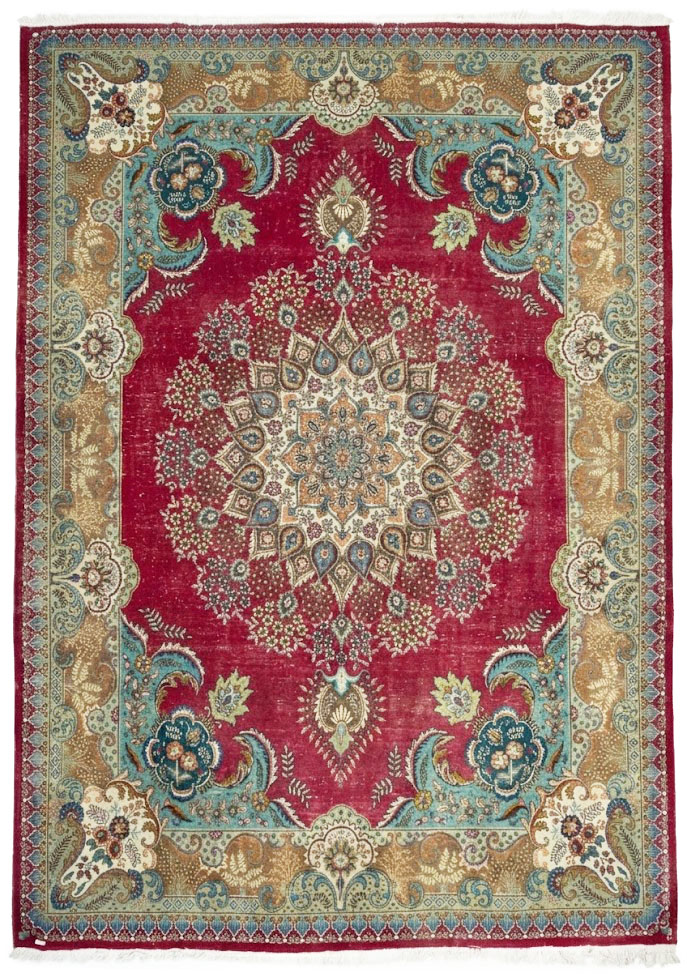
Persian rugs have floral motifs, central medallions, and intricate borders. These rugs include tribal, Tabriz, Kashan, Heriz, and Nain rugs, popular for their colors and designs.
These rugs are perfect to place in the living room, dining area, or bedrooms. They are highly versatile and go well with classic and contemporary interiors.
An Oriental rug is a handmade rug that comes from the weaving areas of Asia, representing a combination of various patterns, colors, and sizes determined by the cultures and traditions.
Depending on the seller, Oriental rugs come from countries such as Turkey, Afghanistan, Pakistan, and India. Oriental rugs also represent a set of variations in colors, patterns, and sizes.
Oriental rugs come with a large variety of patterns, materials, and construction. At the same time, individual characteristics of these rugs are defined by their origins. This type provides buyers with more choices when comparing colors, styles and prices.
The key differences between Persian and Oriental rugs is the origin of each rug type. Persian rugs originate from Persia, while Oriental rugs consist of traditional rugs made in Asian regions. Their designs and construction are based on the particular weaving tradition.
The origin of Persian rugs is Persia, while Oriental rugs are from different Asian countries like Turkey, India, Afghanistan, and Pakistan. Persian rugs are part of the wider Oriental rug category.
Persian rugs have features representing intricate floral patterns, central medallions, and decorative edges. Oriental rugs come with a variety of designs that include geometric shapes, tribal motifs, and consistent patterns.
Traditional Persian rugs are usually handmade rugs made using regional weaving methods. Oriental rugs are also hand-knotted or flatwoven, while some machine-made rugs are available in both.
Design is the main factor buyers should use when comparing Persian and Oriental rugs. However, both rug categories are a mix of floral, geometric, and other traditional designs.
Persian rugs have vibrant floral motifs, curved vines, central medallions, and decorative edges. They work well with traditional furniture or work as accent pieces in simple rooms.
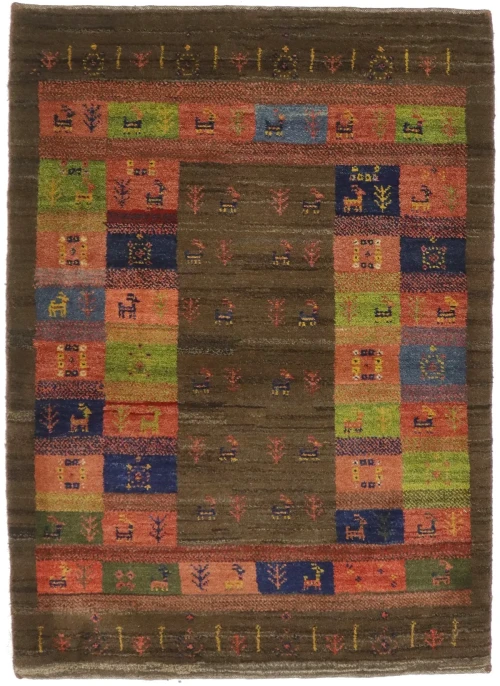
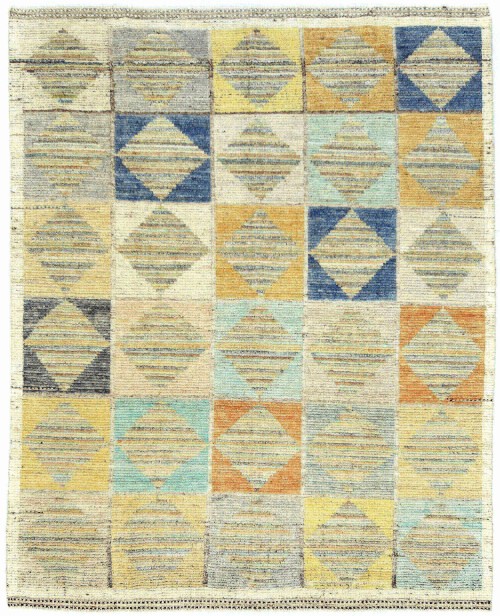
Oriental rugs have a wide variety of floral, geometric, tribal, and consistent patterns that are from different weaving areas. A dramatic geometric rug creates a contrast in a modern room, while a floral design makes a traditional place more subtle.
When comparing the rug’s quality and craftsmanship, always consider its materials, construction, finishing, and condition. Its place of origin provides useful information, but the label alone cannot promise quality.
Materials: Rugs made using wool are more long-lasting, while silk provides a fine texture and shine.
Construction: Check the construction, whether it’s hand-knotted, flatwoven, hand-tufted, or machine-made.
Knotting: Fine knotting develops intricate patterns, but the knot density alone is not a quality indicator.
Finishing: The edges should be well-finished, with regular, consistent weaving and a properly finished back.
Condition: If the rug is old, check for fading, need for repair, worn areas, and loose fibers.
Persian or Oriental rugs made from natural fibers have excellent quality. Always compare the rug's construction and materials rather than only considering the category or name.
It is also important to evaluate the price range when comparing Persian vs. Oriental rugs. No rug type is always costly. The price is based on the rug’s size, materials, construction, design, rarity, condition, age, and the seller.
Handmade rugs, made with fine materials and detailed designs, are higher in price as they require skilled craftsmanship. Materials like silk, cotton, and intricate patterns, age, or origin also affect the price of the rug.
Oriental rugs have a variety of styles and weaving techniques. You can compare rugs of the same size, materials, and construction to know if the rug’s price is worth it.
A rug is more authentic if the seller’s claim coordinates with its origin, materials, and construction. Not a single label can alone justify whether a Persian or Oriental rug is handmade or antique.
To verify the authenticity of a rug, ask the seller for the weaving region of the rug, the materials used, and how it was woven. If the claimed rug is antique or handmade, ask for other details and a description.
A genuine seller should have all the details and explain them well. Be aware of false descriptions or claims that you cannot verify.
You may consider a Persian rug if you want to buy a rug that has a particular Persian origin and unique traditional design. A Persian Rug is best placed in a living room, dining room, or bedroom, complementing the decor.
Persian Rugs can be chosen:
If you like intricate floral designs or classic medallions.
If you want regional categories such as Tabriz, Kashan, or Heriz.
If traditional weaving methods and craftsmanship are valuable to you.
You want an accent piece for a traditional or modern interior.
An Oriental Rug is a great option if you want to check out traditional designs from different weaving areas of Asia. The different categories of Oriental rugs can represent various patterns, materials, and styles for any interior.
You can choose Oriental rugs:
When you want to compare rugs from various countries.
When you like geometric, tribal, or floral patterns.
When you want to look at better choices at different price points and styles.
When you need a rug that fits well in a traditional, modern, or vibrant room.
Persian rugs are considered to be a particular category of Oriental rugs; everything depends on your preferences, the style, and the origin you consider.
Go for a Persian Rug, if you want a rug made in Persia, or you can check out the broader Oriental category if you want to buy a more traditional design.
When buying a rug, you must consider the budget, room size, foot traffic, and maintenance requirements. At Magic Rugs, we have Persian rugs available in various styles, sizes, and materials to buy the best one for your home that complements and fits it well.
No, they are different, and the terms Oriental and Persian rugs are not the same category of Rug. Persian rugs are usually handmade rugs in Persia, while Oriental rugs originate from different Asian countries. Oriental rugs are divided into many categories of traditional rugs, each having different weaving traditions.
It is impossible to say that one category of rugs is better than the other. Persian rugs are a great choice for those who want to buy Persian designs. Oriental rugs have more styles that you can look at. Always compare rugs' materials, construction, durability, and price before making a purchase decision.
Some Persian rugs are costly as they have fine hand-knotting, detailed designs, skilled craftsmanship and are made with premium materials. However, prices differ on the basis of the design, size, and style. Persian rugs are not as costly as other Oriental rugs.
There are many countries that Oriental rugs are associated with. Mostly, Oriental rugs come from Persia, Turkey, Afghanistan, India, Pakistan, and some others. However, the countries listed vary, based on how a retailer describes that category.
Most of the traditional Oriental rugs are handmade, and there are numerous varieties of hand-knotted and flatwoven rugs. Machine-made types are also available. Always read the product description to know the construction of that particular rug.
Rug Guide
Rug Guide
Rug Guide