0 Items In Cart
No products in the cart.
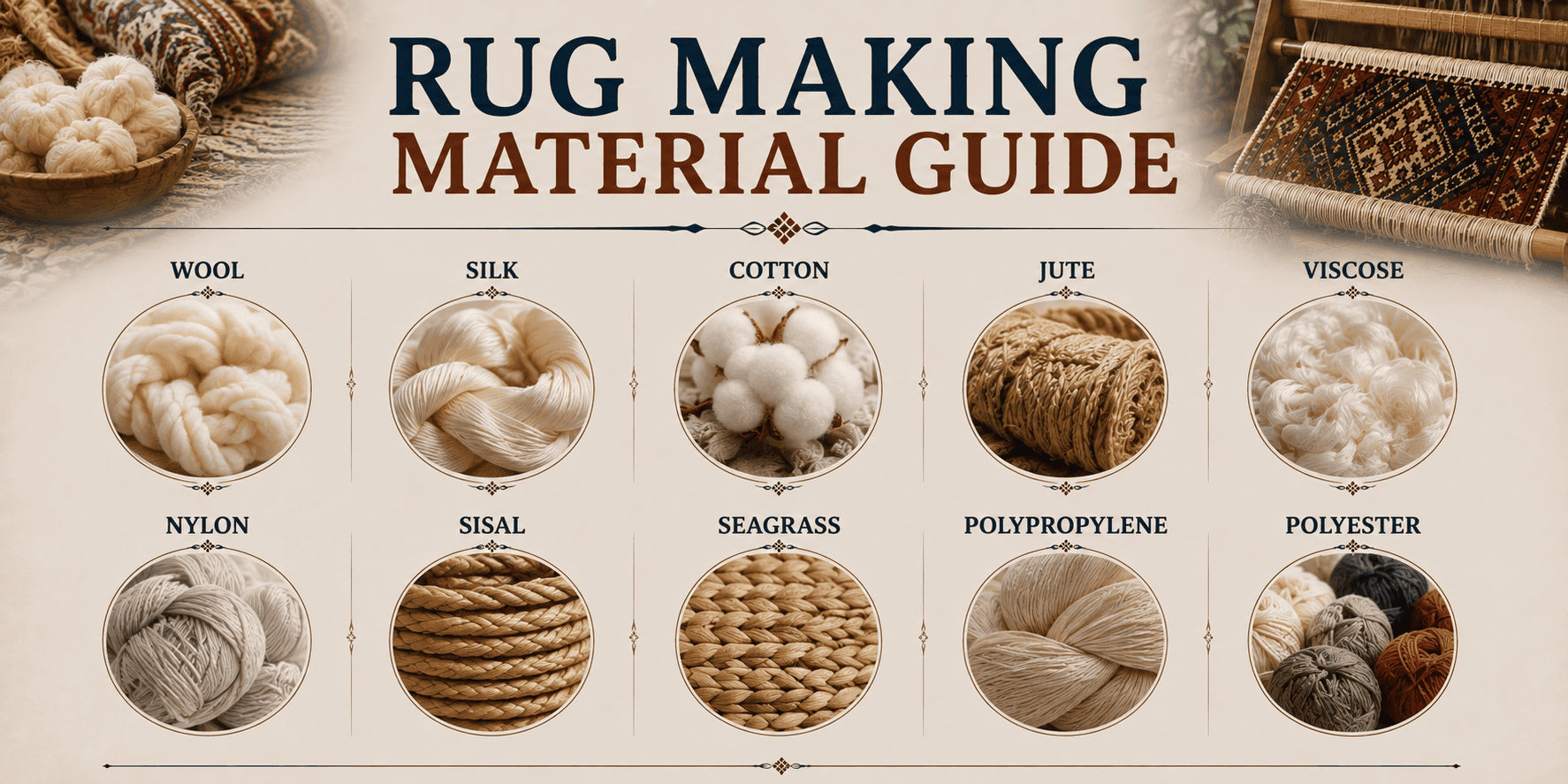
Table of Contents
Rugs are made using natural, synthetic, or semi-synthetic materials. The most common materials used for making rugs are wool, cotton, silk, polyester, nylon, jute, sisal, seagrass, polypropylene, and viscose.
Each one has its own different qualities, such as softness, durability, look, texture, stain resistance, and care needs. Natural fibers provide warmth and an organic look, while synthetic materials are famous for being less costly and low-maintenance.
Semi-synthetic fibers such as viscose provide a smooth and rich look. No matter where you use a rug, whether in a high-traffic living room, a bedroom, dining area, or entryway, learning more about rug materials can help you select an option that works well with your space, lifestyle, and budget.
Key Takeaways:
Natural rug materials make your home warm and welcoming, adding texture and giving it a timeless look.
Natural, synthetic, and semi-synthetic materials each offer a variety of style, comfort, strength, and care.
Choose the rug material depending on the placement and daily use.
Easy-maintenance materials are useful for households with kids, pets, and heavy traffic.
An appropriate rug material should go well with your space, budget, and personal style.
The rug material affects the look, feel, performance, and life of a rug. Materials with quality are easy to clean and help your rug to handle your area’s conditions.
Before selecting a rug, make sure to consider these factors:
Durability: Some materials easily handle heavy foot traffic and daily wear better than other materials.
Comfort: Wool or cotton are soft, while jute or sisal give a firm and textured feel.
Maintenance: Some materials are easy to clean and go well in busy households.
Appearance: Material affects the rug’s sheen, texture, color, and style.
Price: Various fibers are available at different prices, which allows you to select a rug according to your budget.
When looking for the right rug material, you should consider factors like your room, foot traffic, household needs, style, and budget. Before buying, consider how you will use the rug and how much care you want to give your rug.
Consider the Room and Foot Traffic
For busy areas such as entryways, hallways, and family rooms, choose rugs that are made of wool, polypropylene, or nylon. Sensitive fibers such as silk and viscose are perfect for low-traffic areas.
Consider Pets and Children
If you have children or pets at your home, then opt for practical, easy-to-maintain materials. Polypropylene or nylon are the perfect types of materials that can handle daily activities while simplifying regular cleaning.
Consider Your Budget
Polypropylene and polyester are pocket-friendly options for daily use. Wool and silk can be less affordable because of their better fiber quality, look, and excellent craftsmanship.
Consider the Look and Feel
For a soft feel, opt for cotton or wool. Jute, sisal, and seagrass give natural texture. Silk and viscose materials create firmness and elegance in decorative areas.
Consider Maintenance
Choose the material based on the care and cleaning you can provide. Synthetic fibers are great for busy households, while delicate fibers may require special care.
The main rug materials fall into three types: natural, synthetic, and semi-synthetic fibers. Each one has its own benefits, like comfort, durability, appearance, care, and price.
Natural fibers are come from plants or animals and are popular for their natural look and unique texture.
Wool, silk, cotton, jute, sisal, and seagrass are the most common examples of natural rug materials.
Synthetic fibers are human-made materials, made for practical use and are affordable.
Polypropylene, polyester, and nylon are some of the synthetic rug material options for everyday residential use.
Semi-synthetic fibers are obtained from processing natural cellulose into usable textile fibers.
Viscose is one of the common examples of semi-synthetic material, well-known for its soft, smooth, and silky look.
Natural rug materials provide warmth, texture, and depth to a space. It also gives different levels of softness and longevity. The right choice is based on your room’s traffic, moisture, and care needs.
Here is the list of natural materials used to make rugs:
Wool rugs are soft, long-lasting, and ideal options for living rooms, bedrooms, and high-traffic spaces. Wool rugs are warm and comforting but may lose many fibers when new if not maintained properly, and they need regular care.
Cotton rugs are light in weight, soft and usually budget-friendly for simple home decor. They work well in areas such as the bedroom, kitchen, and relaxed spaces where comfort and simple styling matter.
Silk rugs offer a firm, luxurious surface with a natural sheen that adds more detail to the designs. Silk is a sensitive material in nature, it works well in formal spaces and low-traffic areas.
Jute rugs give a warm, rustic texture to informal areas, such as farmhouse, coastal, and bohemian decor. However, jute is not good for damp areas, as it is moisture-sensitive and its fibers get impacted by excess water.
Sisal rugs give a firm, textured surface and are well known for their natural look and boldness. They are ideal for areas like hallways, entryways, and other dry spaces with regular foot traffic.
Seagrass rugs have a firm woven texture that provides an earthy and natural look. They are good for casual styles and beach-inspired decor where you want a natural-fiber look.
Synthetic rug materials are known for their reasonable, functional, and practical daily performance qualities. They are highly recommended in homes with children, pets, and regular spills.
Polypropylene rugs are long-lasting, practical, and spill- and stain-resistant. These rugs are a perfect option for families, pet owners, dining rooms, and other high-traffic areas.
Polyester has a soft touch with vibrant hues and comes at a reasonable price. Polyester rugs are perfect to use in bedrooms, living rooms, and low-traffic areas where softness is preferred.
Nylon rugs are very long-lasting and manage usual foot traffic and everyday wear. They go well in high-traffic areas such as hallways, entryways, family rooms, and other busy spaces.
Viscose is a semi-synthetic cellulose-based material, well known for its sensitive, uniform, and silky look. It is good for making your room look more elegant, but it usually requires more care than wool, nylon, or polypropylene.
Viscose is usually used in decorative rugs where you want to give a rich and elegant look. They work well in bedrooms, formal living rooms, and other low-traffic areas. Do not use them in moist areas where spills, pets, and heavy traffic are common.
No single rug material is best. Each rug material has its own pros and cons in several ways. The quality of material depends on usage and factors such as your room, lifestyle, budget, and cleaning routine.
Let’s discuss the characteristics of rug materials that make them the best in their own different way:
If you are buying for busy areas like entryways or hallways, nylon, wool, and polypropylene are highly suggested and easily manage everyday wear and use.
For households with pets and kids, polypropylene and nylon are the most versatile options, and go for a low pile, as these are easy to clean, vacuum, and remove pet hair.
For a plush and relaxed feel, wool and polyester are perfect choices. However, rug pile height and construction also affect comfort.
For a more natural look, opt for jute, sisal, seagrass, or wool that provides warmth and texture.
This chart helps you make comparisons among rug materials based on feel, use, durability, and easy maintenance.
Material | Feel | Durability | Maintenance | Best for |
Cotton | Soft | Moderate | Easy-moderate | Living areas, Bedrooms |
Wool | Soft | High | Moderate | Casual spaces |
Silk | Smooth | Low-Moderate | High | Formal interiors |
Jute | Textured | Moderate | Moderate | Nature-inspired rooms |
Sisal | Firm | High | Moderate | Entryways, hallways |
Seagrass | Firm | High | Moderate | Casual interiors |
Polyester | Soft | Moderate | Easy-moderate | Bedrooms, Living Rooms |
Nylon | Resilient | Very high | Easy-moderate | High traffic areas |
Polypropylene | Moderately soft | High | Easy | Kids, Pets, busy areas |
Viscose | Silky | Low-Moderate | High | Decorative Areas |
Rug care is important for maintaining its fibers, depending on its construction and the cleaning instructions listed by the manufacturer.
Proper vacuuming, instantly blotting spills, and following proper cleaning methods help you maintain the appearance of your rug.
Regularly vacuum wool, cotton, and synthetic rugs to remove dirt and buildup before it goes deep into the fibers. The delicate materials such as silk and viscose should be vacuumed using gentle settings to prevent fiber damage.
Always blot spills quickly on wool, cotton, and other synthetic rugs to prevent deep permanent stains. Do not rub jute, sisal, and silk rugs.
Protect rugs made of sensitive materials such as silk, jute, sisal, and viscose from wet areas, as they can easily absorb moisture. Make sure to follow care instructions for polypropylene and synthetic rugs.
Wool, cotton, jute, sisal, and synthetic rugs need proper, frequent rotation to evenly distribute foot traffic across the surface. Always check the given care instructions by the manufacturer before deep cleaning silk, viscose, wool, or other natural fiber rugs.
Read how to care for and maintain your rugs.
The appropriate rug material should match your design preference, room, lifestyle, and budget. Whether you choose wool for comfort, polypropylene or nylon for strength, or jute or sisal for their natural textures, opt for a material that suits your daily needs and use.
Ready to find the right rug for your home?
Visit Magic Rugs to explore and discover more about rug materials, and add a timeless, excellent-quality rug to your home that goes well with your preferences and needs. Always go for a rug that fits your lifestyle and home.
Most rugs are made using natural fibers like wool or cotton, or synthetic fibers like polyester, polypropylene, or nylon. Other options include silk, jute, sisal, seagrass, or viscose.
For a soft rug that balances performance with looks, comfort, and durability, wool is always a great material. If you need a functional rug for a busy home, nylon or polypropylene is a great option.
You cannot tell which rug is better, natural or synthetic, as both offer different benefits to different areas. Natural fibers have an organic texture, while synthetic fibers perform well in daily use.
Nylon and wool are long-lasting choices, whereas polypropylene also goes well in many busy households. Construction, pile, fiber quality, and regular care also impact the service life of a rug.
Polypropylene is an easy-to-clean material, it works well in areas that face regular spills, everyday stains, and high traffic. Don't forget to follow the instructions listed by the manufacturer for any specific rug.
Natural fibers such as wool are specifically known for a soft and comfortable touch. Polyester gives a plush surface that differs on the basis of its pile and construction.
Yes, polypropylene is a pocket-friendly, practical rug material that is resistant to everyday spills and stains. It is perfect for homes with kids, pets, and high foot traffic.
Viscose can be a perfect option for a soft, gentle appearance in a low-traffic area. Do not choose it for any high-traffic or high-moisture area, or households that have pets or kids and frequent spills.
Rug Guide
Rug Guide
Rug Guide