Cart (0)
No products in the cart.

Table of Contents
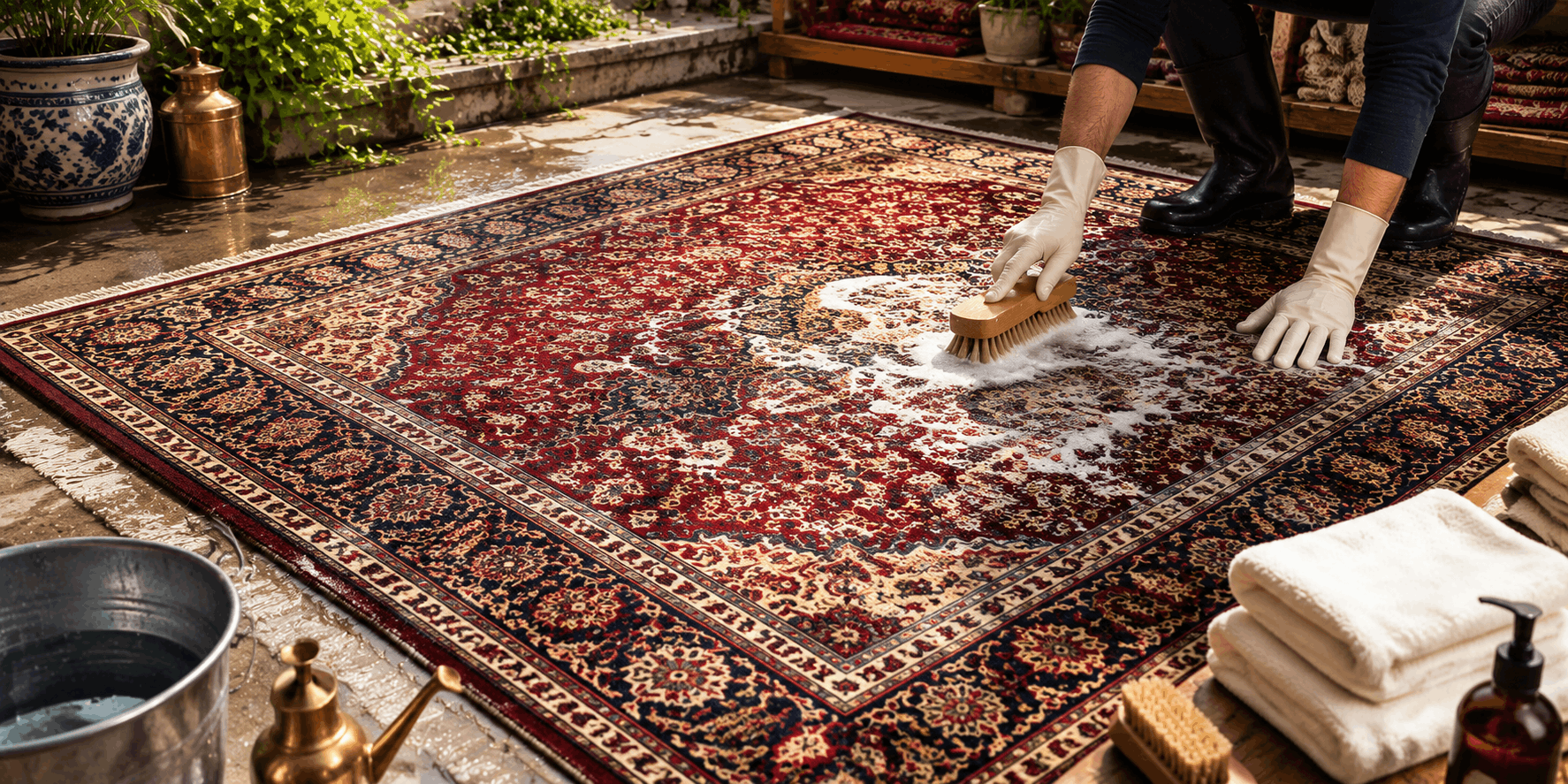
Oriental rugs are very durable if you take proper care. And it’s not difficult to care for them. All you have to do is clean them regularly and take precautions for their storage. But most people mess it up at the cleaning part.
These rugs are made from handspun and hand-dyed wool fibers, so any random cleaning technique doesn’t always give the best result. In this article, we discuss in detail how to clean Oriental rugs and how you can treat different types of stains.
Whether you should clean an Oriental rug at home depends on its material, age, structural condition, color stability, and size.
A rug is safe to clean at home if it's made of wool or cotton; however, silk rugs are not.
Antique and vintage rugs aged over 20 years should not be cleaned at home.
If the rug is torn or the fringe is loose, washing it at home is a risk.
If the rug colors are prone to transfer or bleeding, best not to wet the rug at home.
Large rugs bigger than 8x10 are harder to wash at home and usually don't get the space to dry within 24 to 48 hours.
Here are the basic steps to successfully clean Oriental rugs:
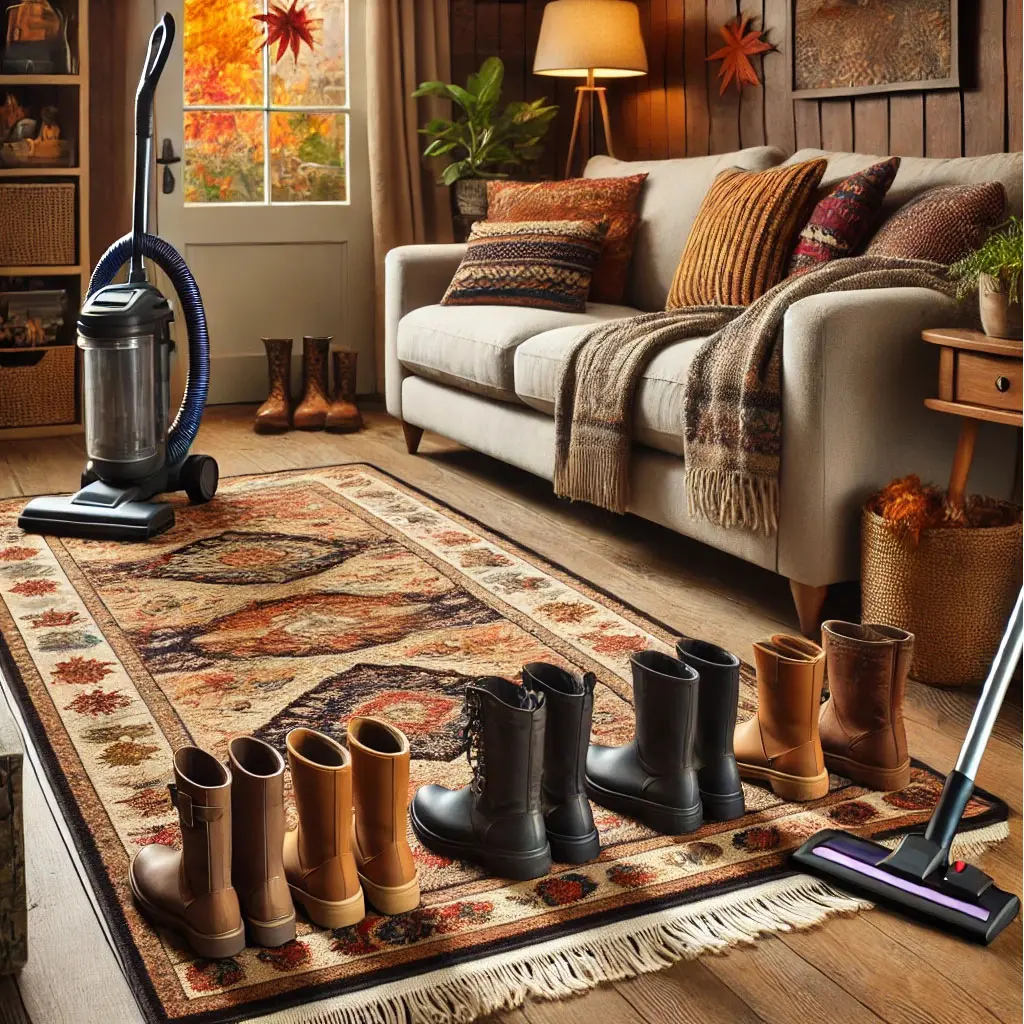
Remove dirt and debris from the Oriental rug by gently vacuuming it without a beater bar.
Pour some gentle rug cleaner over a small patch in a corner to check for color bleeding. If it bleeds, don't use the cleaner.
If it doesn't bleed, rub the shampoo over the rug with a sponge or brush and let it rest for 20 to 30 minutes.
Rinse the rug and wash all the rug shampoo off the material.
Let the rug air-dry completely.
Vacuum the rug after it has dried before using it in your room.
Let’s elaborate on this more.
Over time, loose dirt and particles become embedded in the fibers of your rug. If you have pets, you'll also find fur. And if you have children who know what's down there! So when you vacuum your rug, start with the underside. Use the carpet cleaning setting on your vacuum and gently go over the complete underside.
Stay away from the fringe. Next, turn the rug right side up and vacuum the top side several times. Again, slow and gentle movements, avoiding the fringe, are the way to go.
Another method is to hang your rug and beat it. This can be helpful if you find sand-like particles in the fibers. Beating the rug is also a great way to loosen any particles prior to vacuuming.
Don't use a beater bar on premium handmade rugs. Clean thoroughly, going over the entire rug. Pay extra attention to rugs used in high-traffic areas like entryways and living rooms.
Now that you've thoroughly vacuumed your rug, you're ready to clean it. But wait! Don't use just any chemical cleaning solution. Oriental rugs are made with special handmade color dyes.
Depending on the material, your rug fibers may be more delicate and less able to stand up to harsh chemicals. Be sure to test the rug cleaner in a small spot first to make sure it doesn't damage the rug.
At Magic Rugs, we recommend mild cleansers, such as Woolite or other rug shampoo made especially for fine rugs. Other items you'll need are a small bucket, a large scrub brush, a small scrub brush, an absorbent towel, and lukewarm water.
Start by spot-cleaning any stains or high-impact areas you noticed when you were vacuuming. Use the small scrub brush by dipping it into your cleaning solution and scrubbing gently and thoroughly. Use the absorbent towel to blot any areas that become too soapy or too wet.
For a deeper clean, use the larger scrub brush to gently scrub from one border to the next using the mild rug cleaner. We recommend scrubbing in small sections, from border to border, so you can keep track of your progress. Use a dry towel to blot up excess moisture and suds.
Follow the instructions on the shampoo or consult with a professional to determine the best cleaning method for your rug. For authentic Oriental rugs, it's best to leave deep cleaning to professional rug cleaners.
Lay your rug in a clean, dry space for drying. If possible, position a couple of fans near the rug to maintain a constant flow of air. If the elements are in your favor, lay the rug outside for a maximum of 1-2 days.
You'll want to vacuum your rug one more time. This catches any lasting particles and serves to elevate any matted fibers. Finally, comb your rug; that's right! This will return your rug to its original pattern and design. You should also notice more vivid colors and highlights.
Allow the rug to air dry completely before placing any furniture on top of it. This is especially important for clear-colored rugs. If you are cleaning a white rug and you put furniture over it without it being fully dry, the marks afterwards will be extremely difficult to take off.
Regular maintenance is key to keeping your rugs looking clean and fresh. In between deep cleanings, try to vacuum your rugs at least once a week and spot-treat any spills or stains as soon as they occur.
This will help prevent dirt and grime from building up and extend the lifespan of your rugs.
Following a weekly rug cleaning routine keeps your rug fresh and increases its lifespan. However, it is also important not to overdo it. Overcleaning wears the fibers and stresses the foundation of the rug. So, follow this schedule to keep your rug in the best shape.
Frequency | Task |
Immediately | Blot any spills with a clean white cloth or paper towels until almost dry |
Weekly | Vacuum the rug without a beater bar |
Weekly | Lift the rug and clean under the sides where debris gathers |
Every 6 Months | Rotate the rug 180 degrees for even wear and sun exposure |
Every 1-2 Years | Professional Rug Cleaning |
Cleaning a large Oriental rug of 8x10 and above can be challenging at home. The cleaning method remains the same, but you'll need a large space to clean and dry the rug. Most small rugs can be easily cleaned in an average-sized bathroom, but for large rugs, you need a garage or a large open space.
Plus, the rug needs to dry within 24 to 48 hours; otherwise, it can attract mildew and grow mold. Most homes don't have the tools and space to dry a large rug in such a short time.
So, for deep cleaning large rugs, it's always a better choice to schedule a professional rug cleaning from trusted brands like Magic Rugs.
In a household, it is pretty easy to get coffee or ink stains on your precious Oriental rug. There are several common types of stains that we are going to discuss how to get rid of.
Type of Stain | Rug Cleaning Technique | What to Avoid | When to Call Professional Rug Cleaners |
Coffee | Club soda for fresh stains and baking soda paste with cold water for dried stains | Rubbing, scrubbing, hot water | If the stain has spread or affected the rug's dye |
Red Wine | Club soda for fresh stains and baking soda paste with cold water for dried stains | Rubbing or grinding the stain | Stain doesn't go away or dye bleeding |
Candle Wax | Freeze the wax with an ice pack and then gently remove the hardened wax | Spreading wax further into the fibers | Wax has penetrated deeply into the rug |
Motor Oil | Apply shaving cream on the stain, leave for 20-30 mins, and wipe with a dry cloth | Creams with moisturizers or oils | Mostly opt for professional cleaning for oil stains |
Ink | Spray alcohol-free and fragrance-free hairspray and blot with a clean white cloth | Alcohol or fragrance-containing spray | Dye damage or bleeding |
Pet Stains | Rinse with water and then use a gentle rug cleaner or odor neutralizer | Heat, steam, or heated cleaning tools | Odor persists after washing |
Blood | Apply a mixture of 1 tablespoon hand or dishwashing liquid and 2 cups water directly on the spot, then blot | Hot water or hydrogen peroxide | The stain remains after washing |
Kool-Aid | Apply a highly diluted mixture of white vinegar, dish soap, and water and leave it for a few minutes, then blot | Concentrated vinegar | Dye from Kool-Aid has bonded with the rug fibers |
Chocolate | Scrape the solid chocolate, then apply a diluted mixture of detergent and water | Rubbing from center to outward | Rug feels oily after removing chocolate |
Coffee and wine are two of the most common stains that occur on rugs and carpets. They are also usually considered the worst of the worst, as both of these beverages are highly acidic and have thick, dark colors. They are very difficult to remove if they are not addressed immediately.
When the stain is fresh, you can pour either club soda or water over the affected area and blot the stain up with a cloth. Do not rub the stain or grind it into the rug because that will spread it. Instead, only blot it until it is not visible. Use this method only when the stain is fresh and not dried up.
If the stain is still there once the carpet is dry, or you notice a dried coffee or wine stain later, use baking soda paste with cold water or borax to remove it. This method should not be used when the stain/rug is wet. Also, make sure you vacuum out the paste thoroughly.
Candle wax can work its way into a rug’s fibers and create a slippery, oily mess. If the wax is still hot when spilled, use an ice pack or ice cube to freeze it. Once frozen, the wax will clump together, and it should be easy to remove most of it from the rug.
Motor oil stains are rare in a household. However, if you manage to get one on your rug, blot (do not rub) the stain as much as possible. Then rub shaving cream on the stain with a brush. Any kind of brush would work, such as a toothbrush, paintbrush, hair color brush, etc.
Make sure that you work the shaving cream into the stain by thoroughly rubbing it in. For most stains, you want to avoid rubbing to prevent further contamination, but the emulsifiers in shaving cream break down the oil to extract easily. Thus, you may want to work as much shaving cream as possible into the stain.
Leave it on for 20 to 30 minutes and then wipe it off with a microfiber cloth. Let the rug air dry completely. Make sure that the shaving cream you use does not have any added moisturizers because they can add more oil to the rug.
Important: It is not recommended to use shaving cream on handmade rugs. So, this solution is to be used in emergencies and at your own risk.
Ink stains are very hard to remove from rugs. They can leave a permanent mark if they are not cleaned thoroughly. To remove ballpoint ink stains from your rug, spray some hairspray onto the ink stain, which will soften the ink. Make sure the spray doesn’t have any alcohol or artificial fragrances.
Then use a white cloth towel for blotting the ink. Do not scrub the stain, and repeat this process until the ink stain disappears. Once the area becomes dry, hand-brush and then vacuum it.
Important: It is not recommended to use hairspray on handmade rugs. So, this solution is to be used in emergencies and at your own risk.
Pets have an uncanny ability to leave stains on your clean rugs. If you are lucky enough to catch it immediately, soak up as much liquid as possible with towels or paper. Then wash the affected area with room temperature water and air dry it.
For the odor, you can use a store-bought gentle rug cleaner or odor neutralizer. But even when this is done, some stains may not go away completely. That's when you need professional rug cleaning services.
Tip: Avoid use of any tools which can heat the carpet, as that will set the stain.
To remove the blood stains, dab the stain with a solution of one tablespoon of hand or dishwashing liquid and two cups of cold water. Absorb the liquid with a dry cloth and repeat this till the stain is gone.
If you are still not seeing the desired results, do not use harsh chemicals like hydrogen peroxide on handmade rugs. This chemical can break down natural colors and cause them to fade away.
Kool-Aid is a staple in many American homes, and it is full of colored dye. So, if you get Kool-Aid on your rug, it's going to stain. Pat it with a paper towel or dry towel. Avoid rubbing the stain, as this will make it worse.
Mix ¼ cup of white vinegar, a tablespoon of dish soap, and two cups of water in a spray bottle. Spray the stained area with this mixture and allow it to soak for 5-10 minutes. Then blot with a dry towel or paper towel.
Repeat this several times till the stain is gone. Make sure your vinegar is extremely diluted before spraying.
To remove chocolate stains from your rug, first scrape off any solid remaining chocolate residue. The more chocolate you can remove this way, the better, as any chocolate left on your carpet can make the stain worse.
Then, mix a half teaspoon of laundry detergent with a cup of water. Spray or pour this mixture directly onto the stain. Then blot the stain using a clean cloth or paper towel.
Start working from the outer edge of the stain towards the middle of it. Doing it in this way ensures you are not spreading the chocolate stain from the center outwards. Do this several times if required.
Cleaning Indoor Oriental Rugs
The usual problems an indoor rug can face are dust, dirt from foot traffic, spills of food or drink, and dog feces. To maintain your home's hygiene, a thorough cleanse should be done on a regular basis.
For indoor rugs, it is better to vacuum the rug before you begin cleaning it. If there are any specific stains on the rug, identify the type of stain and try to use the right cleaning method for that stain. (Refer to the section above on different types of stains.) If that doesn't work, get the rug cleaned by professionals like Magic Rugs, NC.
Cleaning Outdoor Oriental Rugs
You might not realize that dirt and moisture can accumulate on your outdoor rug over time, even if it looks perfectly fine. One of the most effective ways to clean outdoor rugs is with a high-quality vacuum cleaner.
Outdoor rugs need more than just regular cleaning. They experience sun fading over the years because of constant sun exposure. They might need light retouching once a decade or more.
You should use a vacuum cleaner to clean your Oriental rug at least once a week, check for stains every other day, and get professional rug cleaning every 6 to 12 months.
When it comes to maintaining your rugs, it's important to strike a balance between cleaning them too frequently and not often enough. Over-cleaning your rugs can cause them to wear out faster, while under-cleaning them can lead to a build-up of dirt and grime that is difficult to remove.
As a general rule of thumb, it's a good idea to vacuum your rugs at least once a week to remove any surface dirt and debris. For high-traffic areas, you may want to vacuum more frequently. Spot-treat any spills or stains as soon as they occur to prevent them from setting in.
For a deeper clean, you can use a rug shampoo or hire a professional cleaning service every six to twelve months, depending on the size and condition of your rugs. With proper care and cleaning, authentic Oriental rugs can withstand regular maintenance and look great for many decades to come.
Read oriental rug care and maintenance.
Spring is the best time to deep clean Oriental rugs because of long days and less humidity. Check for moths in summer and before extended storage. Avoid cleaning rugs in winter because they will take too long to dry and increase the chances of developing mold or mildew.
Spring: Deep Clean Time
After a winter of closed windows, heaters, and wet shoes, your rug needs a deep clean. So, spring is the best time to clean your Oriental rug.
The days are longer, and humidity is very low, which helps a rug dry faster. This is the perfect time to book your professional rug cleaning service from Magic Rugs.
Summer: Check For Moths
Summer is the season of moths. Their larvae eat wool fiber, which can cause bald patches in your rug. So, throughout the summer, keep an eye out for such damage.
Check for bald patches, sandy debris under the rug, loose fiber that comes away with a touch, and silky webbing on the back of the rug.
Autumn: Rotate The Rug
Before winter comes, your rug should be ready to bear the weather. The best idea is to rotate the rug by 180° in autumn for even wear. Also, replace worn-out rug pads with new ones.
In case of water damage,
Immediately move the rug away from the water.
Lift the rug up so the floor doesn’t keep the moisture trapped.
Blot as much water as possible with a clean white cloth or paper towels.
Air dry the rug in a large room.
Run a dehumidifier in that room if possible.
Make sure the rug dries within 24 to 48 hours.
Do not fold or roll a wet/moist rug.
If the rug remains moist for more than 48 hours, mold and mildew can grow very quickly (almost in a day). Once mold grows into the rug, you cannot treat it at home.
Commercial mold treatments are too harsh for natural dyes, and mild ones don’t reach the bottom of the pile. It requires a professional rug cleaning to get the mold out.
No, all commercial rug cleaners are not safe for Oriental rugs. Most commercial and supermarket rug cleaners are alkaline in nature. And alkaline products destabilize natural dyes and strip wool’s natural oils.
Instead, use products that are:
pH-neutral rug shampoo
Woolite or similar delicate fabric detergent
Enzymatic cleaners for wool
Products | Why Avoid It |
Supermarket shampoos | They are alkaline in nature and strip off wool’s natural oils |
Bleach or oxy whitener | Lightens natural dyes and leaves permanent pale patches |
Ammonia-based cleaners | Ammonia smell on pet stain encourages pets to mark the same spot again |
Laundry detergent | Contains pH buffers that can cause color bleeding |
Steam cleaners | Warm air can shrink wool fibers, and hot steam can trap moisture in the foundation |
Here are some of the common mistakes you can avoid while cleaning Oriental rugs to maintain your rug well:
Steam cleaning rugs can cause the wool fibers to shrink and moisture build-up.
Machine washing handmade Oriental rugs can cause distortion in design, damage to the fringe, or color bleeding.
Over-wetting the rug saturates the rug with water and aids mold growth in the foundation.
Using an alkaline cleaning solution can cause color fading of natural dyes.
Rubbing the stains makes them penetrate deeper into the fibers.
Using a beater bar or rotating brush to vacuum the rug can pull the knots.
Not blotting any spills immediately leads to deep penetration into the rug's foundation.
In case of color bleeding while cleaning the rug, stop cleaning immediately. Do not let the rug dry because the dye that dries in place becomes permanent.
Keep the rug damp and contact professional rug cleaners immediately. They can wash out the migrated dye and try to restore the rest of the dye.
In case of color bleeding, here's what not to do:
Apply more water to remove the dye
Add more cleaner to stop dye migration
Rub the colors together with a cloth
Use colored fabrics to blot up the rug
Dry the rug completely
Professional Oriental rug cleaning is more of a necessity than a luxury. These rugs are handmade pieces that can last for decades, but only with proper care. Make sure you find a trusted rug cleaning service like Magic Rugs to hand over your precious rug.
Magic Rugs has 15+ years of experience in rug cleaning and rug repair & restoration at affordable rates. To know how much rug cleaning costs, get in touch with us with the details of your rug.
Yes, you can clean an Oriental rug at home by gently vacuuming it or beating out the dust. However, avoid deep cleaning handmade Oriental rugs at home, as it can get tricky.
No, you should never use steam to clean an Oriental rug. The heat and moisture from the steam can shrink natural fibers like wool and weaken the foundation. It can also cause color bleeding from the fibers.
The best cleaner for an Oriental rug is a pH-neutral solution mixed with cold water. You should avoid using solutions that are harsh or acidic in nature, like detergents, bleach, or ammonia-based cleaners.
It is not recommended to use baking soda for regular cleaning of Oriental rugs. It is okay to use it occasionally if extremely necessary, but try to opt for rug-friendly cleaners instead.
Vinegar in its diluted form is safe to use on an Oriental rug for spot treatment. However, you should never use plain concentrated vinegar directly, as it is highly acidic in nature. Always dilute vinegar by mixing it with cold water before using it on the rug.
No, you should never hose down or pressure wash an Oriental rug. It can cause prolonged moisture retention, which can even lead to mold growth. The pressure from the hose can also weaken the rug's foundation.
An Oriental rug can dry in 6 to 48 hours, depending on the size of the rug and the water it absorbed while cleaning. Large rugs take longer to dry than small rugs, and soaking wet rugs need more time to dry as compared to spot cleaning.
Your rug can develop an odor after cleaning because of trapped moisture that took too long to dry and develop mold or mildew. Even soap residue in the rug fibers can trap smells.
To remove pet urine from Oriental rugs, blot up the urine as much as possible with paper towels or a plain white cloth. Then use a mild and gentle cleaner to spot treat the area. Then blot again till the rug seems dry.
To prevent mold in Oriental rugs, make sure your room is not too humid. Control indoor humidity between 45% and 50%. Blot any spills immediately before they penetrate deep into the fibers. Avoid regular direct contact with water. While cleaning, make sure the treated part dries as soon as possible.
Share: