0 Items In Cart
No products in the cart.
Your privacy
Choose which cookies we can use. Your choice is saved for 12 months, and you can change it at any time from Cookie Settings in the footer. Read our Cookie Policy.
Needed for the site to work, such as your cart, checkout and account sign in. These cannot be switched off.
Remember your choices, such as your wishlist and recently viewed rugs, so the site feels personal.
Help us understand how visitors use the site so we can improve it. The data is collected in aggregate.
Used by our advertising partners to show you relevant Magic Rugs ads on other sites.
Table of Contents
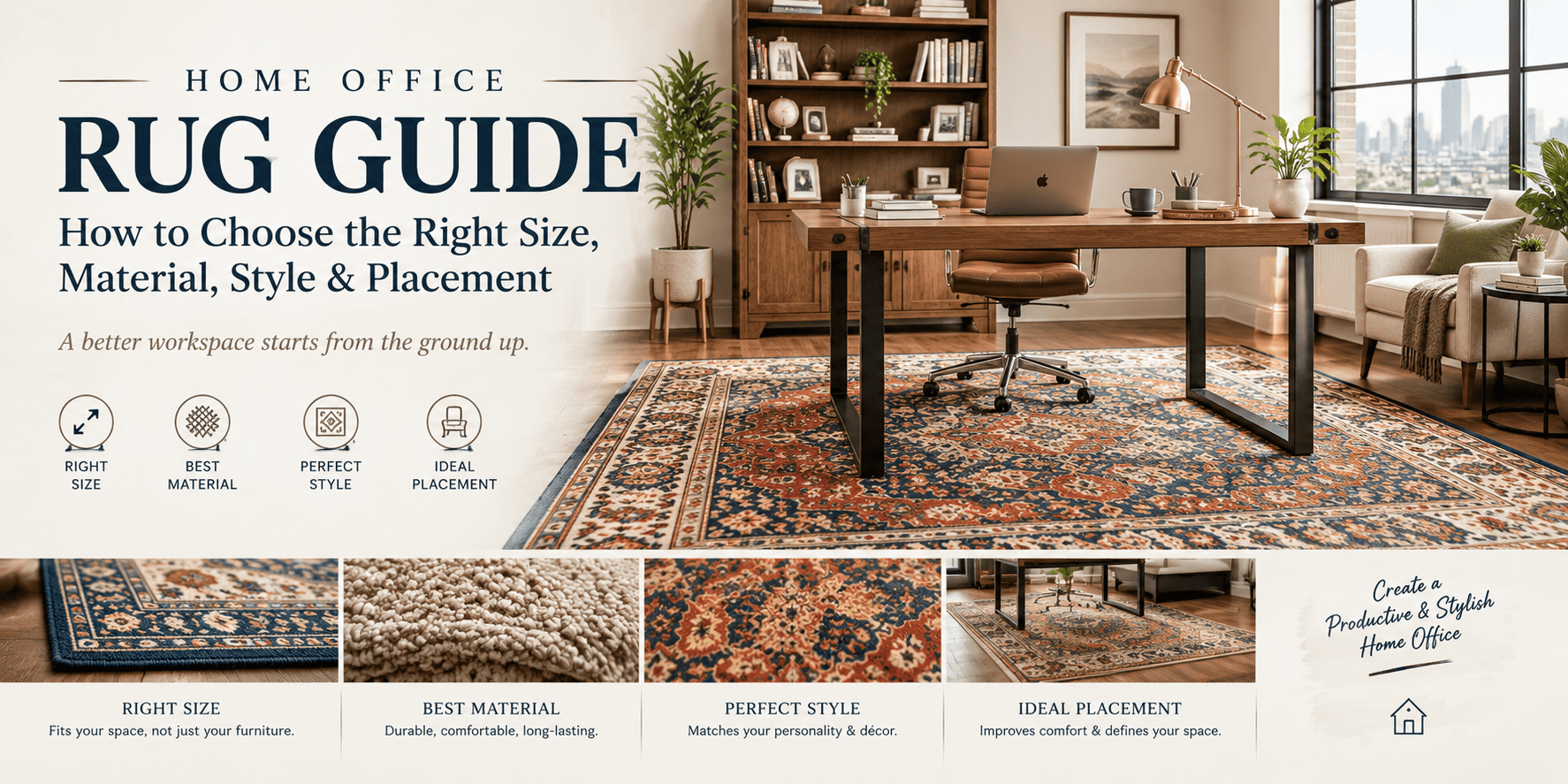
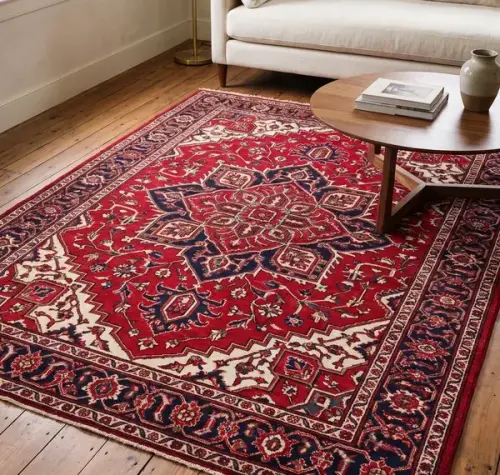
The ideal home office rug should go well with your desk, chair, and flooring and complement the overall look of the room. First, consider the size and placement of the rug, and then focus on materials, pile, color, pattern, and maintenance.
A practical, well-chosen rug can make your home office feel more comfortable while still maintaining the value.
Key Takeaways:
Consider the desk size, chair, and floor space when buying a home office rug.
Low or medium pile rugs are generally more practical to be placed around an office chair.
Select a rug material on the basis of foot traffic and care needs.
Your rug should go well with your desk, floor, and decor.
Use an area rug that helps you balance your work area in an open-plan space.
A rug can soften and make a home office feel cozier and more relaxed while connecting the desk, chair, flooring, and other furniture into a well-defined work area of the room.
This is especially useful if your office space is shared with a bedroom or is separated within the living room. A simple area rug visually separates and defines the office area.
A rug can also make the space feel more vibrant by adding character to your simple office by adding color and pattern to it without redesigning it. Also, it can help you provide a cushioned touch to hard flooring such as wood, tile, or laminate.
When choosing a home office rug, it’s important to focus on the size, pile, materials, placement, color, pattern, and everyday use of the rug. After all, the appearance of the rug doesn’t make sense if your chair doesn’t have enough space to move, or the material is difficult to clean.
Key factors to consider when choosing a home office rug:
Size: Make sure the rug covers the desk and chair space properly.
Material: Select a material based on traffic and care needs.
Color: Make sure the color matches the room rather than coordinating everything.
Pattern: Consider how much detailing the office already has.
Everyday use: Take the chair movement, spills, comfort, and maintenance into consideration.
The easiest way to choose a rug for your home office is to consider five factors: size, material, color, pattern, and everyday use. Focusing on all these factors when purchasing a rug for your home office can help you avoid choosing a beautiful but impractical rug.
The rug should provide sufficient space for your desk and chair without making the room feel unorganized. Measure the desk and area for easy movement of the chairs before deciding the rug size.
A 4x6’ or 5x7’ rug can work well for a small office, while 6x9’ or 8x10’ rugs are for large offices.
Choose the rug material on the basis of foot traffic, comfort, and care. Wool rugs are long-lasting and soft, while jute or sisal rugs can add a natural texture to the office. Consider your daily routine as well.
If you regularly eat or drink at your office desk, then the rug for your office must have a particular cleaning routine that may be more important than the one selected because of its appearance.
The rug doesn’t have to match perfectly with the interior of the office, but its color should go well with the flooring, walls, desk, chair, and other decor in the room.
Neutral colors such as beige, ivory, and taupe give an elegant look, while richer, darker, or warmer tones can give an extra contrast and character.
A patterned rug can bring character to a simple office, while a soft pattern anchors bold furniture or artwork. Persian, Oriental, vintage, tribal, geometric, and modern rugs can all work well in a home office.
The most important thing is to consider the size of the office and how detailed the rug already is.
The rug should work according to the needs of the office. Comfort, maintenance, and everyday use all should be checked before choosing a rug.
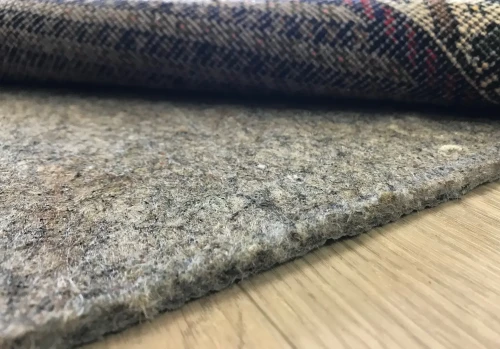
Pile height can also be a consideration. A low or medium pile rug is better to place around an office chair than a high pile or shaggy rug. A rug pad can also help prevent slippage on smooth flooring.
The ideal rug size for a home office depends on the desk, chair, room size, and whether it is to cover the workspace or the most area of the room.
This chart represents the best sizes for a home office:
Office Type | Rug Size | Best For |
Small Corner | 4×6’ or 5×7’ | Small Office area |
Medium-Size office | 6×9’ or 8×10’ | Desk and chair area |
Large office | 8×10’ or 9×12’ | Desk and additional furniture |
Low-pile or flat-weave rugs are generally best for placing around rolling office chairs because they provide a uniform surface. However, a medium-pile rug can also be used depending on the chair and rug construction.
Very thick or shaggy rugs can also make it difficult to move a rolling chair. If the chair is used the entire workday, then you may prefer functionality over a soft, cushioned rug.
The best material for a home office rug depends on the use and how much you can maintain it. Wool is famous for its long-lasting and comfortable quality, while jute or sisal rugs can offer natural texture to the room.
Material | Suitable for | Consideration |
Wool | Comfortable, long-term use | Follow specific care instructions |
Jute | Natural, textured offices | Texture may affect the movement of the chair |
Sisal | Natural, long-lasting look | Can feel more textured |
Cotton | Casual spaces | Durability depends on construction |
Synthetic | Busy or easy-to-maintain spaces | Quality varies |
In a home office, the rug can be placed under the desk and chair, but the best placement depends on the room design. The rug should connect the work area while leaving sufficient space for easy movement.
Let’s find out the best rug placement in a home office:
Under the Desk and Chair
This is a good option for a dedicated home office. Ensure that the rug is large enough so that the chair can move around easily without constantly leaving the rug.
Under the Whole Desk Area
A larger rug placed under the whole desk can conceal the desk area, chair, and storage or furniture. This arrangement is great for big office areas.
In a Small Office Nook
A small area rug connects a desk in a bedroom, hallway nook, or corner without making the space feel cluttered.
In an Open Room
A rug can visually divide your work area from the dining or living space. You can achieve a proper, well-organized office area without creating a physical division.
Read: Rug Placement Guide
The easiest way to choose the color of a home office rug is to match it with the existing colors of the room. Beige, cream, grey, taupe, and muted browns are all versatile color options that merge well in many office spaces.
Darker tones can add variation to light furniture, while warmer colors can complement wooden desks and flooring. If there is already vibrant furniture or artwork in the office, a simple rug may give appropriate balance to the room.
You don’t need to match the rug color with every decor item in the office. You can repeat one or two colors that are present in the room is more than enough.
The rug can either merge with the office interior or serve as a centerpiece. The original home Office Rug inspiration ideas work naturally with the different decorating styles.
Let’s discuss the ideas for different office styles:
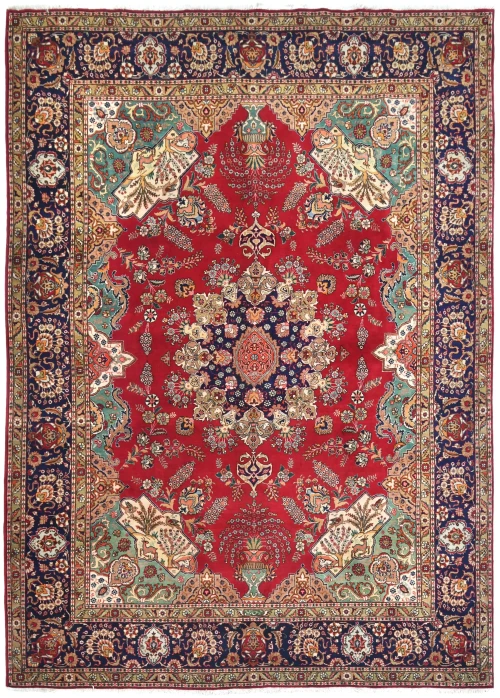
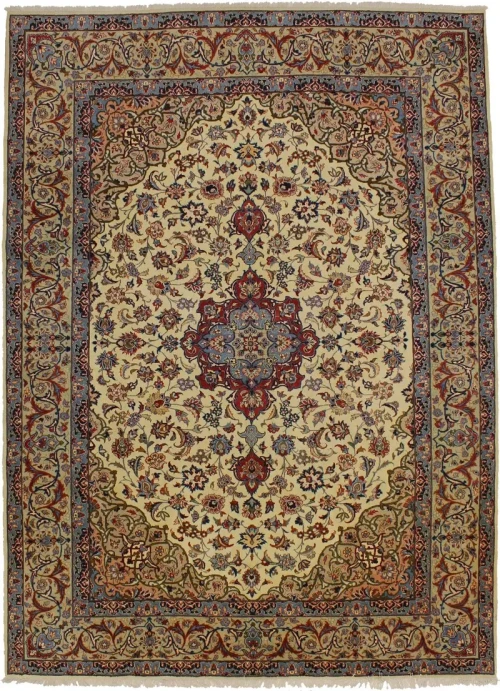
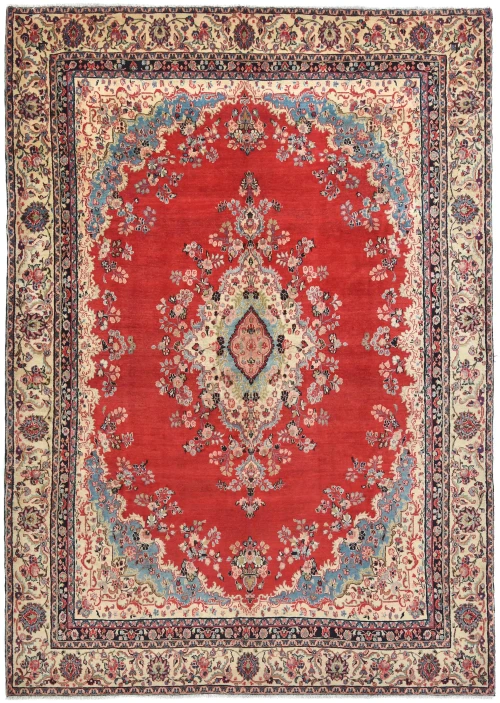
Hamedan, Nain, and Tabriz rugs are all good options for a traditional home office. Their intricate patterns can add more detail to the space without introducing extra accessories.
An Oushak rug can give warmth to a minimalistic office space. Muted rug colors and simple patterns work well with light wood desks and clean furniture.
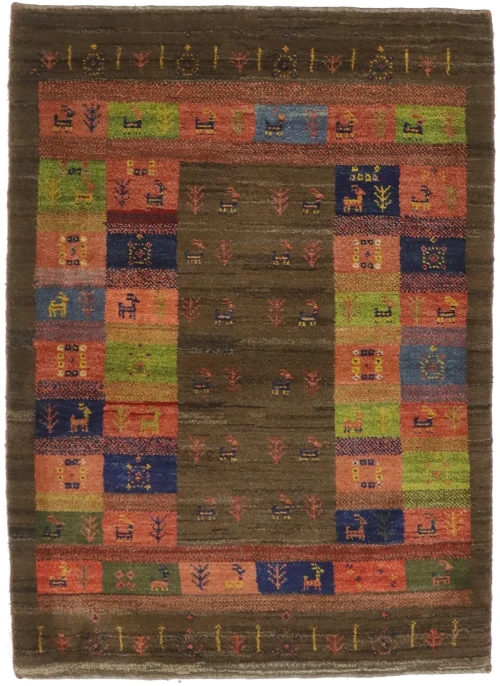
Tribal rugs can add interest to a creative home office. The geometric patterns and natural tones go well with plants, wood furniture, and open shelves in a creative workspace.
Abstract, geometric, or contemporary rugs can fit well with a modern office and minimalistic desks. Go for a subtle pattern if there are already strong, interesting visual elements in the office space.
A Moroccan-influenced or monochromatic geometric rug can add contrast to a black and white home office without using additional colors.
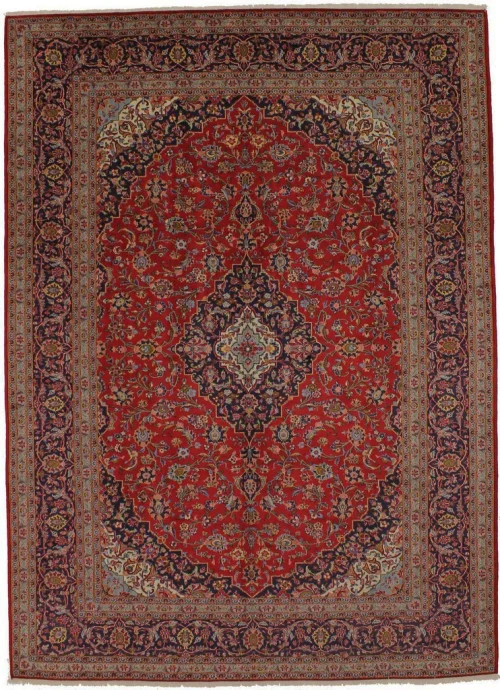
A vintage Persian or Oriental rug can soften a contemporary home office and give it a vibrant feel. Faded colors and aged patterns complement the simple furniture designs.
Your home office rug doesn't need to match your furniture perfectly, instead, look for common colors, contrasting hues, or similar design elements.
A wooden desk goes well with warm Persian or neutral rugs, while a black-colored desk can complement a light rug or a dramatic geometric design. With a white desk, a colorful vintage or traditional rug would suit it best.
If you already have dramatic furniture, opt for the simplest rug, and if your furniture is minimal, then the rug can have more design features using patterns and colors.
The most common mistake is focusing on the appearance while deciding on the rug, but a good home office rug also needs to be chosen according to the desk, chair, floor, and overall function.
Let’s discuss the common mistakes to avoid while choosing a rug for a home office:
Wrong rug size: A small rug can make your workspace look unbalanced and also limits your chair movement.
High-pile rugs: Thick, fluffy, or shaggy rugs make the movement of your office chair difficult and can damage its wheels.
Ignoring the materials: Some materials cannot work well with regular chair movements, foot traffic, and daily cleanings.
Improper rug layout: Not considering the desk, chair, and other furniture during the rug placement can make the space look cluttered.
Style before substance: A beautiful but impractical rug may not work well in a home office.
Vacuuming and spot cleaning will keep your home office rug looking its best. The cleaning method will vary depending on the material, so it is recommended to follow the specific care instructions given by the manufacturer.
The right rug pad will also keep the rug in place and reduce rug movement. Deep cleaning can be done according to the rug rather than doing the same treatments for every material.
Read: Oriental Rug Cleaning Guide
A great home office rug balances appearance and practicality together. Firstly, start with choosing the appropriate size and placement t, then focus on the materials, pile, colors, patterns, and maintenance.
Whether you prefer a traditional Persian rug, vintage, tribal, or a contemporary style, go for one that complements your home office and works well with its needs.
For high-end home office rugs, you can explore Magic Rugs, they have a variety of Persian, Oriental, vintage, traditional, and contemporary rugs in various sizes that can fit with your home office design, preferences, and needs.
The best rug size is based on the amount of space and the size of your desk. The popular size is 5×7’, but 6×9’ or 8×10’ may also work well.
Yes, a rug can be placed underneath the desk and adds more style, but it should provide enough space for easy movement of the chair.
Low- to medium-pile rugs and flat-weave rugs are the best options for a rolling office chair, as shaggy or thick rugs can make the chair difficult to roll.
Wool is an excellent material option for home office rugs because it is highly durable and soft and comes in different styles. Always check the rug’s care instructions before purchase.
Jute is a good choice to add natural texture in the home office, but it may not be the best choice for areas with heavy foot traffic and regular chair movement.
Not necessarily, but it should coordinate with the existing design elements in the office, such as colors, patterns, and textures.
Neutral tones like beige, cream, and gray will suit most home office furniture, but darker colors or patterned rugs can be a nice contrast to light and neutral furniture.
Protecting the rug may be necessary; choose a pile according to your workspace. Using a low-pile or less thick one is a great option. Use a suitable rug pad, keep a regular check on the rug for wear, and shift the rug when required.
Rug Guide
Rug Guide
Rug Guide