Cart (0)
No products in the cart.

Table of Contents
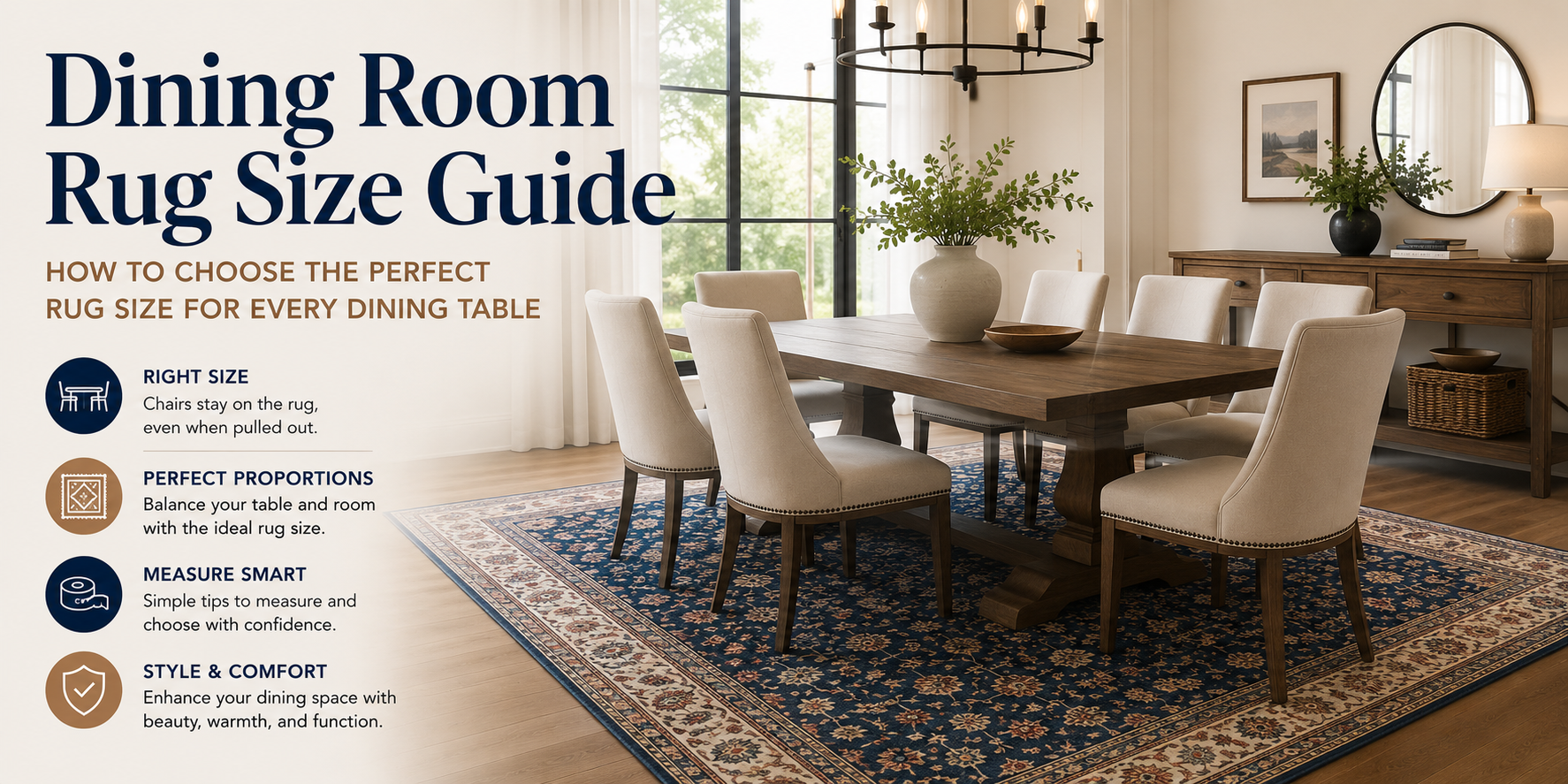
Choosing the right rug size for the dining room depends on the dining table size, chair movement, room size and rug placement. The 24-inch rule is the best way to select the correct size dining room rug. The rule states that the perfect dining room rug should extend a minimum of 24-30 inches on each side of the dining table.
Choosing an ideal dining room rug size not only enhances your space's decor but also affects comfort and movement, creating a warm, cosy dining experience.
Although most dining rooms have standard-size rug dimensions like 6'x9’, 8'x10’, 9'x12', and 10x14’, depending on your table’s shape, seating arrangements, and the room’s size. The biggest mistake many people make is buying a rug size that is too small for a dining room.
Because of that, the chair slides off when pulled back and sometimes gets caught on the edge of the rug. This restricts movement, and the dining area will look imbalanced.
In this dining room rug size guide, you will learn how to select and measure the dining room rug properly, based on table size, seating, the overall room dimensions, and layout.
Overview
The perfect dining room rug should reach 24-30 inches on all sides of the dining table.
When choosing your rug, follow the 24-inch rule so that your chairs stay completely on the rug when drawn out.
The standard rug sizes range from 6'x9’, 8'x10’, 9'x12’, and 10'x14’.
The size of your rug should be based on the table size, seating, chair movement and room size.
Make sure to avoid buying a rug that is too small, as it affects the comfort, movement and overall look of the room.
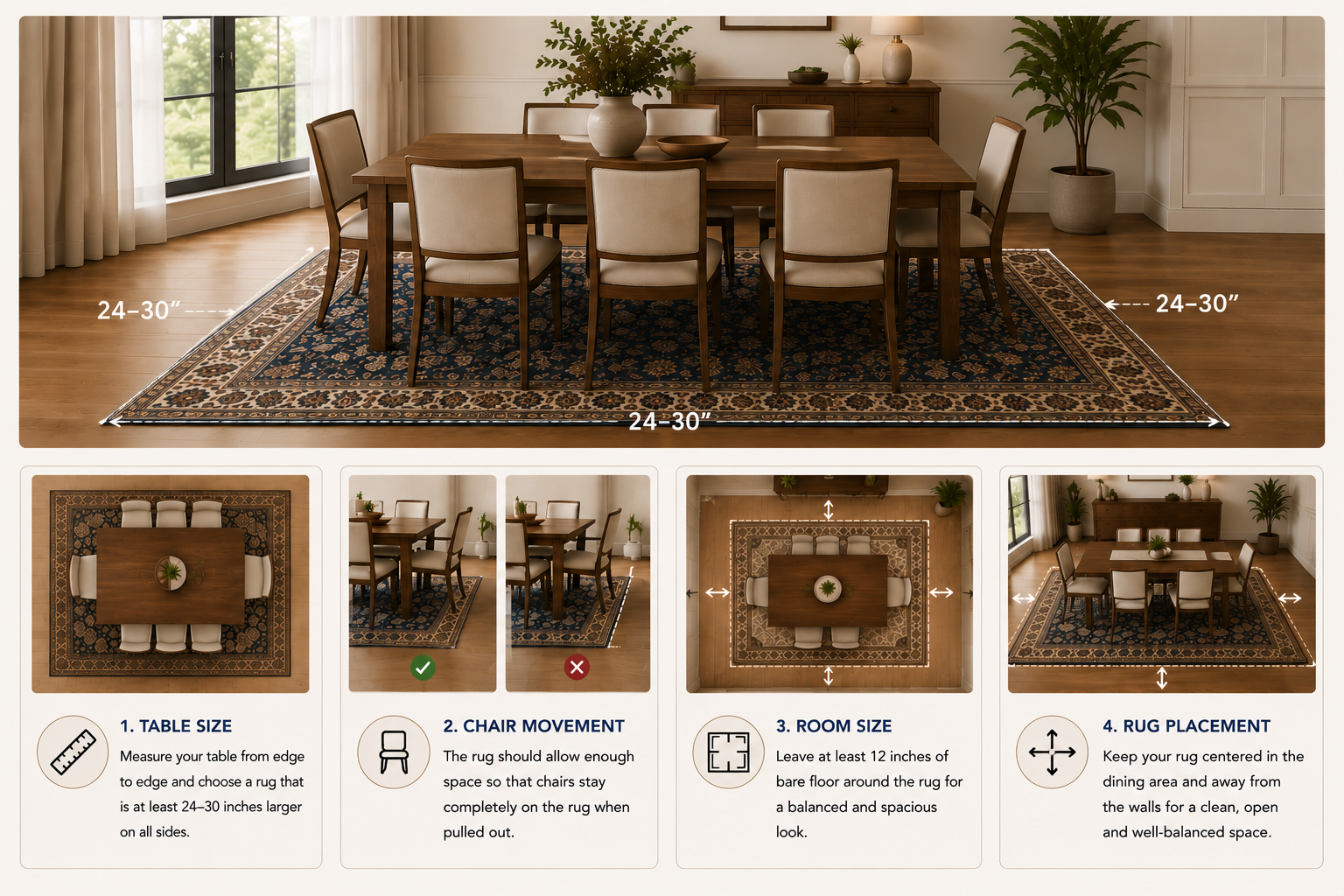
The best dining room rug size should extend at least 24-30 inches larger than the dining table to accommodate dining chairs when pulled out into a comfortable seating position.
The key factors to consider when choosing the right rug size are table size, chair movement, room size and rug placement. Using a correct rug size not only protects the floor but also makes the area more relaxed and defined.
Let’s discuss the factors in detail:
Table Size
Consider the size and measurements of your dining table before choosing a rug. Measure the table from edge to edge. A larger table requires a needs larger rugs to accommodate sufficient space for chairs.
Chair Movement
Make sure that the chairs remain on the rug when someone sits and stands up. If the back legs of the chair hang over the edge of the rug, that means the rug is too small.
Room Size
Think about how much floor space you want the rug to occupy. Avoid choosing a rug that overwhelms the room. Consider leaving at least a 12-inch perimeter of exposed floor space.
Rug Placement
Your rug should be placed properly in the dining area without extending to the wall corners. You should leave a good amount of bare floor on all four sides for easy movement and a balanced appearance.
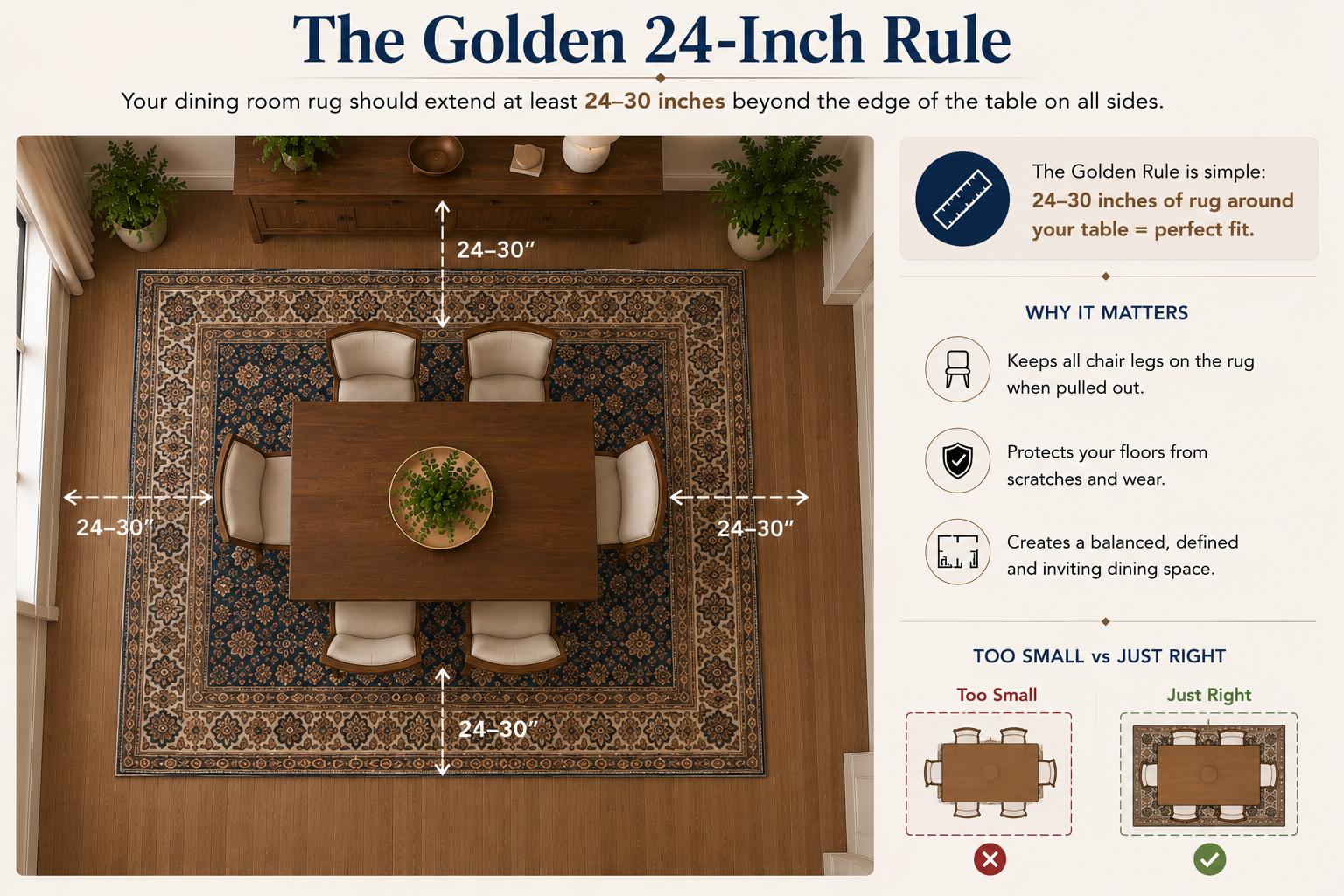
The 24-inch is the greatest and simplest thumb rule to choose the correct size of a dining room rug. Your dining room rug should be at least 24 inches larger on all sides than your dining room table. For large dining rooms, it should extend up to 30 inches, establishing comfort and visual harmony.
The main reason every chair should remain on the rug is comfort and easy movement while sitting down and getting up. If the chair legs fall off the rug, then there is a chance that your chair may shake, get stuck on the rug corner, or possibly damage the floor.
So, using the 24-inch rule and keeping the chairs completely on the rug protects the floor and gives an overall pleasant dining experience.
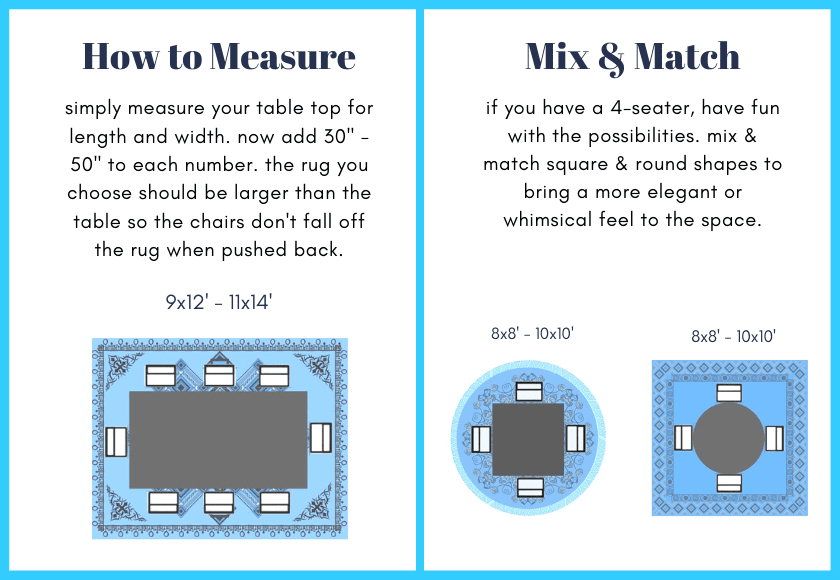
Taking the right measurement of the dining room rug correctly helps you to avoid making sizing mistakes. By following a few simple measurement steps, you can ensure that your new rug will fit properly around your dining space.
Let's understand the measuring process step by step:
First and foremost, carefully measure the entire length and width of your dining table. If you have a round dining table, measure the diameter.
Pull out all of your dining chairs and position them in a manner as if someone is sitting. This implies how much space each chair occupies around the table, particularly how far the back legs extend.
After taking the idea of the chair, measure the dining table to the back of the drawn-out chair. This helps to understand how much additional space for rugs is required.
Add at least 24-30 inches to each dimension of your dining table measurements. You can use this rule to accommodate larger rugs and provide more comfort.
It's better to buy a larger rug size or one closest to the standard size. That provides enough room rather than selecting a small one.
Using this rug size chart, you can easily get the perfect rug size for your dining table and chairs. This dining room rug size chart is a great option for choosing between standard rug sizes.
| Table Size | Seats | Minimum Rug Size | Ideal Rug Size |
| 36" × 48" | 4 | 6' × 9' | 8' × 10' |
| 36" × 60" | 4-6 | 8' × 10' | 8' × 10' |
| 36" × 72" | 6 | 8' × 10' | 9' × 12' |
| 42" × 84’’ | 8 | 9' × 12' | 10' × 14' |
| 42" × 96’ | 10 | 10' × 14' | 12' × 15' |
The dining table shape is as important as the dining rug size. Ensure that your dining rug complements the shape of your dining table. Select a rug that matches your dining table shape, adding symmetry and balance to the room.
Standard rug sizes for a rectangular dining table include 8'x10', 9'x12', and 10'x14' feet. A rectangular rug complements a rectangular-shaped table, enhancing the elegance of your dining space and establishing an even shape on each side.
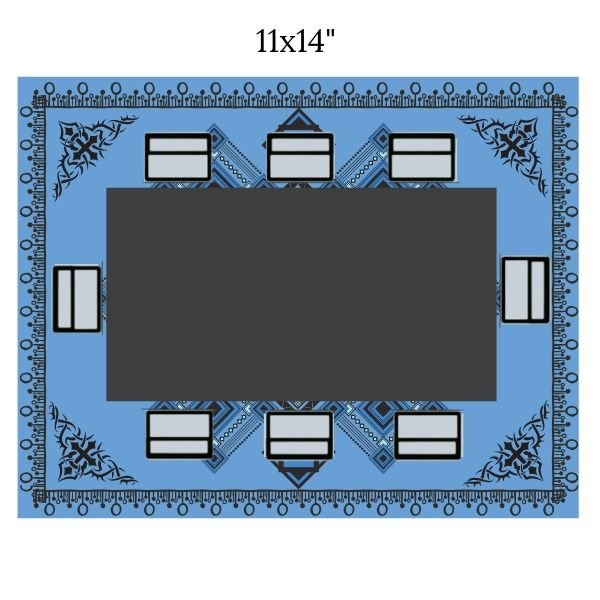
6, 8 or 10 feet are the round rug sizes based on your table's diameter.
A round rug fits well under a round dining table as it establishes a defined and organized appearance.
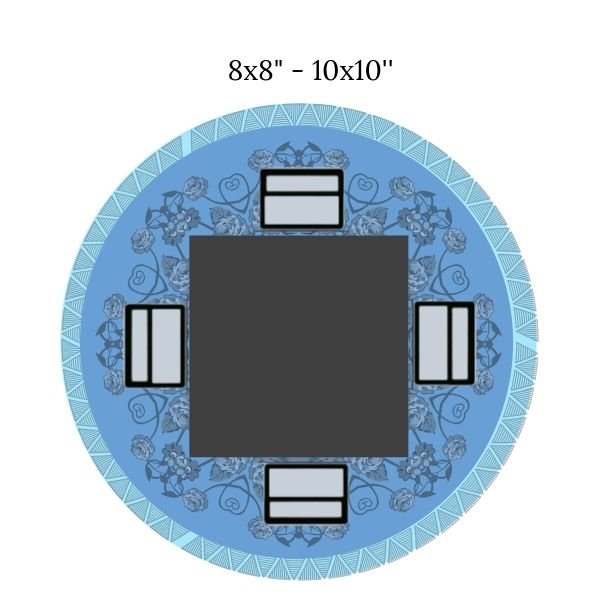
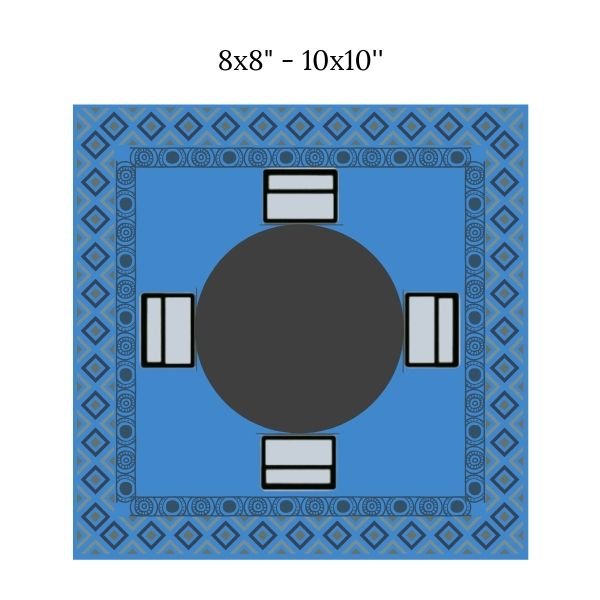
Common dining rug sizes for a square dining table are 6'x6', 8'x8' or 9'x9' feet. A square rug is ideal for a square dining table as it makes your dining area symmetrical and well-sized.
An oval dining rug and a large rectangular dining rug go well with an oval dining table. The popular sizes range from 8'x10', 9'x12' or 10'x14' feet.
The right rug size also depends on the seating capacity of a dining table. Always opt for a rug size that makes movement easy by keeping each chair on the rug.
A 6x9 feet rug size is perfect to place under a 4-person table, while an 8x10 feet rug ensures more space for chairs to move easily and comfortably.
The standard size to look for a dining rug of 6-person seating capacity of a dining table is 9x12 feet. This rug size is a go-to for this size dining room setup and provides enough space for chairs and fits well with the 24-inch rule.
Your 8-person dining table may need a dining rug size of up to 10x14 feet. to give sufficient room for guests. This rug size helps to keep the chairs completely on it, establishing a refined dining area.
With a 10-person seating capacity dining table, an average of 10x14 feet dining rug works great. If you need more space for a large dining room, then a 12'x15' rug is perfect.
You should buy a 12'x15' rug size for a 12-person seating capacity dining table. Before buying a rug for a 12-person seating capacity dining table, always take proper measurements of your table.
Opt for a layout that complements your dining room size and goes well with your furniture and decor. Use these layout ideas to choose the ideal rug size for your dining space:
Each chair should stay completely on the rug when drawn out. This is the most practical and suggested dining room layout.
Consider a larger rug size to connect with the dining space without using the entire room. To create balance, leave at least some visible space around the rug.
A smaller rug will complement the smaller dining room. Your dining rug size should follow the 24-inch rule, which states keeping some space between the rug and the wall corners without making it look overwhelming.
Make sure to buy a dining rug that fits your dining table's additional length completely and perfectly. Dining with an extendable table needs a rug that can easily accommodate its extended length.
A rug that is large enough for benches and chairs both to remain fully on the rug for a clean and practical arrangement.
Yes, a rug should always be bigger than the dining table. The rug reaches out at least 24-30 inches from all sides of the table, so that every chair should stay completely on it and create a comfortable walk on.
A bigger rug helps to keep chairs stable and in place while moving. A rug bigger than the table prevents chair legs from getting stuck in the rug's corner. It protects your floor from damage.
It helps to make the dining room look larger and more balanced. A larger rug makes the area look more balanced and well-designed.
A bigger rug helps to keep chairs stable and in place while moving.
A rug bigger than the table prevents chair legs from getting stuck in the rug's corner.
It protects your floor from damage.
It helps to make the dining room look larger and more balanced.
A larger rug makes the area look more balanced and well-designed.
At least 8-18 inches of floor should be left between the rug and the wall of the dining room. The accurate idea of the amount of space required between the rug and the wall depends on the size of the dining room and the rug.
Let’s discuss the space requirement in detail:
8 inches: Smaller dining rooms require around 8 inches of space to be left between the rug and the wall.
12 inches: Many standard rooms and rugs that measure around 10'x12' feet need at least 12 inches of bare floor. This helps to make the space look defined and more spacious.
18 inches: In larger dining rooms, leave 18 inches of space around the rug and the walls. The extra space border highlights both the rug and the floor.
Open concept homes: Select a rug that can be placed well under your dining table and chairs, but make sure to leave enough open area around it. The open space helps to isolate the dining area from adjacent living or kitchen areas.
The right rug shape for your dining room mainly depends on the shape of the dining table. Opt for a rug shape that fits well around your table and the chairs to stay in place without sliding off when drawn out.
| Rug Shape | Ideal for | Pros | Cons |
| Rectangle | Rectangular & Oval Table | Fits most dining rooms | Looks too large under small round tables. |
| Round | Round Table | Establishes a balanced appearance | Does not go with large rectangular tables. |
| Square | Square Table | Creates a harmonious and modern appearance | It Cannot be used with other table shapes. |
| Oval | Oval Table | Blend well with round table corners | Few size and design options available. |
The best rug materials that help to increase durability and performance, while being anti-slip, are wool, cotton, and polyester. This chart helps you to select the best rug based on your requirements:
| Material | Easy to Clean | Pet-Friendly | Kids | Movement | Durability |
| Wool | Good | Yes | Yes | Good | Excellent |
| Cotton | Excellent | Yes | Yes | Excellent | Good |
| Polypropylene (Synthetic) | Excellent | Excellent | Excellent | Good | Very Good |
| Flatweave | Excellent | Yes | Yes | Excellent | Very Good |
| Washable Rugs | Excellent | Excellent | Excellent | Good | Good |
Your dining room rug colors and patterns should connect with your decor while being practical enough to hide everyday spills and wear.
Here is the list of a few:
Light colored rugs like white, cream, or a light beige can make a small room feel more spacious and brighter. These light-colored rugs need more care and maintenance.
Darker rugs come in charcoal gray, navy blue, or even dark chocolate colors. These color rugs easily hide common stains like food crumbs and beverage spills and are best suited for a high-traffic dining room.
If you are not sure about patterns or colors, neutral rugs in beige, grey, taupe, or ivory colors are best to choose. They are so versatile and work well with any dining room.
Geometric rugs offer clean lines and simple designs and can give a contemporary touch to your dining area. They are particularly best suited for smaller rooms as their shapes help to define the space.
Floral rugs and traditional pattern rugs consist of classic and detailed designs, creating a sense of elegance and warmth. They work well with traditional, rustic, and farmhouse-style dining rooms.
Vintage rugs not only establish character in your room but also create an antique look that hides everyday wear and stains. These rugs establish warmth, history, and personality in any dining room.
Always avoid making mistakes such as buying a rug that is too small, too thick, or choosing the wrong rug shape. These mistakes can make the room appear unorganized and give a sense of cluttered look. Let’s discuss each mistake in detail:
Many people make the most usual mistake of picking a rug that is too small. It can make the chair unstable, and it can fall out of the rug when drawn out. This can make the dining area look unrefined.
Not leaving 24-30 inches of space from all sides of the table can disrupt the movement of chairs.
Buying the wrong rug shape will not allow the chairs to completely sit on the rug, and the chairs will fall off the rug, making the room feel disconnected and unrefined.
Using high-pile and thick rugs can make it very difficult to pull chairs out. Thick rugs need more care and maintenance; the cleaning of these rugs is time-consuming.
Placing the rug very close to the walls makes your room appear cluttered and unorganized.
Before buying a rug, measuring the table, chairs, room, and open floor can help you avoid buying the wrong-sized rug for your dining room.
The best rug pile height for dining rooms is low-pile rugs, as the chairs can easily move around these rugs, making the cleaning easy and fast.
Low-pile rugs are the perfect option for dining rooms as they allow smooth and easy chair movement. Also, these rugs are easy to clean and have less chance of food trapping and spilling.
You should avoid buying a high-pile rug for a dining table because the legs of the dining chairs will easily sink into the carpet. Also, the high pile makes the movement of dining chairs quite difficult and challenging.
You can choose a rug that has the right thickness. The rug thickness for a dining room should never be higher than three-fourths of an inch. The right rug thickness prevents the dining chairs from rolling out.
These examples help you to select a rug for different table sizes, seating and layouts:
Having a 72-inch-long rectangular dining table needs a 9×12-foot rug. This creates sufficient space for the chairs when drawn out fully, protecting the corners of the chair legs from getting stuck in the rug.
An 8-foot rug for your 60-inch round table is an ideal choice because it gives sufficient space around the table, and the chairs remain entirely on the rug with full support during movement.
A large 10-person seating capacity dining table is perfect for get-togethers, and it needs an appropriate 10x14-size rug. This gives sufficient space for 10 chairs placed around the large dining table.
Getting the right size rug for your dining table helps to improve the aesthetic and functionality of your dining area. Always make sure that your dining chairs sit completely and comfortably on the rug, and that you get enough space between the rug and the wall corners.
This perfect placement and layout prevent the dining space from looking cramped and unorganized. Keeping the 24-inch rule, proper measurement, and your personality in mind when choosing the shape, material, and size of your perfect dining room rug makes your rug selection perfect and easy.
If you want to transform your dining area, then visit and get the best collection of dining rugs at Magic Rugs. Our rug collection will completely change the look of your dining room into a stylish and elegant one.
Check out the Living room rug size guide
Check out the Bedroom rug size guide
Read the rug placement guide for every room
Explore Our Dining Room Rugs
A 6-person dining table generally requires a 9x12 ft rug. This rug size establishes proper space for chairs to sit fully on the rug when dragged out, and you can follow the 24-inch space clearance rule for easy chair movement.
Yes, the dining room rug should stay on the rug when pulled out. Chairs resting completely on the dining room rug prevent shaking, protect your floor and make your dining space organized and defined.
Yes, a dining room rug that is too large covers the entire room floor and makes it appear smaller than it actually is. Leaving around 8-18 inches of floor space uncovered helps you.
An 8'x10' rug may work well for small 4-person or sometimes 6-person seating capacity dining tables if there is sufficient space to accommodate all chairs when pulled out.
No, it's not necessary. However, the placement of a dining room rug under the table not only adds comfort but also has many practical benefits, such as protecting your flooring, reducing the impact of noise from scraping chairs, and visually defining the dining space. Getting the right size of your dining rug enhances the look of your space.
It is not always important to match your rug to your dining chairs perfectly; it should only complement them. For a defined look, you should consider the right size, shape and color of your table, chairs, flooring, and interior style without overpowering it.
Round dining room rugs work great with round dining tables, whereas a rectangular rug is ideal for rectangular dining tables. Match the rug shape to your table shape for a more harmonious feel.
Always buy a rug depending on the size of the extended table. If you have an extended dining table, this allows chairs to sit on the rug comfortably.
Washable rugs like those made from synthetic materials or flat weaves are easier, more comfortable options for homes with regular spills and stains. They are easy to clean, stain-resistant, and work well for normal day-to-day use.
Yes, a dining room rug should ensure the chairs do not get stuck on the edge of the dining rug. Prevent it from catching on or damaging the dining room rug itself, and allow it to come out smoothly while dragging for a great experience.
Share: