0 Items In Cart
No products in the cart.
Your privacy
Choose which cookies we can use. Your choice is saved for 12 months, and you can change it at any time from Cookie Settings in the footer. Read our Cookie Policy.
Needed for the site to work, such as your cart, checkout and account sign in. These cannot be switched off.
Remember your choices, such as your wishlist and recently viewed rugs, so the site feels personal.
Help us understand how visitors use the site so we can improve it. The data is collected in aggregate.
Used by our advertising partners to show you relevant Magic Rugs ads on other sites.
Table of Contents
What Is a Rug Pad and Why Does It Matter for Oriental Rugs?
5 Reasons Your Oriental Rug Needs a Pad
How to Choose the Right Rug Pad?
Best Rug Pad Materials for Oriental Rugs
How Thick Should a Rug Pad Be?
Final Thoughts: Small Addition Big Difference
Where to Find the Best Rug Pads?
FAQs
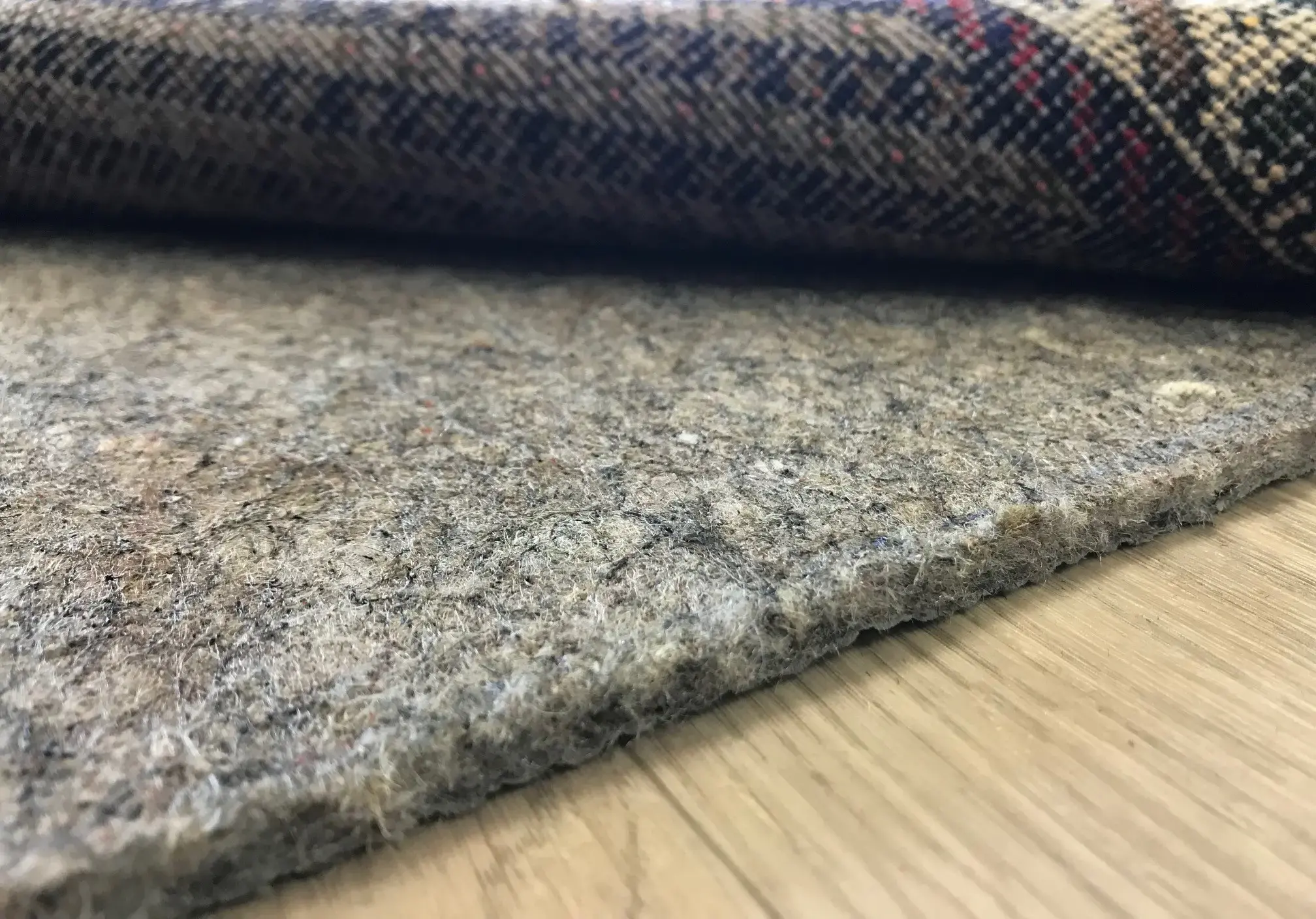
Whether it is a new rug or one you just discovered in your own home, the first thing you need to know is that your Oriental rug might need a rug pad. Yes, a rug pad can protect your ancient and delicate oriental rug, which will be at the mercy of normal wear and tear, the floor underneath it, and even the lives of your loved ones.
You have recently bought a beautiful oriental rug and found it the best decision to bring it to your home. It added warmth, beauty, and coziness to your space. But after putting it on the floor, you suddenly feel the rug sliding, creasing, or gradually getting damaged because of continuous rubbing with the floor below. That is when you started looking for a simple, reliable solution, and finally found the perfect solution, a rug pad.
Although a rug pad will get hidden under your oriental rug, it is actually doing a lot to protect your rug and floor both. A rug pad not only prevents the rug from sliding or guarding your floor against scratches, keeping slipping accidents at bay, but also muffles the footsteps noise. It also makes cleaning easier and maintains the quality of your rug by extending its life to 40%.
In this blog, we will talk about five major reasons why your Oriental rug must have a pad underneath, and the points you should be aware of while buying the right rug pad.
A rug pad is an additional layer of material that you add between a rug and the floor. For most rugs, this is the perfect way to stop the rug from moving. However, for Oriental rugs, it does more than this.
Oriental and Persian rugs are hand-knotted, which means that the back of the rug consists of hand-tied knots. Whenever you walk on a rug, these knots get pressed directly against the hard floor underneath. After some time, this rubbing separates the knot structure, damages the weave, and makes the rug lose its tight, even shape.
A good rug pad minimizes friction and also assists in the rug lying flat and secure. Most importantly, by using it, your Oriental rug is able to retain its clean, smooth, and new look much longer.
A rug pad does more than just add cushion; it serves as a barrier between the floor and the rug. It absorbs pressure, reduces rubbing, and keeps the rug protected and firm. Also helps your oriental rug to remain clean, smooth, and new for a very long time.
The underside of an Oriental rug, especially if it's an antique or one that's made with rough natural fibers, scratches hardwood, laminate, tile, and stone floors. Dirt and sand grains get stuck between the rug and the floor. Behave like sandpaper with every step. Putting a rug pad in that place will stop the damage completely.
Do you know that a bare rug placed on a hardwood or marble floor can become quite dangerous? This is especially true when you have kids and older adults in the house or anyone who is always in a rush. A non-slip rug pad works by sticking both the floor and the rug, and reduces movement and the risk of a fall.
Stepping on a rug without a pad is equivalent to hammering each hand-tied knot straight into the floor. Over time, the weave gets loose, and the rug falls apart. The pad softens the pressure each time, thus it protects the knot structure and increases the life of a rug.
The perfect felt pad effectively reduces the 'footstep noise' which is required for upper floors or top floor rooms. It provides a layer of padding on the floor, thus making it a lot more comfortable to walk and sit on the rug.
Rug damage is mostly caused by dirt. A rug pad will hold the rug in position while you vacuum it. Therefore, you can clean more thoroughly and with less effort. Also, it keeps the rug from folding and gathering, which will cause unevenness and cleaning problems in the long run.
There are many types of rug pads available, all of which work differently, so it is important to select the right one. Choosing the best rug pad depends on the floor type, rug thickness and your choice and comfort.
If you have hardwood floors, it is better to go for a rug pad that is wood-friendly and leaves no marks. Felt pads are perfect for comfort, whereas rubber pads provide good grip and stability.
Keep the following tips in mind while purchasing a rug pad:
For smooth floors, a non-skid pad is the best option.
To get the extra plush feel, choose felt padding.
Make sure the rug pad measures slightly less than the rug to prevent pad edges from being visible.
Stay away from inexpensive rug pads, as they could harm the flooring.
A good quality rug pad may be expensive to your pocket, but it will save you from expenses in the long run by protecting the rug and floor both.
Your choice of material is important, and it is where most buyers get confused.
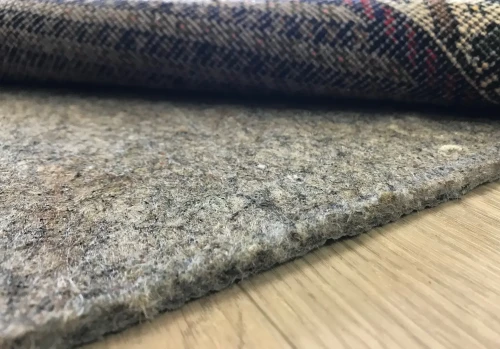
The perfect rug pad for an Oriental rug on hardwood floors is the combination of natural rubber and felt. The felt layer softens the impact of every footstep and keeps the harmful vibrations away from reaching the knot structure of the rug. The natural rubber pad back sticks to the floor without any glue, keeping the rug secured firmly.
Sometimes, you might want a less thick rug. In such a case, a pad made of only natural rubber (about ⅛ inch thick) can serve as a great non-slip grip with the least amount of cushioning. It is a great option for flat-weave Oriental rugs, kilims, and dhurries where you need the rug to be still without increasing the height.
When you decide to put down your Oriental rug on a wall-to-wall rug, the best recommendation we have is to go with a felt-only pad, without rubber. Felt just stops the rug from moving and prevents wrinkles on rugs, without adding much thickness.
Additionally, stay away from pads made with foam, cheap plastics combined with synthetic adhesives or clay fillers. Such products can remove floor finishes, after a while, leave a permanent residue and can spoil both your floors and your rug.
Thickness varies depending on the type of rug and what you want to achieve:
¼ inch (felt + rubber): This is the most versatile choice for the majority of Oriental rugs. It offers proper cushioning to protect the knots and is firm enough to prevent coming out.
½ inch (dense felt): Perfect for areas with heavy foot traffic or if you want extra cushioning and sound absorption. It should not be used under an antique or very thin rug.
⅛ inch (rubber only): Ideal for flat-weave rugs or when you want the lowest profile possible.
Do not use anything thicker than ½ inch under Oriental rugs; too much softness will harm the rug's structure instead of protecting it.
The most logical and wise purchase after an Oriental rug is a rug pad. It will not only protect your floors but will also preserve the rug's hand-knotted structure and keep your family safe. It also silently extends the life of the rug, for which an artisan may have taken several weeks or months to make.
There is already the beauty and charm that an oriental rug brings to your surroundings, yet it is the rug pad that further helps in maintaining this charm. Besides taking care of the risk of slipping and the protection of the hardwood floor, the addition of comfort and longer rug life are some features of the rug pad that go beyond just providing cushioning.
Oriental rugs are beautiful; make sure to buy a high-quality rug pad for it. Not only does it protect your rug from wear and tear, but it will also give you peace of mind knowing it has the necessary support.
You may find, now that you know about this topic, that there are many sites where you can find rug pads, but which of these places offer full quality and totally size-customised, extra cushioned, and also eco-friendly rugs?
There is just one that comes to mind when all these characteristics meet free shipping and quick delivery: Magic Rugs, not only the home to amazingly beautiful rugs, but also the highest quality rug pads you can find.
Yes. Every Oriental rug benefits from a pad, no matter what size or how old it is. Specifically, hand-knotted rugs need the most. Their knotted foundations are mostly affected by floor friction and pressure.
The best option is a combination of natural rubber and felt. While felt protects the knot structure of the rug. Also, the natural rubber provides floor-gripping properties without the need for adhesives. Stay away from foam and plastic pads, these will cause damage to both your rug and your floor.
Yes, the wrong pad can. Over time, foam and low-quality plastic pads may stick to flooring finishes and remove varnishes. On the other hand, natural rubber pads make secure grips without the need for any adhesive and are also compatible with hardwood, tile, and laminate.
A pad made of ¼ inch felt and rubber is sufficiently thick for most Oriental rugs. When antique pieces or very thin rugs are involved, it is advised to use a thinner ⅛ iinch rubber pad. When dealing with delicate items, do not use anything thicker than ½ inch for padding under the pieces.
To help keep the pad from showing, reduce the size by 1 or 2 inches on each side. This is also effective in preventing the curling of edges and making the rug lie flat. The vast majority of pads can be cut quite easily with a pair of scissors.
A felt-only pad is the right choice for a layer between the rug and the carpet. It will reduce shifting and bunching, but won't increase the height significantly. Rubber-backed pads should not be used on carpet, as they can get unevenly gripped and cause a mess.
With good care, a natural and quality combination of the two materials can make the rug pad last for 10 to 20 years. Make it a habit of inspecting the pad yearly, and once you notice the rubber crumbling or the matting of the felt, then it's time for a change.
No. The reason is that foam pads are extremely soft, and they will cause the breaking of rug knots with every step. Besides, they decompose quickly and may leave a powdery residue that sticks to hardwood floors and is very hard to remove. To remain on the safe side, use natural rubber or felt only.
Persian & Oriental Rug Care
Persian & Oriental Rug Care
Persian & Oriental Rug Care