0 Items In Cart
No products in the cart.
Your privacy
Choose which cookies we can use. Your choice is saved for 12 months, and you can change it at any time from Cookie Settings in the footer. Read our Cookie Policy.
Needed for the site to work, such as your cart, checkout and account sign in. These cannot be switched off.
Remember your choices, such as your wishlist and recently viewed rugs, so the site feels personal.
Help us understand how visitors use the site so we can improve it. The data is collected in aggregate.
Used by our advertising partners to show you relevant Magic Rugs ads on other sites.
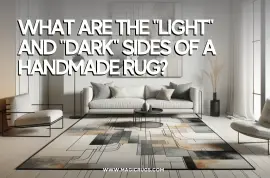
Table of Contents
Every hand-knotted rug is visually like two rugs in one; it's just a matter of the direction in which you are standing.
Have you ever wondered why one side of a handmade rug looks bright, and the other side is darker? No, don’t get confused, it is not your imagination, it happens in hand-knotted rugs. Most people can actually see this difference after buying a handmade rug for the first time. It seems strange to them, and at first glance, they assume it is a rug defect. However, this is a feature of a handmade rug and is the most natural and beautiful one.
This feature often reflects in a handmade rug that has a "light side" and a "dark side". The main reason for this is the pile direction of the rug and the way light bounces off the fibers. In fact, many rug specialists explain it as a hallmark of a well-crafted, authentic rug. You will not find it in a machine-made rug, they lack the pile direction and fiber depth.
In this guide, you will learn why the color of rugs changes, why they look exactly different from different sides, how colors are affected by the direction of the pile and why it is a sign of quality and a treasure. Let's understand the science behind this feature of handmade rugs.
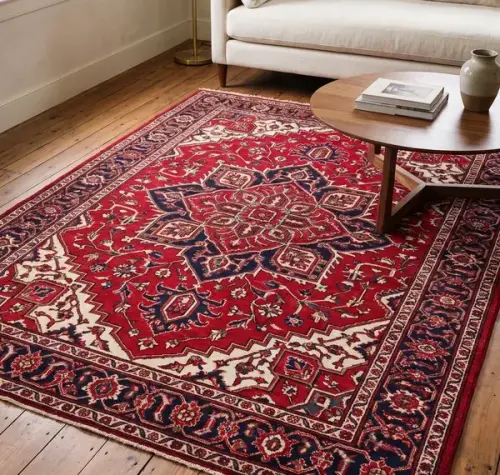
Actually, how a rug looks light or dark depends on which way the pile lies. The pile is the soft surface of a rug, composed of wool, silk, or other natural fibers. While weaving, the artisan ties each knot by hand, causing all the fibers to bend in a particular direction. When the rug reflects the light, the fibers of the rug create a different contrast based on the direction you see them.
In case the face of the pile is towards you, then the rug consumes more light and looks darker, deeper and slightly dull. On the other hand, if the face of the pile is away from you, then it will reflect more light and look brighter and more vivid.
This is the unique feature of handmade rugs in which the same rug gives the effect of two different rugs at the same time, when viewed from the two opposite sides of a room.
Pile direction provides depth and movement to the hand-knotted rugs. You can get it by drawing hands throughout the surface of the rug.
In one direction, it feels smooth, and in another, it feels a bit rough. The smoother direction will generally look darker, as the fibers are flat. The reverse side reflects more light and appears brighter.
Unlike machine-made rugs, handmade rugs have a natural texture and movement, which adds richness and elegance to their appearance.
You can follow these steps and easily identify whether the side of your rug is dark or light.
Open your palm and drag it slowly from one end of the fringes to the other end of the fringes along the full length of the rug. Pay close attention to the texture.
The surface feels smooth in one direction, similar to stroking a cat in the direction of the grain. That smooth direction implies you are moving with the pile. This is the dark side of the rug. Where fibres push back is the rough direction, and that is the light side.
Go to one edge that is fringed and look at the rug closely. Then go to the other end. You will see the difference, the colors will appear vibrant or deep. Follow and trust your eyes.
The effect of light and dark side varies material to material, some rugs have a stronger light and dark effect than others. Let's discuss the different materials and their light and dark effects:
Handmade silk rugs create the most contrasting effect because the fibers of silk reflect much light. These rugs sometimes look shiny and flashy.
Wool rugs will add a cozier and warmer effect. Colours have richness but do not look too shiny.
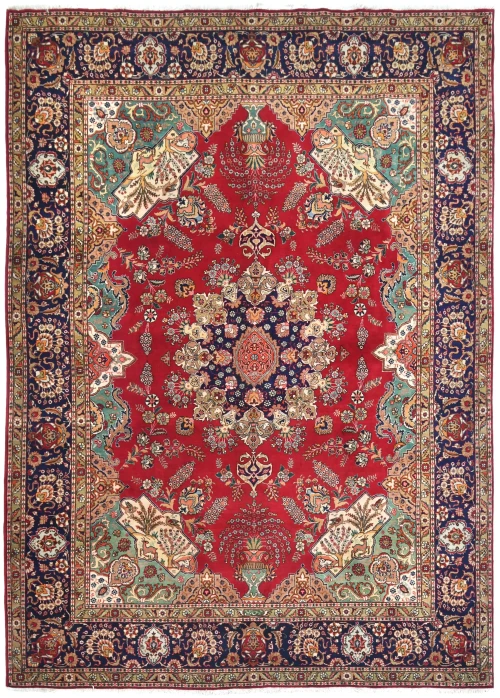
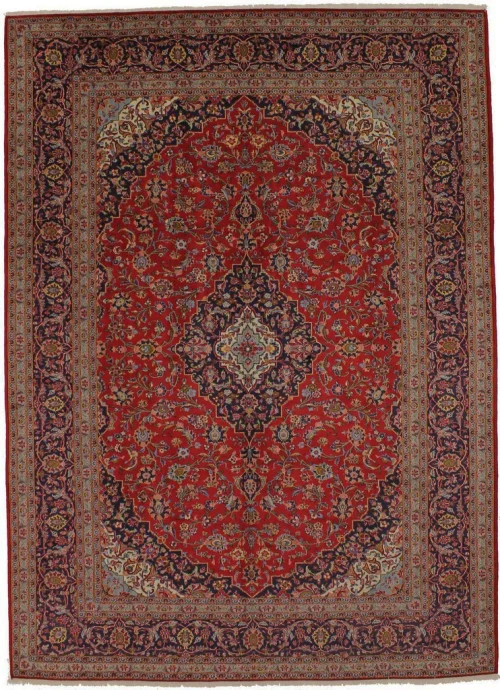
Traditional Persian rugs are well-renowned for their vibrant colors and stunning light reflection. They are detailed hand-knotted to make the effect more visible.
If you are looking for a beautiful, handcrafted, and timeless patterned rug, check out Magic Rugs, authentic handmade wool and silk rugs crafted to add warmth and elegance to your home.
Some simple habits will help you keep the light-dark dynamic of the rug looking beautiful for decades and delay the onset of nap reversal for a long time. Let's understand how:
You should always use the vacuum head in the "smooth" direction, not against the pile. Do not use the beater bars attachment, as they cause stress on fibres and make the piles out of alignment.
This is to spread the foot traffic equally across both sides of the rug, to slow down nap reversals and to also avoid unequal sun fading along the side facing windows on the South side.
A specialist will deep-clean the rug fibres and get all the pile back into its original form, and bring back the same light-dark dynamic just as the newly purchased rug was.
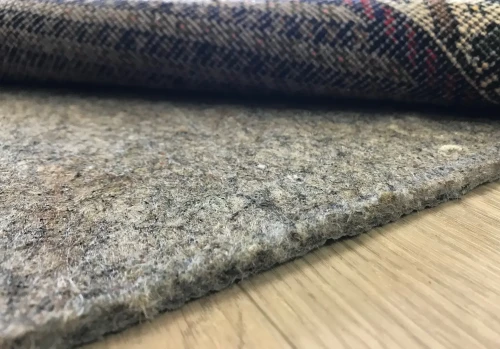
A non-slip rug pad keeps the rug in place while walking on it, also lessens cross-grain friction and maintains the pile in the same direction consistently.
The characteristics of these two have no comparison between bad and better. They just quite differ, and each one is a great fit for certain rooms and complements certain decors. Let's learn the difference:
Light Side | Dark Side |
|
|
|
|
|
|
|
|
|
|
This part is mostly overlooked by many people, and it really creates a huge difference. If you get clear which side is which, then you can make a conscious decision, which face the room sees.
The sides of the piles are reflective, which draws natural and artificial light deeper into the room, giving the room a naturally brighter and welcoming look.
The absorptive tips drop down the appearance of the room, bringing depth and do not make a bright room look washed out or flat.
The light side and dark side of a handmade rug are not a defect or imbalance in the rug. They are the outcome of the natural hand-knotting, pile direction and the way in which light combines with the wool and silk fibres. This gorgeous transformation in the look provides depth, movement and character to hand-knotted rugs which cannot be replicated by any machine-manufactured rugs.
Every detail, from the direction of the pile to weaving techniques, light reflection, and room placement, contributes to this unique visual effect. A handmade rug goes perfectly in any room, either to enhance the ambiance with its vibrant colors or to warm and enrich the atmosphere with dark hues.
Learning about this feature will help you value the craftsmanship, artistry and lasting elegance of every true handmade rug. You can apply these techniques for turning your dull room into a bright, vibrant one by taking ideas from this blog and exploring Magic rugs for the wide range of premium quality handmade rugs.
When hand-knotted, fibres in the rug tend to run in one direction, known as the pile direction. A light-colored rug looks lighter against a light-colored background, and a dark rug looks darker against a dark background, so looking at the rug's pile, you can naturally create a brighter or darker look.
No, the dark side isn't a defect, fade or damage. It is a natural visual property of any handmade rug and is known as a sign for the true hand-knotted rugs, natural fibres and traditional weaving methods of skilled weavers.
In darker rooms, put the lighter side towards the door to create a brighter and larger look in the room. The dark side will give warmth and depth in bright rooms. The rule is not mandatory, so you can pick the style that looks best in your house.
Gently brush your hand over the rug surface, from one side to another. One direction will feel smoother, the other will be slightly rougher. The smoother one is generally in the direction of the pile and gives a darker appearance when looked at from a distance.
With time, regular foot traffic causes the fibres of rugs to get pushed in various directions, resulting in lighter or darker spots on the rug. This is named nap reversal. Still, it's nothing to be concerned about in handmade rugs and may become more visible after professional cleaning or with excessive daily usage.
Due to pile direction and the natural reflection of the fibres, most handmade pile rugs feature a pattern of light and dark. The best contrast can be seen on silk rugs, the next level of soft variation is with wool rugs, and the lightest variation is not noticeable on flatweave rugs.
Yes, a handmade rug can make a difference in the look and feel of a room when it's rotated. When you turn the rug color changes, depending on which side is facing the light. It's a simple trick interior designers use to give a new seasonal appearance.
This effect is followed by experts as it reflects true hand-knotting features like natural fibre quality and craftsmanship. Handmade rugs also experience a shift in appearance, which gives them movement, depth and richness, often lacking in machine-made rugs.
Persian & Oriental Rug Care
Persian & Oriental Rug Care
Persian & Oriental Rug Care