0 Items In Cart
No products in the cart.
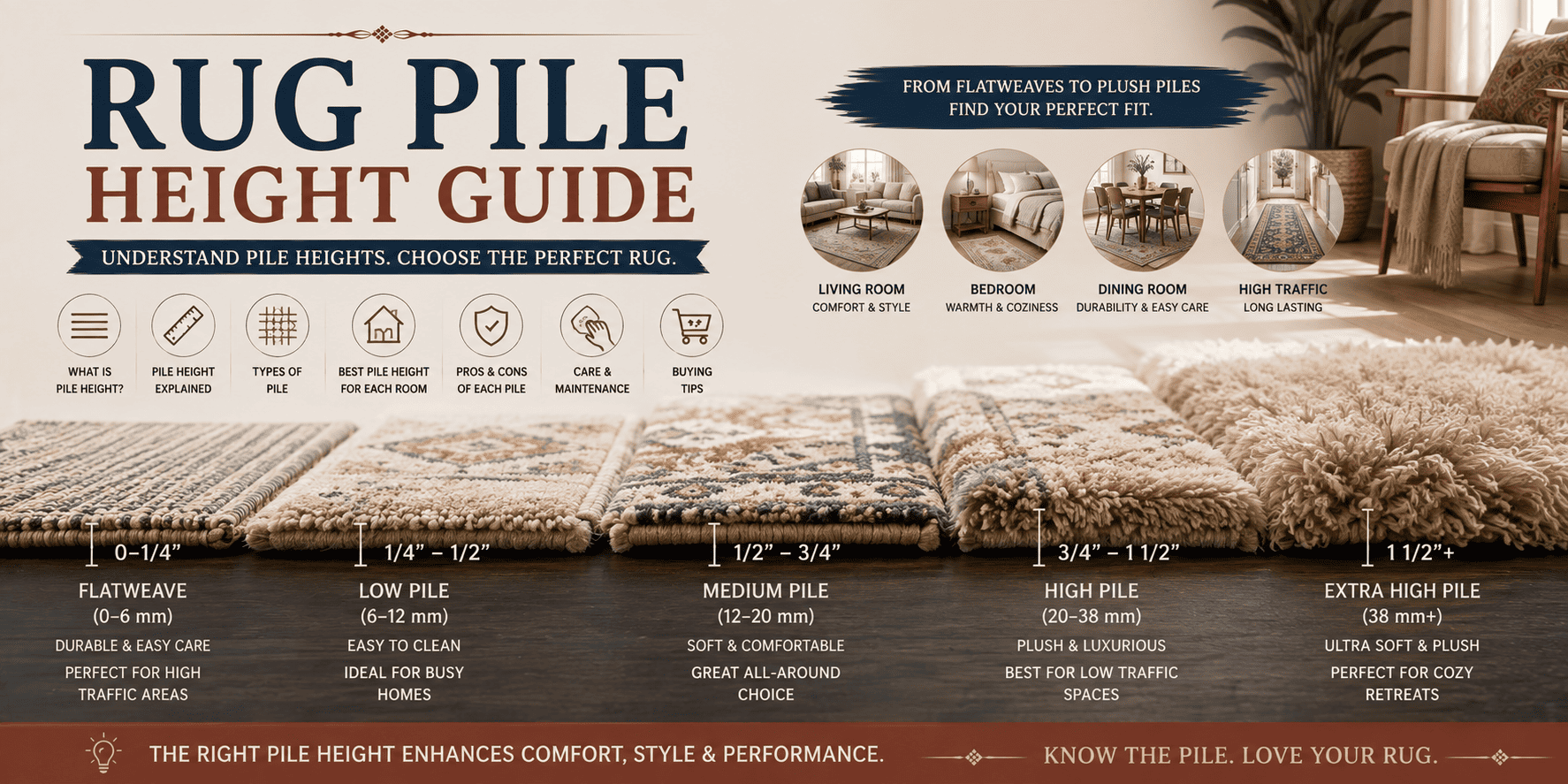
Table of Contents
Choosing the right rug pile height can create a huge difference in the appearance, feel, and performance of the rug.
From low-maintenance, low-pile rugs and purposeful medium-pile rugs to soft, plush, high-pile choices, each pile type provides extra comfort and goes well with different rooms of your home.
The appropriate selection of pile height relies on factors such as foot traffic, pets, children, furniture, comfort, and care requirements.
The one you choose for your heavy traffic entryway may not be perfect for your calm bedroom. This guide helps you learn more about low, medium, and high-pile rugs to choose the best for your home.
Key Takeaways:
Low-pile rugs can be placed in high-traffic areas, dining rooms, entryways, and pet-friendly homes.
Medium-pile rugs can be used in most rooms where you want to add comfort and softness, and are easy to maintain.
High pile rugs work well in bedrooms and low-traffic areas where extra comfort is required.
Rug Construction and fiber also impact the softness and density of the rug, even at the same pile height.
Always keep in mind room use, cleaning needs, furniture movement, and door clearance before opting for a rug.
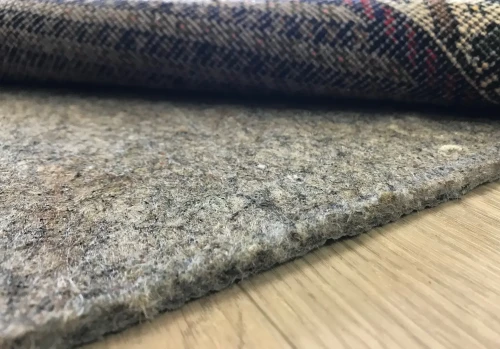
Pile height is the length of the rug fibers that come up from its backing. Rug pile height matters because it impacts how a rug feels underfoot, how it handles foot traffic, traps dirt, and how much space it will take under your furniture and doorways.
Shorter piles are usually more functional, while longer ones give a more comforting feel and better cushioning.
The rug pile height has three different categories: low, medium, and high pile rugs, depending on their pile structure, comfort, maintenance needs, and durability.
Generally, low-pile rugs are best in high-traffic areas, while medium-pile rugs are good for their ability to combine comfort with functionality. On the other hand, high-pile rugs provide the softest and most luxurious feel.
Let’s discuss each rug pile height in detail:
Low-pile rugs have shorter fibers that are 0-0.25 inches long. The short length of low-pile rugs makes them easier to vacuum and clean than high-pile ones. This type of rug offers enhanced practicality and is more appropriate for homes with kids or pets and high-traffic areas.
Medium pile rugs have 0.25-0.75 inches of pile fiber, ideal for areas where you want to create a balance between comfort and practicality. Medium pile rugs are perfect for places like living rooms as compared to others, providing more cushioning underfoot. They are easy to maintain and best for everyday use.
High-pile rugs have longer fibers of more than 0.75 inches, giving a soft, plush, and comfortable feel underfoot. They are best placed in spaces like bedrooms and low-traffic areas where softness is preferred.
The best rug pile height depends on how you utilize your space rather than just picking the option that is the softest. Low pile is best in high-traffic areas, medium pile is appropriate for most purposeful everyday places, and high pile is best for areas where you prefer comfort over easy maintenance.
Before making a purchase, consider the usage of the room as well as who will be using it and how frequently. A plush rug may look attractive, but a low-pile rug can be a better option for a busy household with kids, pets, or regular guests.
You can measure rug pile height by using a ruler against the rug and measuring from the backing’s top along the edge of the fibers.
Let’s discuss the rug pile height measurement step by step:
Place the rug on a firm surface. Make sure you have a ruler or a measuring tape with clear markings.
Measure rug pile height by positioning the ruler vertically against the rug’s backing.
Measure from the top of the backing to the tip of the fibers.
Do not push the ruler too much into the fibers, as this will give you a shorter measurement.
Repeat the process in many areas of the rug, specifically if it is a textured, uneven, or patterned pile.
Always compare your reading with the seller’s listed height before selecting the product, especially if you are buying it online.
Note: In this measurement, the backing or total thickness of the rug is not included, so you will get a clearer picture of how long the pile actually is.
The pile height depends on the type of room, as different areas have different comfort, traffic, and furniture requirements. Entryways need something more long-lasting, while bedrooms generally require a cozier option.
Let’s explore the appropriate rug pile height for different rooms:
Low pile rugs are the perfect choice for entryways, hallways, and dining rooms as their firm surface handles usual traffic and allows easy movement of chairs.
Medium pile rugs offer a relaxed surface that is not too thick and easy to maintain. They can be easily used in living rooms and family spaces.
High-pile rugs give a soft and cushioned feel underfoot that makes them a great option to use in bedrooms, reading corners, and other less busy areas that focus on comfort.
Low, medium, and high-pile rugs are different from each other in terms of their fiber length, softness, comfort level, and care requirements.
Rug Type | Low-Pile | Medium-Pile | High-Pile |
Pile Height | 0-0.25 inches | 0.25-0.75 inches | 0.75+ inches |
Underfoot Feel | Uniform, smooth | Soft and more cushioned | Plushy and cozy |
Maintenance | Easy to clean | Moderate | NeedsNeed more care |
Comfort | Moderate | High | Very High |
Best For | Entryways and hallways, dining areas, and high-traffic areas | Living rooms, bedrooms, and family spaces | Bedrooms, reading corners, and low-traffic areas |
Rug construction is an important factor that determines how the pile feels. In addition, different techniques also change the overall feel of the rug. Many homes opt for rugs that are more resilient to spills and stains.
On the other hand, some people prefer them as they have a softer touch compared to others.
Below is the list of the most common rug construction types:
Hand-tufted rugs are made by pulling yarn from a fabric backing, creating a soft and comfortable surface. Tufted rugs provide excellent comfort and coziness because of their construction.
You can expect a difference in feel based on the pile height, fibers, density, and materials used in the rug.
Hand-knotted rugs are made by tying knots one by one onto a foundation, creating detailed and durable construction. On the basis of materials and knot density, these rugs feel dense, uniform, and comfortable.
Flatwoven rugs offer a smooth and flat surface. They are generally not very plush, but they are a more functional option for busy and high-traffic spaces that have limited door clearance.
Shag rugs come with long fibers, giving a rich, soft, and cushioned feel underfoot. You can place them in areas like bedrooms and cozy spaces where you want a more personalized feel with a unique look.
The most common rug pile height mistakes include selecting rugs according to softness needs, not considering the home’s furniture traffic and movement, the clearances in front of doors, and the level of animal and children interaction.
Opting for a medium-pile rug for heavy traffic areas like entryways and hallways is not an appropriate option. A comfortable medium-pile rug may require more care in busy areas than a low-pile rug.
A thick rug can make door or furniture movement difficult. Do not ignore the rug’s pile height before placing it under furniture or doorways.
A high-pile rug does not always mean a rug is good quality. Fiber quality, its density, construction, and craftsmanship also play an important role in evaluating quality.
Low-pile rugs are more practical and easy to clean, but their flat surface does not offer much cushioning and comfort as medium-pile rugs do. They are not appropriate for areas like bedrooms or spaces where you prefer walking barefoot and may need extra comfort.
The best way to opt for rug pile height is to concentrate on factors such as comfort, durability, and functionality. A low pile is great for high-traffic areas, a medium pile is appropriate for offering comfort, while a high pile gives a calm and rich feel in quiet rooms. Always keep the actual usage in mind before buying a rug.
With this guide, you can easily determine which pile goes well with your living room, dining area, or entryway. To explore all different rug pile height types, you can visit Magic Rugs , check out our collection, and invest in unique and best-quality rugs with the right pile height.
You will easily get the material of your choice and the right pile height that suits your needs and matches your space.
The best rug pile height for a living room is a medium pile, as it gives a sufficient level of comfort while being practical for daily use and regular cleaning.
A rug that has short fibers and a firm surface is known as a low-pile rug. They are ideal for busy homes with children or pets and are also easy to clean.
A medium rug pile height gives more cushioning and comfort than a low-pile rug, even with less thickness. This pile type is more functional and provides a balance between comfort and maintenance.
High-pile rugs usually have long fibers that offer a dense and soft surface. They can be used in your bedrooms or around low-traffic areas.
Low-pile rugs are best for pet-friendly homes, as they are easy to clean and maintain. A low pile has short fibers, which makes it best for everyday use.
High-pile rugs can be quite difficult to take care of, as their longer fibers get more dust and dirt. Proper vacuuming and instantly blotting spills with a clean, fresh cloth help to maintain their quality and appearance.
The low pile is perfect for a dining room as it allows easy movement of chairs. Also, its flat surface makes it more functional for frequent cleaning.
No, a higher pile does not mean good quality. The other important factors that need to be considered are the rug’s materials, density, overall construction, and craftsmanship.
Rug Guide
Rug Guide
Rug Guide