Cart (0)
No products in the cart.

Table of Contents
What are Nain Rugs?
Where Do Nain Rugs Come From?
Why Are Nain Rugs So Popular?
Nain Rug Sizes: Which One Fits Your Space?
Traditional Nain Rug Patterns: What Do They Look Like?
What Does the La System Mean in Nain Rugs?
Why is Knot Density Important in Nain Rugs?
What Materials Are Used to Make Nain Rugs?
How to Identify an Authentic Nain Rug?
Final Thoughts
FAQs
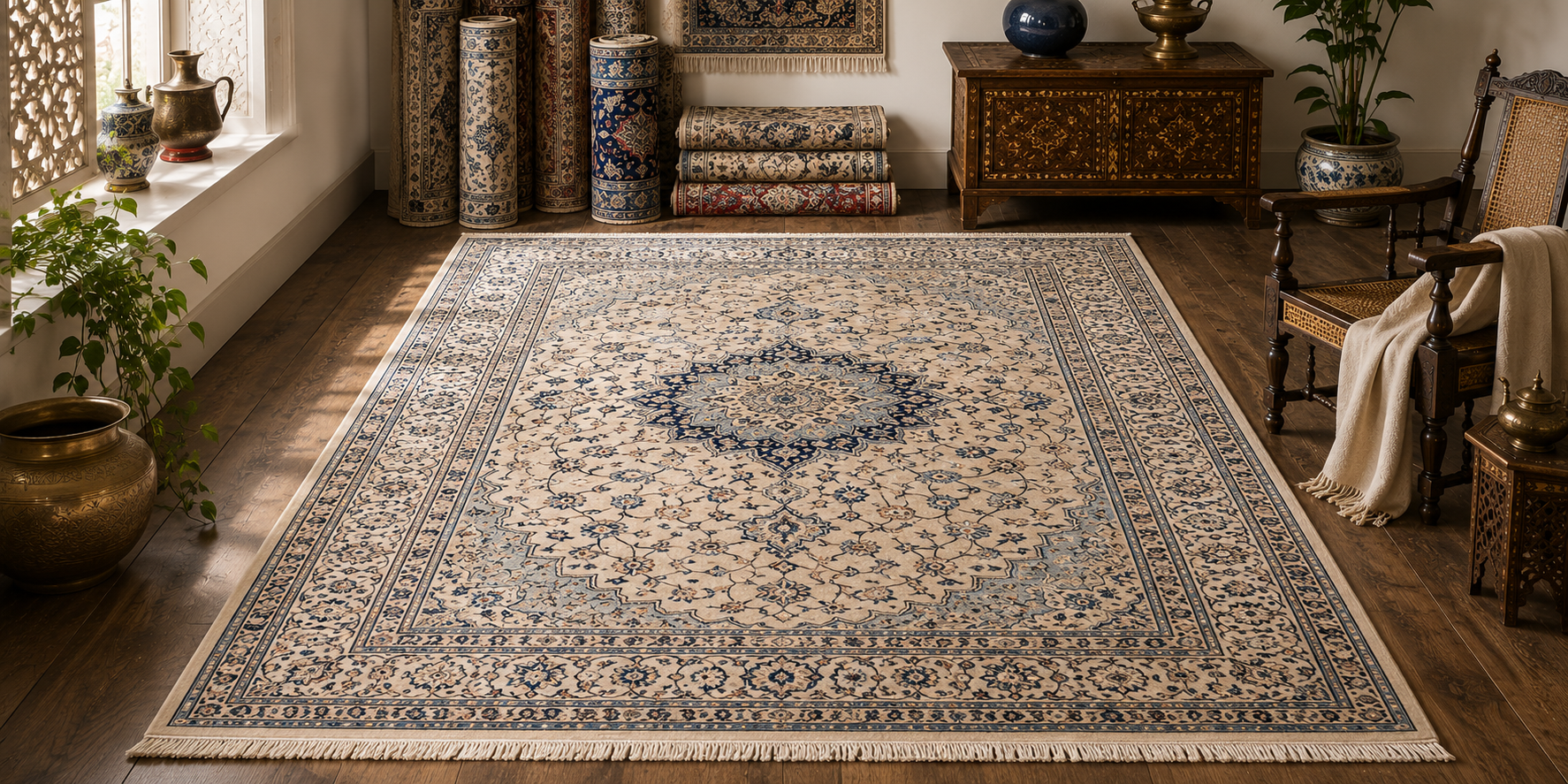
Know the history, origin, patterns and art of the Nain rugs, and learn why they are among the world's highly popular Persian rug styles.
The rugs are woven in the Nain city of the region and are well-known for their durability, detailed designs and luxurious look. Their unique look, traditional background and perfect weaving methods have made them one of the finest Persian rugs globally. By knowing more about their origins, patterns, and craftsmanship, you can learn about the art and history of Nain rugs that make them very famous among experts, designers and homeowners.
Nain rugs are among the finest category of Persian rugs, and they are popular for their beautiful floral designs, outstanding craftsmanship and quality of materials. Nain rugs are highly in-demand rugs and are valued for their elegant design, detailed art, and timeless beauty. All these features make them suitable for both traditional and contemporary decor.
Nain rugs are fine, handmade Persian rugs that hail from the city of Nain, located in central the region. Artisans in this area are known for their skilled craftsmanship. The rugs are very popular all over the world for their detailed floral patterns, superior knot density and durable material.
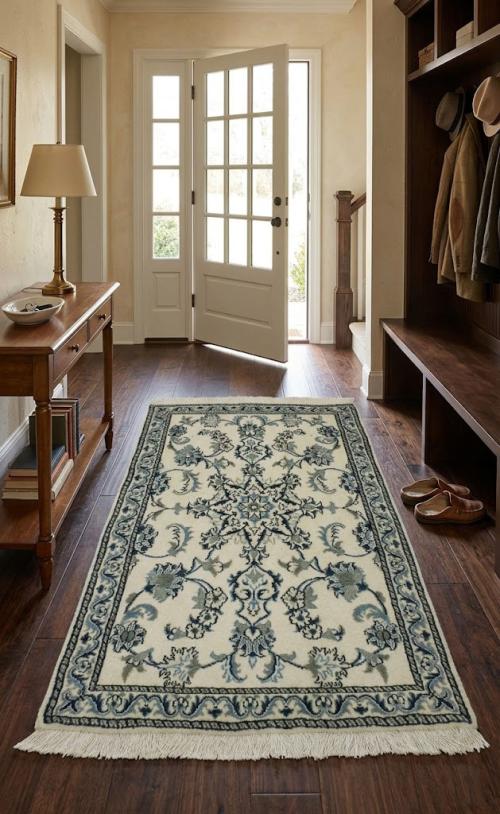
They have firm textures, unique designs, and color tones like ivory, cream, blue, beige, and light grey. They are well-designed and can easily fit into many different decorating styles.
Nain rugs are handmade rugs that come from the region called Nain, a historic desert town located near Isfahan, central the region. Rug weaving in Nain started late compared to other centres of Persian rug weaving, but then the weavers became famous for making the most beautiful, quality rugs in the country.
Before gaining fame for rugs, Nain was earlier known for producing high-quality textiles. In the early 20th century, local artisans shifted their weaving techniques to rug weaving and invented the distinct Nain rug style that is very popular today. Today, Nain rugs are well known globally for their fineness, beauty and have become a piece of attraction.
The Nain rugs are so popular because of their beauty, durability, and skilled craftsmanship. Their soft color options make them easy to match with other interior items.
Nain rugs are liked by homeowners and experts because of their: Timeless floral patterns, Skilled craftsmanship, Durable construction, Good-quality materials, Soft muted colors, Long-lasting value. They never go out of trend and are very popular among rug lovers for these reasons.
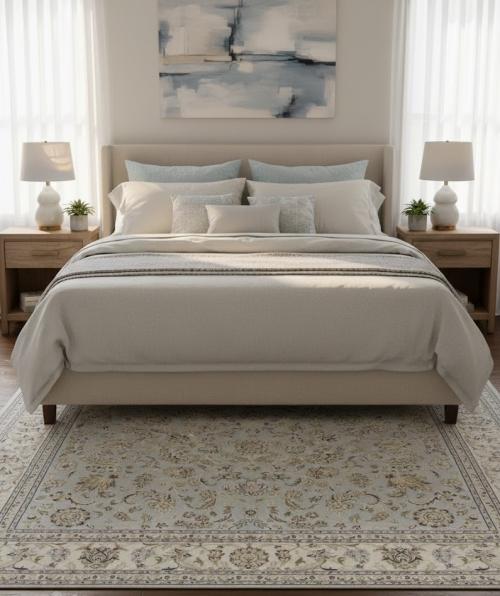
Nain rugs are available in different sizes, from small statement pieces to large room-covering rugs, making them perfect for all spaces. The following is a list of the most popular sizes of Nain rugs, along with the details of placement for each room, in which they can fit well.
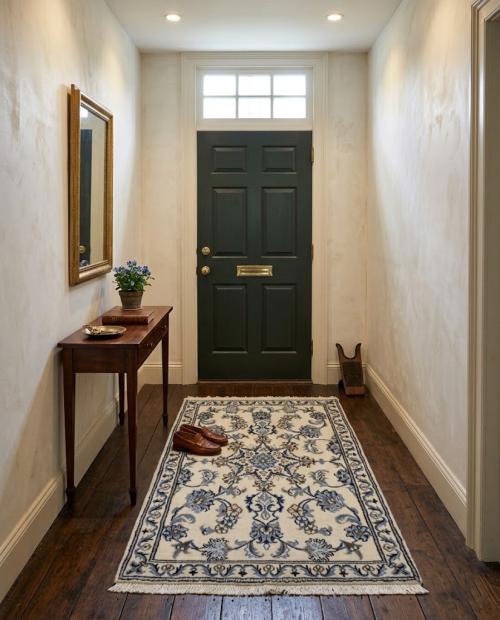
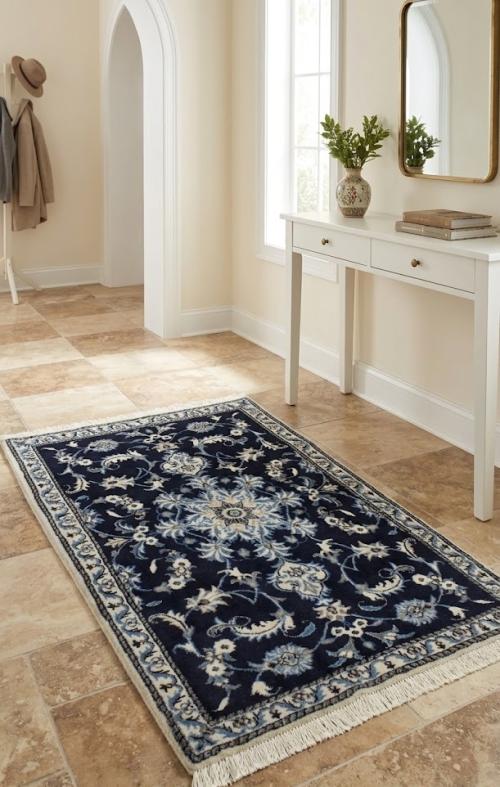
Small rugs are great for entryways and bedside, and they can be used as a statement piece on a console or shelf.
Medium-sized rugs are best for a dining room, home office, or small living room.
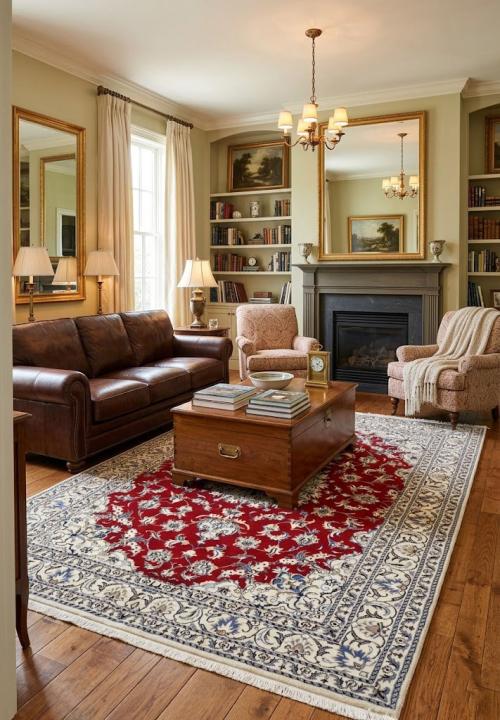
Large area rugs are perfect for a main living area or formal sitting. Large enough size to accommodate a whole set of furniture.
Oversized rugs are made for bigger areas, open-plan living concepts, dining rooms with large tables or formal hallways.
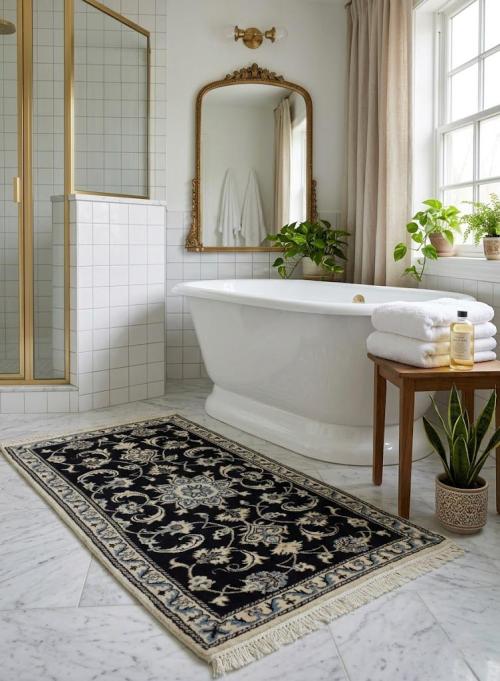
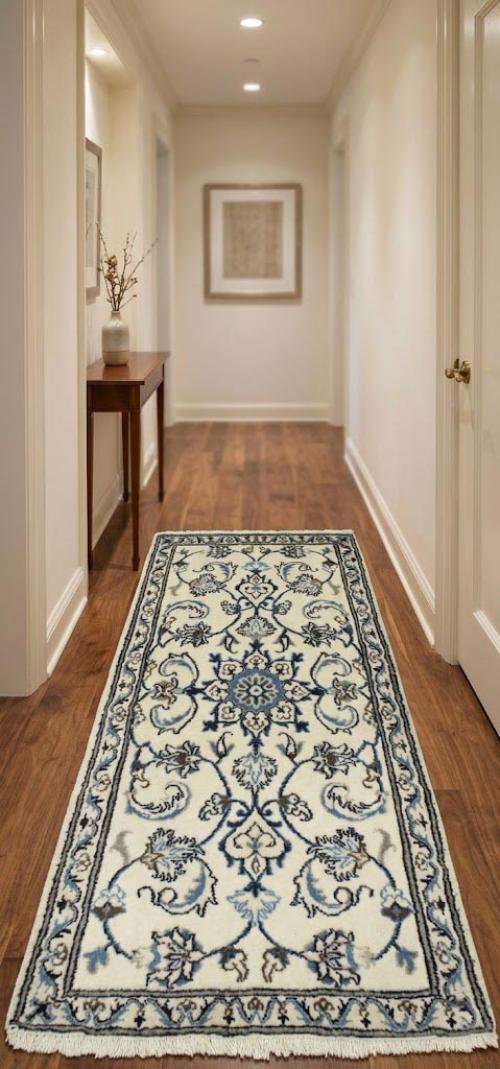
Runner rugs are a narrow design that goes well in hallways, corridors, and for placing at the side of the bed.
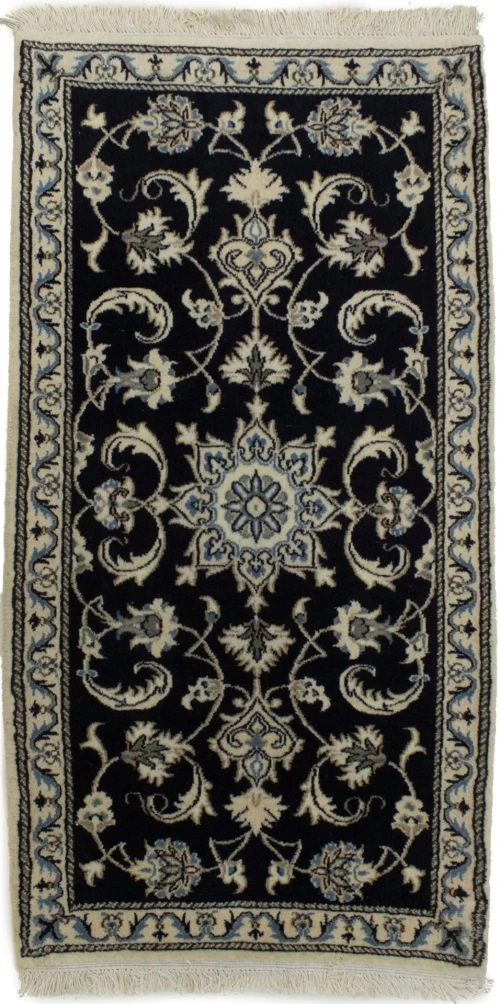
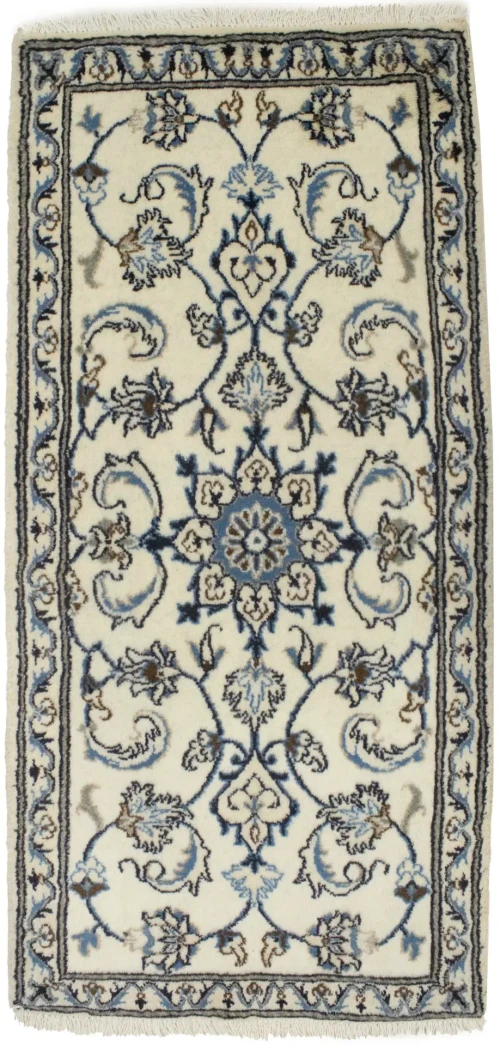
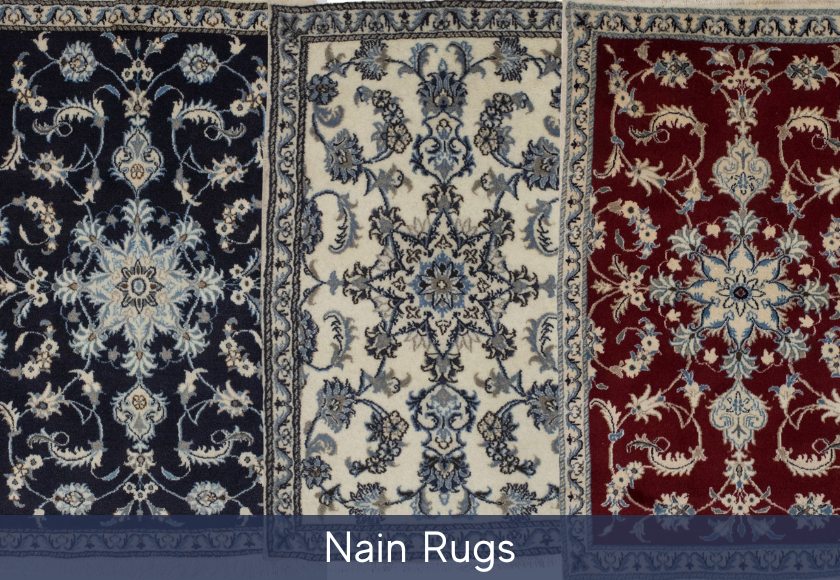
Nain rugs are featured for their soft ivory or cream base, floral centre medallion and flowing detailed motifs, creating a lasting and elegant appearance.
Colors: Unlike other Persian rugs featuring vibrant reds and rich blues, Nain rugs feel light and elegant.
Design and Patterns: The central medallion is surrounded by curved floral vines, decorated at the borders. Some larger pieces feature birds, animals or hunting scenes to add extra features.
This highlights the calm, elegant, effortless, and easy-to-style rugs that can be placed in any area.
The La (or Lah) is a traditional way of grading the fineness of a Nain rug. Generally, the lower the La number, the finer the weaves and the more detailed the design will be.
There are some common Nain rug grades:
4 La Nain Rugs: Very fine weaving and more detailed designs.
6 La Nain Rugs: One of the most popular grades and fine craftsmanship.
9 La Nain Rugs: Good quality, but slightly less detailed.
12 La Nain Rugs: Less costly and rougher.
In addition to La grading, knot density, material, and craftsmanship are also important factors to consider when buying.
The Knot density is important for the quality and fineness of the Nain rug. The number of knots present in a rug is called knot density. The more the knots per unit area, the sharper the patterns and the more detailed the design will be.
The elegance, durability and value of Nain rugs are connected with high knot count. Knot density is not the only thing making the rug fine; the La system, material and weaving skill altogether make it the best.
The quality of Nain rugs is mainly based on the materials used. The traditional Nain rugs are created using wool, silk and cotton fibers, each material used to serve its purpose.
Nain rugs are made from a variety of materials:
Wool: The rug's pile is made from high-quality wool. It is soft, durable and resistant to daily use.
Silk: The fine and floral designs are usually created by using silk. It gives a lot of shine to the rug, which looks more luxurious.
Cotton: The base of the Nain rug is usually made of cotton, using warp and weft threads. Supports a strong and stable structure.
Many of the finest Nain rugs featuring Silk highlights are present throughout the design. The silk pieces highlight light wonderfully and showcase the detailing of the design.
To identify a real Nain rug, you can check a few things, such as the paleness of the color palette, the knot count, the texture of the pile and the specific floral medallion design.
Before buying, ensure the following:
Flip the Rug Over: The back side of a fine Nain rug has thousands of small, evenly spaced knots. You must see the knots clearly on the back of the pattern.
Feel the Pile: Genuine Nain rugs are not very coarse or loose, but are closely woven and silky.
Study the Colors: The traditional Nain rugs feature soft, muted colors, made with natural dyes. Aware of anything that appears to be overly bright.
Look for Silk Highlights: The authentic rugs usually have subtle silk pieces that have light-reflecting qualities compared to the wool.
Nain rugs are a symbol of patience, artistry, history, and skill; these qualities make the handmade rug extraordinary. Every Nain rug tells a story in every knot, from their unexpected start in a town of textile weaving to present-day rug weaving and being famous as world's most in-demand handwoven rugs.
For those who are interested in a rug that will stand the test of time, or anyone who is a serious collector, you won't be able to beat a Nain rug in terms of craftsmanship.
If you are thinking of bringing a statement piece into your home, then Magic Rugs is the best choice to explore the collection of Nain rugs. You not only buy a piece of history, but you also feel that your money is used in the right place.
Explore our Extensive Range of Nain Rugs Collections
Nain rugs are fine, handmade Persian rugs made in the city of Nain, the region. They are made from high-quality wool, silk, and cotton, and are patterned with floral, pale-colored backgrounds.
La refers to the number of threads twisted together to make each strand of pile yarn. The smaller the La indicated (such as 4La), the finer the yarn, and the higher the number of knots, the better the quality and the higher the value.
Yes, the Nain rugs are the highest quality of the Persian rugs. Because of their better knot density, high-quality material and craftsmanship, they are among the best quality handmade rugs available globally.
Normally, a medium-sizedmedium size Nain rug takes between 12 and 18 months to get ready. More detailed rug pieces take years to complete.
Rotate it every 6-12 months for even wear, vacuum it gently without using a beater bar, and have it professionally cleaned every 3-5 years. Avoid direct sunlight for a longer time to maintain its color.
Yes. If you buy traditionally old rugs from different workshops, such as Habibian, they hold value and remain authentic when cared for and maintained properly.
Nain rugs require time, quality materials and skills to weave. The quality of their knots, detailed construction and high demand in the Persian rug market are responsible for their high cost.
If properly cared for and well-maintained, a good Nain rug can last for decades and may even be a family heirloom. Its life can be increased with regular cleaning, rotating and protecting it from direct sunlight.
Share: