Cart (0)
No products in the cart.

Table of Contents
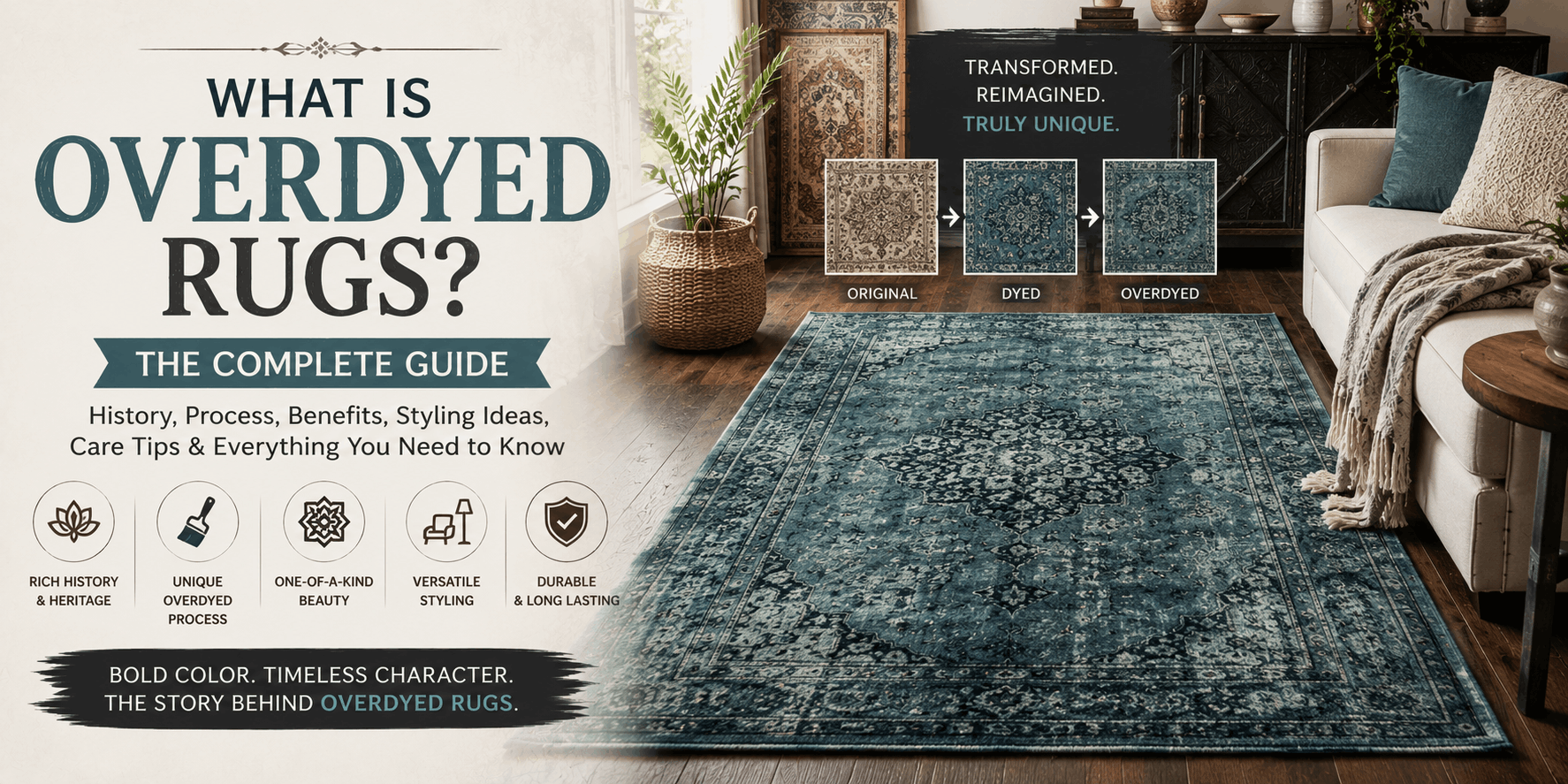
A vintage or antique rug that has been transformed and given a new bold color using an additional dyeing method is called an overdyed rug. The original pattern of an overdyed rug remains visible under the newly dyed color, giving a strong yet distressed look.
This overdyed rug is popular among homeowners who want to add a vintage look with a modern style to their home.
These rugs are usually washed or treated to increase their softness and to make them more durable and best-suited for high-traffic areas such as living rooms and hallways. Between two overdyed rugs, none of them looks exactly similar, which makes them unique and appealing.
If you want to add something more modern and like the look of Persian or Oriental rugs, then overdyed rugs are the best choice, as they have a balance of history, texture, color, and modern patterns.
At a Glance
Before you purchase an overdyed rug, make sure to check its reliability.
Always check the core dimensions, that is, its materials, weaving technique, condition, origin, and dye quality.
Persian, Turkish, or oriental overdyed rugs are usually used for the decoration of modern homes.
Overdyed rugs bring color, texture, and vintage character to modern homes.
The original design remains visible under the new color, giving an aged look.
An overdyed rug is a kind of refurbished rug made by cleaning a faded vintage or antique rug, stripping off its original old colors, and redyeing it in strong, saturated hues.
During production, the rug’s original traditional patterns and woven textures are fully preserved, creating a combination of old craftsmanship and modern design. This process of redyeing gives a contemporary and vibrant look to the rug.
A usual vintage or antique rug showcases its original colors and organic fading and aging, presenting a soft and traditional appearance.
At the same time, an overdyed vintage rug gets a changed, bolder, and more modern appearance through its color-renewal process. While both are authentic vintage pieces, overdyed rugs stand out for their strong color intensity and updated look.
Most overdyed rugs are made from faded, worn, or outdated Persian, Turkish, and Oriental rugs. After their original colors are lightened and muted, a new hue is applied. The original patterns form soft shadows under the new shade, which are then classified as distressed rugs.
The process is that the old rug is completely cleaned and treated before lightening or removing its original colors, then covering most of the original color of the rug with deep, saturated tones by redyeing it.
The entire process depends on the rugs and makers, so buyers must ask about processing before making a purchase.
Overdyed rugs include popular colors such as deep navy, emerald green, burgundy, pink, purple, orange, teal, and various neutral tones. When choosing a color, match it to your furniture, wall colors, room size, and overall decorative style.
Blue tones create a stable yet dynamic foundation, and they go perfectly well with furniture in white, cream, gray, brown, and natural wood finishes.
These colors introduce warmth and unique personal style into neutral-colored rooms. They are an ideal choice if you want the rug to become a strong focal point of the entire space.
Emerald, olive, and light green rugs bring a natural vibe to a space while maintaining a strong visual impact. They go well with wood, beige, cream, and all types of earthy colors.
Overdyed rugs in gray, beige, taupe, and light brown are easier to coordinate with various decors. If you want a vintage feel without using a bright, timeless color, these are an excellent option.
Read the Rug Color Guide to Choose the Perfect Color Rug.
When choosing an overdyed rug, consider things like the size, color palette, and the overall style of your room and furniture. Don’t make a decision only on the basis of color.
A strong overdyed color properly matches with neutral furniture. However, for colorful furniture and other decor, you should go for a muted overdyed rug that may create a better balance.
Pick a rug size that is correct or large enough to define the seating arrangement of the living area. For bedrooms and dining rooms, go for a size that should anchor the area where furniture is placed.
Be sure to consider the level of traffic in your busy family room or hallway so that you choose a rug strong enough to last for a longer time in a heavy traffic area.
Many times, an overdyed rug is made using old, used Persian, Turkish, or Oriental rugs. Just because a rug is overdyed does not necessarily mean that it is genuine or antique. The construction, material, age, and the origin of the rug still need to be evaluated.
These rugs are often overdyed in order to enhance the original appearance, like its color and style, so the value of the rug primarily depends on the original rug quality rather than its redyeing process. To know the quality of the rug, consider the following.
When looking at the back of the rug, look for signs of hand-knotting, construction, and weaving details. The back of the rug can give you clues about some of the finer details of the piece.
See if the seller is willing to tell you where the rug is from and which rug type it is: Persian, Oriental, or Turkish.
Wool, cotton, and silk all react differently during the dyeing process. Natural fibers are almost always used for overdyeing, but you should also consider the rug's construction.
Overdyed rugs have a unique texture and look. They need proper care and regular maintenance to keep their vibrant look and rich color preserved and enhance their service life.
Gently Vacuum by setting the vacuum to a low-suction setting.
Avoid doing harsh brushing or using hard vacuum heads.
Try to blot spills instantly with a clean, dry, and new cloth.
Keep away from direct sun exposure.
Rotate the rug regularly to even out wear and fading.
Avoid harsh chemicals or cleaners.
Book a professional rug cleaning service for deep cleaning.
Overdyed rugs add new life to older rugs and give a different appearance and feel in a home. But they are not an appropriate option for everyone. Before buying them, you should keep in mind their look and functionality.
Pros | Cons |
Bold, contemporary colors | Original colors disappear |
Vintage style | Daily heavy wear may affect the look |
Unique aged look | Requires authenticity check |
Goes well with modern decor | May not fit well in traditional interiors |
Can reuse old rugs | Quality of dye may differ |
If you want the unique texture or a vintage look but prefer bold, modern-style colors, an overdyed rug is an excellent choice.
The key to purchasing an overdyed rug is not only to focus on its appearance before making a confident decision, but also to make sure to check the rug’s structure, fibers, condition, origin, size, and the quality of its dye.
If you are thinking of investing in a unique, authentic rug that can give both vintage texture and modern style to your home, do visit and explore the collection of Magic Rugs to select a piece that fits your space, lifestyle, and personal aesthetic.
Overdyeing refers to adding a new layer of color to an already dyed old Persian, Oriental, or Turkish rug. It is usually done when the original rug’s color becomes faded or light.
An overdyed rug gets a layer of new color, while distressed rugs generally describe deliberate signs of wear and an aged appearance. A single rug can have both of these features.
During some professional processes, the original color may get removed or lightened, but this depends on the rug’s material, fibers, and the dyes used. Do not assume that all overdyeing treatments are reversible.
Yes, their rich colors, paired with soft visible original textures, give warmth and exclusive texture to modern spaces, without making a room feel overly traditional or outdated.
There is no particular universal color. Blue, green, burgundy, pink, teal, and all types of neutral tones go well. The specific choice is based on the existing color palette of the decor of your room.
Prices vary and are affected by the rug’s size, materials, age, craftsmanship quality, condition, origin, and the quality of the overdyeing process. The price range of handcrafted vintage rugs is usually different from that of newly manufactured rugs.
A dramatic new color may hide some stains, fading or discoloration, making them less noticeable, but overdyeing cannot replace the need for professional cleaning or restoration.
You can place an overdyed rug in living rooms, bedrooms, dining rooms, offices, or any other areas where the rug’s color defines the overall design.
When choosing a rug, focus on size and matching it with your furniture, the size of a room and decor rather than making a purchase based on appearance only.
Share: